
Understanding the light requirements of the harlequin glorybower is fundamental to achieving the lush growth and prolific flowering that define this species. Light acts as the primary energy source for all physiological processes, influencing everything from leaf size to the intensity of the berry color. While it is known for its versatility, providing the optimal balance of sun and shade will result in a much more spectacular garden specimen. A thoughtful approach to placement ensures that the plant thrives throughout the changing intensity of the seasons.
Photosynthesis is the engine that drives the development of the shrub, and the quality of light directly affects its efficiency. In general, this species prefers a location that offers full sun to partial shade, which translates to at least six hours of direct light daily. Plants grown in too much shade often become leggy and sparse, with fewer flowers and a less dramatic fruit display. Conversely, intense afternoon sun in very hot climates can sometimes lead to leaf scorch if the plant is not properly hydrated.
The orientation of your planting site—whether it faces north, south, east, or west—determines the type of light the plant receives. East-facing locations provide gentle morning sun followed by afternoon shade, which is often ideal for many ornamental shrubs. West-facing spots receive the most intense heat of the day, requiring more careful water management to prevent stress. South-facing sites offer the most consistent light but may be too intense in southern regions without some filtered shade.
Adaptability is one of the strengths of the harlequin glorybower, allowing it to fit into various niches within a landscape. It can often be found growing happily at the edge of a woodland or as a standalone specimen in a bright lawn. The key is to avoid extreme deep shade where the plant will struggle to maintain its structural integrity. Observing how light moves through your garden at different times of the year is the best way to choose the perfect home for this shrub.
Balancing sun and shade for optimal health
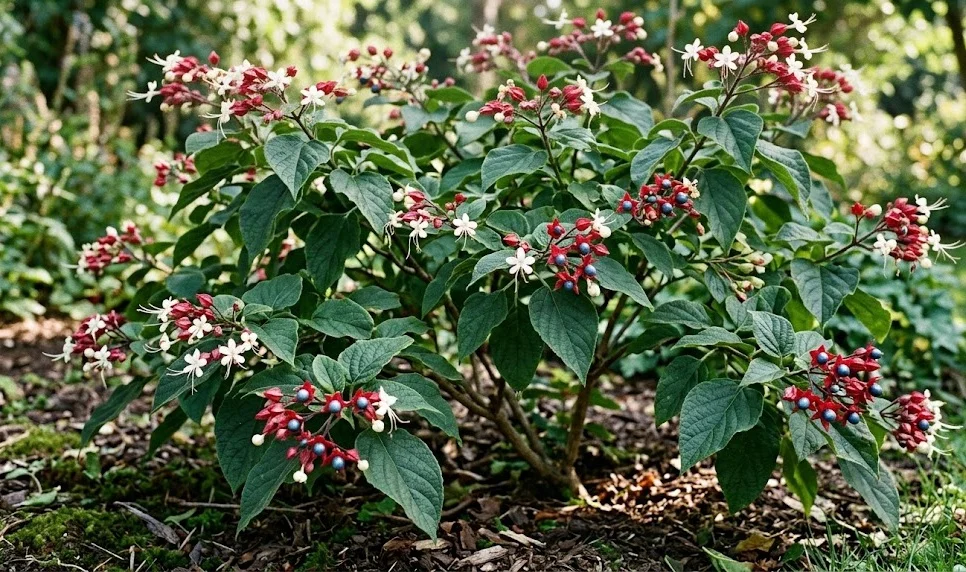
Full sun is generally the best condition for maximizing the production of the fragrant white flowers that appear in late summer. The energy from direct sunlight allows the plant to build up the necessary carbohydrate reserves for such a heavy blooming period. Sun-drenched plants also tend to have a more compact, sturdy habit with thicker stems and denser foliage. This robust structure is better able to support the weight of the berries that follow the flowers.
More articles on this topic
In regions with particularly hot summers, providing some afternoon shade can be beneficial for the overall health of the foliage. The large, soft leaves of the glorybower can transpire water very quickly when subjected to high temperatures and direct light. A bit of dappled shade during the hottest part of the day reduces the thermal stress and helps the plant maintain its vibrant green color. This balance is especially important for younger plants that are still establishing their root systems.
The intensity of light also plays a crucial role in the development of the striking metallic blue berries. Without enough light, the chemical processes that produce the vivid pigments in the calyx and fruit may be inhibited. If you find that your plant produces flowers but the berries remain pale or fail to mature, it may be a sign that it needs more light. Moving a small specimen to a brighter location can often resolve this issue and dramatically improve the autumn display.
Filtered light, such as that found under the canopy of a tall, thin-leaved tree, can provide a beautiful environment for this shrub. This type of light mimics the conditions of its native woodland edges, offering protection from the harshest rays while still providing plenty of energy. The shifting patterns of light and shadow can also create a more dynamic visual experience in the garden. This “dappled shade” is often the most forgiving environment for the harlequin glorybower.
Seasonal changes and light intensity
The angle of the sun changes significantly from summer to winter, affecting the amount of light that reaches different parts of the garden. A spot that is in full sun during the height of June may be in deep shadow by October as the sun sinks lower in the sky. When choosing a planting site, consider the path of the sun during the late summer and autumn when the plant is most active. Ensuring that the shrub receives adequate light during its peak ornamental period is the priority.
More articles on this topic
Early spring light is essential for waking the plant from its winter dormancy and stimulating the first flush of growth. As the days lengthen, the increase in light intensity signals the roots to begin taking up water and nutrients. Providing a bright, open location ensures that the new shoots develop quickly and strongly. This early momentum is vital for a successful growing season and helps the plant outcompete any nearby weeds.
During the height of summer, the primary challenge is managing the sheer intensity of the light and the associated heat. While the plant loves the energy, the combination of strong sun and dry soil can be taxing. If you notice the leaves drooping in the afternoon despite moist soil, it is a sign that the light intensity is exceeding the plant’s ability to keep itself cool. In these cases, temporary shading or increased mulching can help the plant cope with the midsummer peak.
As autumn approaches, the quality of light changes to a more golden hue, which can enhance the visual appeal of the berries. The decreasing day length signals the plant to begin shutting down its metabolic processes and preparing for winter. During this time, the plant is less reliant on intense light for growth and more focused on seed maturation. Even as the light fades, the structural form of the shrub remains an important part of the late-season landscape.
Adapting to suboptimal light conditions
If your only available planting spot is more shaded than ideal, there are several techniques you can use to help the plant succeed. Pruning back overhanging branches from nearby trees can let more light reach the shrub without moving the plant itself. Painting nearby walls a light color or using reflective mulches can also increase the amount of ambient light available to the foliage. These subtle changes can sometimes be enough to turn a struggling plant into a thriving one.
In very shady spots, the harlequin glorybower may become “stretched” as it grows toward the nearest light source. This can result in a lopsided or leggy appearance that lacks the natural beauty of the species. Regular, light pruning can help maintain a more balanced shape by encouraging branching in the lower, more shaded parts of the plant. However, be aware that you may still see a reduction in the number of flowers compared to a sun-grown specimen.
Plants grown in less-than-ideal light are often more susceptible to fungal diseases like powdery mildew because the foliage stays wet for longer. Ensuring excellent air circulation becomes even more critical in these situations to compensate for the lack of drying sunlight. Thinning the center of the shrub allows the wind to move through and remove excess moisture from the leaf surfaces. This careful management can offset some of the disadvantages of a shadier location.
Ultimately, the harlequin glorybower is a resilient and forgiving plant that will try its best to adapt to the conditions you provide. While it may not reach its full potential in a dark corner, it can still serve as an attractive green backdrop for other, more shade-tolerant plants. Understanding the limits of its adaptability allows you to set realistic expectations for its performance in your garden. A knowledgeable gardener works with the light they have to create a balanced and beautiful environment.