
The health and longevity of garden catmint are deeply influenced by how you manage its hydration and nutrient intake. While these plants are famous for their resilience, a professional approach to watering and feeding can elevate them from surviving to truly thriving. Balancing the need for moisture with the requirement for excellent drainage is the central challenge for any gardener. This article explores the nuanced techniques required to master the irrigation and fertilization of this versatile perennial.
Principles of effective irrigation
Understanding the water needs of catmint starts with recognizing its origins in regions with distinct dry and wet seasons. Once established, these plants are remarkably drought-tolerant and can survive long periods without significant rainfall. However, during their first year in the ground, they require a more consistent watering schedule to build a strong root system. The goal is to provide enough moisture to encourage growth without creating a waterlogged environment.
The best time to water your plants is in the early morning hours before the sun reaches its full intensity. This allows the foliage to dry quickly, which is essential for preventing the development of fungal diseases on the leaves. Watering at the base of the plant rather than from overhead is a professional technique that ensures the moisture reaches the roots directly. It also helps to conserve water by reducing evaporation and preventing unnecessary leaf wetness.
During the height of summer, you should monitor the soil moisture levels by checking a few inches below the surface. If the soil feels dry to the touch, it is time to provide a deep soaking that reaches the entire root zone. Avoid the temptation to give frequent, shallow waterings, as this encourages the roots to stay near the surface where they are vulnerable to heat. A thorough, deep watering once or twice a week is usually far more beneficial than daily light sprinkling.
In the autumn and winter months, the plant’s water requirements drop significantly as it enters its dormant phase. You should scale back your irrigation routine to reflect the cooler temperatures and reduced growth rate. If you live in an area with high winter rainfall, you may not need to water at all during this time. The primary danger during the cold season is excessive soil moisture, which can lead to crown rot and the death of the plant.
More articles on this topic
Soil drainage and moisture retention
Soil structure is the most important factor in determining how effectively your catmint can use the water you provide. These plants thrive in “lean” soils that allow water to move through quickly while retaining just enough for the roots. If your garden has heavy, compacted soil, the roots may struggle to breathe, leading to poor health and stunted growth. Improving the drainage of your planting site is often more important than the actual act of watering.
You can improve the moisture characteristics of your soil by adding organic matter like well-rotted compost or leaf mold. While this might seem contradictory for a plant that likes drainage, organic matter actually helps break up clay and adds structure to sandy soils. It creates a “spongy” texture that holds onto moisture in a way that is accessible to the plant but doesn’t feel saturated. This balance is the secret to growing healthy, vigorous perennials in a variety of climate conditions.
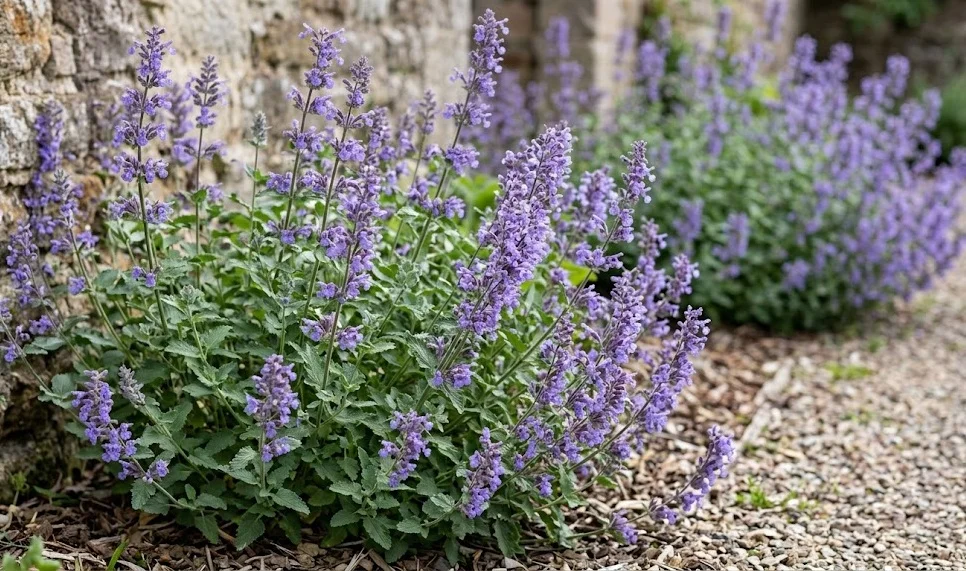
Mulching is a professional strategy used to regulate soil temperature and moisture levels throughout the growing season. A thin layer of inorganic mulch, such as gravel or crushed stone, is often preferred for Mediterranean plants like catmint. This type of mulch allows water to penetrate easily but prevents the surface from drying out too rapidly under the sun. It also keeps the base of the plant clean and reduces the chances of soil-borne diseases splashing onto the foliage.
If you are growing catmint in containers, you must be even more diligent about drainage and watering. Pots dry out much faster than the ground, so you may need to water more frequently during hot, windy weather. Ensure that your containers have large drainage holes and use a high-quality potting mix that includes perlite or grit. Never let a pot sit in a saucer of water, as this is a guaranteed way to cause root issues for these drainage-loving plants.
More articles on this topic
Nutrient management and fertilization
When it comes to feeding garden catmint, the general rule is that less is almost always more. These plants have evolved to grow in relatively poor soils and can become overgrown and unattractive if they receive too much fertilizer. High levels of nitrogen can lead to rapid, soft growth that is more susceptible to pests and diseases. A professional approach focuses on maintaining a natural balance rather than forcing growth with chemicals.
Most garden catmint plants will never need supplemental liquid fertilizers if they are grown in reasonably healthy garden soil. If you feel the need to feed them, a single application of a balanced, slow-release organic fertilizer in early spring is sufficient. This provides a steady supply of nutrients as the plant begins its new growth cycle without causing a sudden, weak surge. Always follow the manufacturer’s instructions and avoid over-applying, as this can do more harm than good.
Compost is the best “fertilizer” for catmint because it improves the overall health of the soil ecosystem. Spreading a half-inch layer of finished compost around the base of the plants each spring provides everything they need. This method mimics the natural cycle of decomposition and nutrient return found in the wild. It also supports the beneficial microbes and fungi in the soil that help the plant’s roots absorb minerals more efficiently.
Watch for signs of nutrient deficiencies, such as yellowing leaves or a complete lack of flowers, though these are rare. Often, these symptoms are actually caused by poor drainage or incorrect pH levels rather than a lack of minerals in the soil. Before adding any fertilizer, it is a good idea to perform a simple soil test to see what is actually happening underground. This scientific approach prevents you from wasting money and potentially damaging your plants with unnecessary chemicals.
Impact of watering on flowering
The way you water your catmint can have a direct impact on the quality and duration of its blooming period. Plants that are consistently stressed by extreme drought may produce fewer flowers and go to seed more quickly. By maintaining a moderate moisture level, you can help the plant sustain its energy for flower production over many weeks. A well-hydrated plant is better equipped to handle the metabolic demands of creating the nectar and pollen that attract bees.
However, overwatering can be just as detrimental to the floral display as underwatering can be. Too much water often results in lush, dark green foliage but very few of the signature purple flower spikes. It can also cause the stems to become weak and heavy, leading the plant to flop over and look messy in the center. Finding the “sweet spot” of moisture is the key to achieving that perfect, mounded look covered in blossoms.
After the first flush of flowers has faded, a light pruning followed by a thorough watering can often trigger a second bloom. This gives the plant the hydration it needs to push out new growth and develop a fresh set of flower buds. It is a common professional practice to provide a little extra care during this mid-summer transition period. This ensures the garden remains colorful and attractive well into the late summer and early autumn.
In very hot climates, the timing of your watering becomes even more critical for maintaining flower health. If the plant wilts during the day, it is losing more moisture than it can take up, which can damage the delicate petals. Providing a deep drink in the evening or early morning helps the plant recover and keep its flowers looking fresh for longer. Observing how your catmint reacts to the daily cycle of heat will help you refine your watering technique over time.
Long-term hydration strategies
As your catmint matures, it will become increasingly independent and require less frequent intervention from you. The deep root system of an established plant acts as a reservoir, allowing it to tap into moisture deep within the earth. You can slowly reduce the frequency of your watering as the years go by, trusting the plant’s natural resilience. This transition is a sign of a well-established garden that is in harmony with its environment.
Using rainwater is a professional and sustainable way to keep your garden hydrated throughout the growing season. Collecting water in barrels allows you to provide a chlorine-free source of moisture that is at the ambient temperature. Many plants, including catmint, respond better to natural rainwater than to treated municipal water from a hose. It is also an environmentally friendly choice that reduces your reliance on local water supplies during dry spells.
Consider the layout of your garden and group plants with similar water needs together, a practice known as hydrozoning. Catmint should be placed with other drought-tolerant perennials like lavender, sage, and ornamental grasses. This allows you to water an entire section of the garden at once without worrying about overwatering thirstier neighbors. It makes your maintenance routine more efficient and ensures that every plant receives exactly what it needs.
Finally, remember that the weather is always the best guide for when to pick up the watering can. A particularly rainy spring might mean you don’t need to water at all until mid-summer arrives. Conversely, a dry winter might require an occasional supplemental drink to prevent the roots from completely drying out. By staying observant and flexible, you can ensure your garden catmint remains a beautiful and healthy part of your landscape for years to come.