
Establishing a successful garden with Japanese skimmia requires a fundamental understanding of its unique biological needs and environmental preferences. This evergreen shrub is highly valued for its leathery foliage and the vibrant berries that persist throughout the colder months of the year. To ensure the plant thrives, one must consider the specific acidity of the soil and the level of shade provided by the surrounding landscape. By following professional cultivation techniques, any gardener can maintain these plants in a state of peak health for many years.
Maintaining the health of these shrubs starts with selecting the perfect location within the garden or patio area. These plants naturally evolve in woodland settings, meaning they prefer a cool and damp environment that mimics the forest floor. You should avoid areas where the soil is prone to drying out rapidly or where the wind is excessively harsh during the winter. A site with consistent moisture and protection from the afternoon sun will result in much glossier leaves and more prolific flowering.
Understanding the soil requirements is perhaps the most critical aspect of caring for this particular species. These shrubs are strictly ericaceous, which means they cannot tolerate alkaline conditions or high levels of lime in the earth. If the soil pH is too high, the plant will struggle to absorb iron, leading to a condition known as chlorosis. You can easily remedy poor soil quality by incorporating plenty of organic matter like composted bark or leaf mold before planting.
Proper nutrition and hydration cycles must be maintained throughout the growing season to support new growth. While the plant is relatively hardy once established, young specimens require consistent attention to ensure their root systems develop deeply. You should monitor the moisture levels weekly, especially during unusually dry spells in the spring or summer. Applying a specialized fertilizer designed for acid-loving plants will provide the necessary nutrients without disturbing the delicate chemical balance of the soil.
Understanding the flowering and fruiting cycle
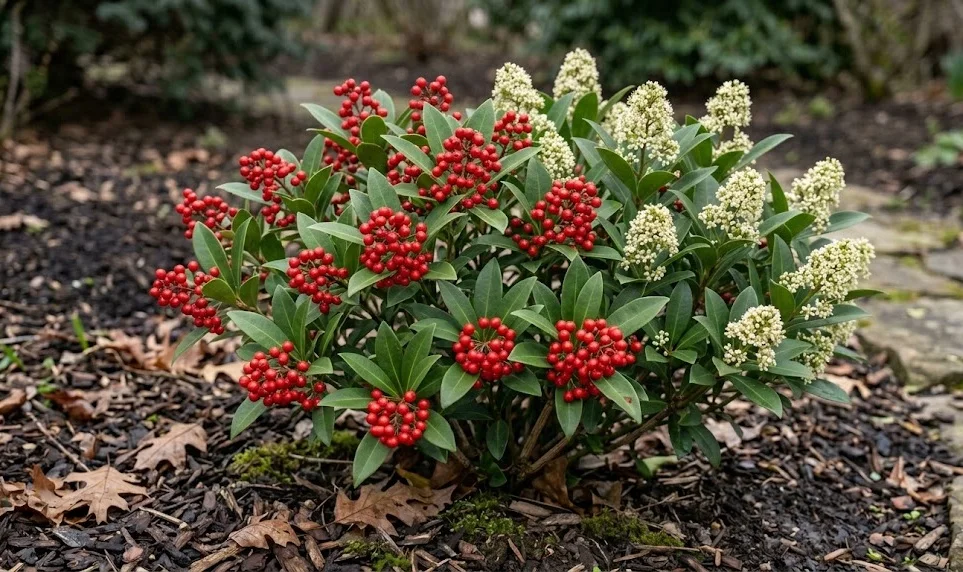
To enjoy the full aesthetic potential of Japanese skimmia, you must understand how its reproductive cycle works. Most varieties are dioecious, meaning that individual plants are either male or female and require a partner for berry production. Male plants are often chosen for their larger and more fragrant flower clusters that appear in early spring. Conversely, female plants are prized for their bright red berries, which remain decorative throughout the entire winter season.
More articles on this topic
If your goal is to have a garden filled with berries, you must plant at least one male specimen nearby to pollinate the females. A single male plant can typically provide enough pollen for several surrounding female shrubs within a reasonable distance. The pollination process is mostly handled by early-season insects that are attracted to the sweet scent of the flowers. Without this cross-pollination, the female plants will produce flowers but will fail to develop any of the characteristic red fruit.
The development of flower buds actually begins in late autumn, providing visual interest even before the winter hits. These buds often have a reddish or greenish tint and remain tightly closed during the coldest months of the year. As the temperatures begin to rise in March or April, the buds open into small, star-shaped white flowers. The contrast between the dark green leaves and the pale blossoms creates a striking visual effect in any shaded border.
After the flowering stage concludes, the female plants begin the slow process of developing their fruit. These berries start out green and gradually turn a deep, brilliant red as the autumn weather approaches. They are not typically eaten by birds immediately, which allows them to stay on the branches for a very long time. This longevity makes the shrub an essential component of a winter-interest garden, providing color when most other plants are dormant.
Managing seasonal growth and maintenance
Seasonal maintenance involves more than just watering; it requires a proactive approach to environmental changes. During the transition from spring to summer, you should keep an eye on the rate of new leaf production. Healthy plants will produce vibrant, light green shoots that eventually darken and toughen as they mature. If the new growth appears stunted or pale, it may be time to reassess the nutrient levels in the surrounding soil.
More articles on this topic
As summer progresses, the primary challenge becomes maintaining cool root temperatures during heatwaves. Deep mulching is an effective strategy to keep the ground moist and insulated from the direct heat of the sun. You should use materials like pine needles or shredded bark, as these also help maintain the necessary acidity over time. Avoid piling the mulch directly against the main stem of the shrub to prevent any potential rot issues.
When autumn arrives, the plant begins to prepare for its dormant phase while simultaneously showcasing its berries. This is the ideal time to clear away any fallen leaves from other trees that might be smothering the crown of the skimmia. Cleanliness around the base of the plant reduces the risk of fungal diseases that thrive in damp, decaying organic matter. You can also take this opportunity to check for any branches that might have been damaged during the summer months.
Winter care is generally minimal, but you should be prepared for extreme weather events such as heavy snowfall. The leathery leaves are quite sturdy, but a heavy accumulation of wet snow can cause the branches to splay or even snap. Gently brushing off excess snow with a broom can prevent structural damage to the shrub’s natural mounded shape. If the ground freezes deeply, the plant may suffer from physiological drought, so a deep watering before the first hard freeze is highly recommended.
Optimization of container cultivation
Many gardeners choose to grow Japanese skimmia in pots or decorative containers to brighten up shaded balconies. This method allows for perfect control over the soil environment, which is especially useful if your garden soil is naturally alkaline. You must select a high-quality ericaceous potting mix that provides excellent drainage while retaining sufficient moisture. Large terracotta or stone pots are excellent choices as they provide stability and help regulate temperature.
Pot-grown specimens require more frequent watering than those planted directly in the ground. Because the root volume is limited by the size of the container, the soil can dry out very quickly during breezy or warm days. You should check the moisture level by inserting a finger into the top inch of the soil every few days. If the potting mix feels dry to the touch, apply water until it begins to drain from the bottom holes.
Feeding container plants is essential because the nutrients in the potting soil are eventually depleted by the plant and through leaching. You should use a liquid fertilizer formulated for acid-loving plants every two to four weeks during the growing season. Stop all fertilization by late summer to allow the plant to harden off before the winter temperatures arrive. This schedule ensures the plant remains vigorous without producing soft, vulnerable growth late in the year.
Repotting is generally necessary every two to three years to prevent the plant from becoming root-bound. You will know it is time to move the shrub when you see roots emerging from the drainage holes or if growth slows down significantly. Choose a new container that is only slightly larger than the previous one to avoid excess soil that stays too wet. Carefully loosen the outer roots before placing the plant in its new home with fresh ericaceous compost.
Environmental stressors and physiological health
The overall health of your skimmia is directly tied to how well it can withstand environmental stressors. One common issue is leaf scorch, which occurs when the plant is exposed to too much direct sunlight or harsh winds. The leaves will develop brown, crispy edges or pale bleached spots in the center of the foliage. Moving the plant to a more sheltered, shady location usually solves this problem within a single growing season.
Another physiological concern is waterlogging, which can lead to root rot and the eventual death of the shrub. These plants need consistent moisture, but they cannot survive in soil that remains saturated for extended periods. If you notice the leaves turning yellow and dropping off, check the drainage of the site immediately. Incorporating grit or sand into the planting hole can help improve the structure of heavy clay soils.
Temperature fluctuations can also impact the plant, particularly in late spring when sudden frosts occur. While the foliage is quite hardy, the emerging flower buds can be sensitive to freezing temperatures after they have started to swell. If a hard frost is predicted after a warm spell, covering the plants with a layer of horticultural fleece can protect the future blooms. This simple precaution ensures that your spring floral display remains intact and beautiful.
Air circulation is an overlooked factor that significantly contributes to the long-term health of the evergreen foliage. Densely planted borders can sometimes limit the flow of air, creating a humid microclimate that encourages mildew. You should ensure there is enough space between the skimmia and its neighbors to allow for natural air movement. Periodically thinning out internal branches can also help keep the center of the shrub dry and healthy.
Enhancing garden aesthetics with skimmia
Integrating this shrub into a professional garden design requires an eye for texture and color contrast. The deep green, glossy leaves provide an excellent backdrop for lighter-colored perennials or silver-foliaged plants. Because it thrives in the shade, it is the perfect companion for ferns, hostas, and bleeding hearts. Placing these shrubs in groups of three or five creates a lush, structural foundation for a woodland-themed garden bed.
The winter appeal of the red berries is unmatched by almost any other shade-tolerant shrub available today. You can maximize this impact by planting them near entryways or windows where they can be enjoyed during the cold months. The berries also look fantastic when paired with other winter-interest plants like hellebores or cyclamen. This combination ensures that the garden remains vibrant and full of life even when the rest of the landscape is grey.
The fragrance of the male flowers is a hidden benefit that many novice gardeners often overlook. When the male varieties bloom in the spring, they release a scent that is reminiscent of lily of the valley. Placing these plants near a seating area or a garden path allows visitors to experience the sweet aroma as they pass by. It adds a sensory dimension to the garden that complements the visual beauty of the glossy foliage.
Finally, consider the long-term growth habit of the plant when deciding on its final position. Most varieties are slow-growing and maintain a neat, rounded shape without much intervention from the gardener. This makes them ideal for low-maintenance landscapes or as a formal hedge in a shaded courtyard. Over time, the shrub will become a reliable anchor in your garden, providing year-round beauty with very little effort.
Professional tips for longevity
Achieving a long lifespan for your Japanese skimmia involves a combination of patience and consistent observation. These plants are slow growers, so you should not expect rapid transformations within the first few years. Instead, focus on building a strong root system by keeping the soil conditions optimal and avoiding unnecessary disturbances. A well-placed plant can easily live for several decades if its basic needs are met consistently.
You should regularly inspect the undersides of the leaves for any signs of early stress or nutrient deficiencies. Catching a problem like iron deficiency early allows you to treat the soil before the plant becomes severely weakened. Keeping a garden journal can help you track the timing of flowering and berry production each year. This information is invaluable for identifying any shifts in the plant’s health that might require a change in your care routine.
Water quality is a subtle factor that can influence the longevity of ericaceous plants over many years. If you live in an area with hard tap water, the high calcium content will slowly raise the pH of your soil or potting mix. Using harvested rainwater is the best way to ensure the water remains soft and acidic for your plants. If rainwater is not available, you can occasionally use a water acidifier to neutralize the lime in your tap water.
Ultimately, the secret to a thriving Japanese skimmia is mimicking its natural mountain forest habitat as closely as possible. Provide it with shade, acidic soil, and consistent moisture, and it will reward you with stunning foliage and berries. It is a plant that respects the gardener who understands its specific requirements and provides a stable environment. With these professional practices, your skimmia will remain a centerpiece of your landscape through every season of the year.