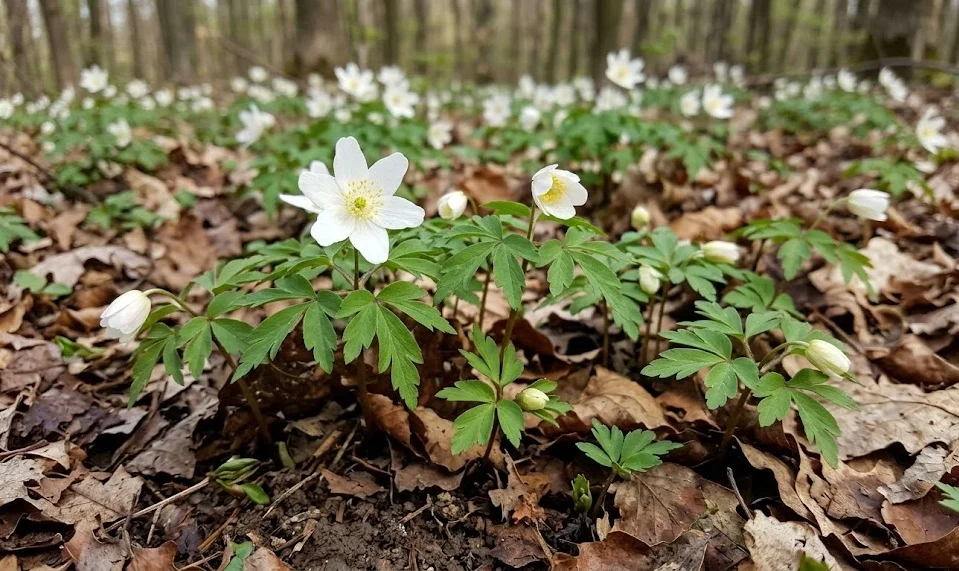

Understanding the light requirements of wood anemones is essential for anyone wishing to replicate their natural woodland charm in a domestic setting. These plants are true masters of the “spring window,” a brief period when the forest floor is flooded with sunlight before the trees overhead leaf out. To thrive, they need a specific balance of intense early-season light followed by deep summer shade. Professional gardeners must carefully choose and manage their planting sites to provide this unique and shifting light environment.
The ideal light condition for a wood anemone is often described as “dappled shade,” but this term can be somewhat misleading without further explanation. In the early spring, when the plant is actively growing and flowering, it actually benefits from a surprisingly high amount of direct sunlight. Because the deciduous trees are still bare, the forest floor receives enough energy to fuel the plant’s rapid life cycle. You should aim to place your anemones where they will be exposed to this bright, unobstructed spring sun for at least several hours a day.
As the seasons progress and the weather warms, the wood anemone’s relationship with light changes significantly. Once the tree canopy closes in late spring, the plant is suddenly protected from the harsh, drying rays of the summer sun. This transition into deep shade is a signal for the plant to begin its dormant phase and retreat underground. You must ensure that your planting site provides this essential summer protection, as direct sun during the hot months can overheat the soil and damage the dormant rhizomes.
The quality of light is just as important as the quantity when it comes to the health and aesthetics of wood anemones. Filtered light, passing through the leaves of a tall tree or a lattice fence, creates a soft and luminous environment that highlights the delicate white petals. This dappled light also prevents the soil from drying out too quickly, maintaining the cool conditions that these plants love. Observing how light moves through your garden at different times of the year will help you find the perfect spot for your anemone colonies.
Choosing the perfect garden location
When searching for the best place to plant wood anemones, the base of a large deciduous tree is almost always the premier choice. Trees like oaks, maples, or birches provide the perfect natural light cycle that these plants have adapted to over thousands of years. You should avoid planting them under evergreens, as the constant shade can be too dark in the spring and may lead to sparse flowering. The key is to find a spot that is “open” to the sky in March but “closed” and shaded by July.
More articles on this topic
If you do not have large trees in your garden, you can still create a suitable light environment using buildings or other structures. The north side of a house or a tall garden wall can provide consistent shade during the hottest part of the day while still allowing for bright morning or evening light. You should be careful to avoid sites that are too dark all year round, such as narrow alleys between buildings, as these can lead to weak and leggy growth. A balanced approach that maximizes spring light while ensuring summer shade is the professional way to site these plants.
The orientation of your garden also plays a role in how the light interacts with your wood anemone patches throughout the day. East-facing sites are often excellent, as they receive the cool morning sun but are protected from the intense heat of the afternoon. South-facing sites can be more challenging and will require more substantial shading from taller perennials or shrubs to prevent the soil from drying out. Understanding the path of the sun through your specific landscape is a vital step in successful garden planning.
You can also use companion plants to manipulate the light levels in a smaller garden or a mixed border. Taller spring bulbs can provide a bit of initial shade, while large-leaved summer perennials like Hostas can take over the shading duties later in the season. This “living canopy” mimics the structure of a forest and provides a dynamic light environment that shifts as the anemones move through their cycle. It is an elegant and effective solution for gardeners working with limited space or without the benefit of mature trees.
Managing light through the seasons
As a professional gardener, you may sometimes need to intervene to maintain the ideal light levels for your wood anemone colonies. In the early spring, you should ensure that no evergreen branches or overgrown shrubs are blocking the sunlight from reaching the ground. Pruning back competing vegetation or removing winter debris can make a significant difference in the vibrancy and timing of the blooms. This early light “boost” is what gives the plants the energy they need to produce a spectacular floral display.
More articles on this topic
If a tree is removed or a structure is built that changes the light profile of your garden, you must be prepared to help the anemones adapt. Suddenly exposing an established colony to full summer sun can lead to stress, leaf scorch, and even the death of the rhizomes. You might need to provide temporary shade using garden umbrellas or lattice screens while new plantings establish themselves. Long-term solutions could include planting new shrubs or small trees that will eventually restore the necessary shade.
The density of the canopy overhead can also be managed through professional arboricultural techniques like “thinning” or “crown lifting.” By carefully removing some of the lower branches of a tree, you can increase the amount of dappled light reaching the anemones without removing the shade entirely. This can improve the health of the plants by increasing air circulation while still maintaining the cool microclimate they require. It is a subtle way to fine-tune the environment for maximum growth and beauty.
Finally, consider the aesthetic impact of light when planning your garden layout. Wood anemones have a luminous quality that is most apparent when they are back-lit by the low spring sun. Positioning them where they can catch the light of the “golden hour” in the morning or evening will make the white flowers appear to glow against the dark soil. This thoughtful approach to light design transforms a simple planting into a professional-grade landscape feature that captures the magic of the spring season.
Signs of light-related stress
Being able to recognize when a wood anemone is not receiving the correct amount of light is a vital skill for any serious gardener. If the plants are growing in a location that is too dark, you will notice that the stems become unusually long and thin as they “reach” for the light. The flowers may be sparse or completely absent, and the foliage will lack its characteristic healthy green color. This “etiolation” is a clear sign that the colony needs to be moved to a brighter spring location to regain its vigor.
Conversely, symptoms of too much light are often seen later in the spring or during the summer months. Leaf scorch, appearing as brown or bleached patches on the foliage, is a common sign that the sun is too intense for the delicate tissues. You may also see the plants going dormant much earlier than expected, a defensive move to protect the rhizome from dehydration. If this happens repeatedly, the plant will eventually lose its energy reserves and may fail to return in subsequent years.
The color and size of the leaves can also provide subtle clues about the light environment. In ideal conditions, the leaves are compact and a deep, vibrant green, indicating efficient photosynthesis. If the leaves are unusually small or have a yellowish tint, it could suggest that the plant is stressed by either too much or too little light. By observing these changes and comparing them across different parts of your garden, you can gain a deeper understanding of the microclimates you are managing.
Regularly assessing the health of your anemone patches and being willing to move them if they are struggling is part of professional maintenance. Because they are relatively easy to transplant during their dormant phase, you can experiment with different locations until you find the perfect light balance. Once you find that “sweet spot,” the colony will reward you by expanding rapidly and producing a reliable, beautiful display every spring. Taking the time to master the light requirements of wood anemones is a journey that leads to a more harmonious and successful garden.