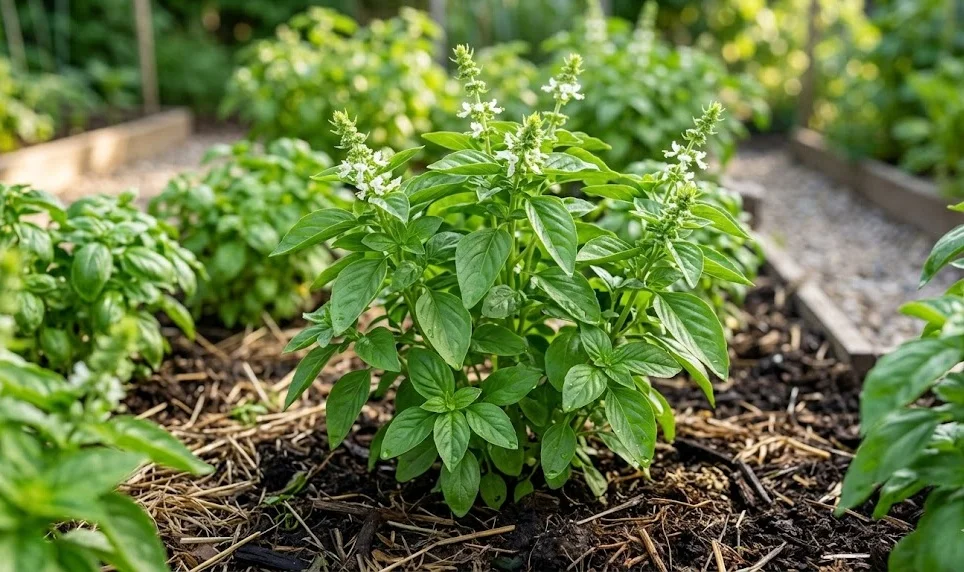

As a heliophilic plant originating from tropical and subtropical regions, basil has very specific and demanding light requirements for optimal development. Light is not merely a source of energy for the plant but also a signal that regulates growth habits, leaf size, and the production of aromatic compounds. Professional growers understand that the quality, intensity, and duration of light must be carefully managed to prevent issues like leggy stems or reduced flavor profiles. Mastering these lighting dynamics is a fundamental component of successful basil cultivation in any environment.
Understanding light intensity and duration
Basil thrives best when it receives at least six to eight hours of direct, high-intensity sunlight every day. In its natural habitat, the plant is exposed to full sun, which drives the rapid photosynthesis needed for its fast growth rate. Intense light also triggers the production of essential oils, such as linalool, which are the plant’s natural defense against ultraviolet radiation. If the light intensity is too low, the plant will prioritize stem elongation over leaf production, resulting in a weak and unproductive specimen.
The duration of the light period, or photoperiod, also plays a crucial role in the development of the basil plant. While it is not a strictly photoperiod-sensitive plant like some others, longer days generally encourage more robust vegetative growth. In a professional setting, maintaining a light cycle of 14 to 16 hours is often used to maximize yield and prevent the plant from entering its reproductive phase too early. Providing a consistent daily light schedule helps stabilize the plant’s internal biological clock and metabolic processes.
Seasonal variations in light can significantly impact the health and productivity of basil grown in temperate climates. During the peak of summer, the sun’s angle and intensity are ideal for basil, but in early spring or late autumn, the light may be too weak to sustain high-quality growth. Cultivators must be aware of how the path of the sun changes across their garden or windowsill throughout the year. Identifying the brightest spots in a given location is the first step in planning a successful basil planting strategy.
In areas with extremely high temperatures and intense solar radiation, some varieties of basil may actually benefit from light afternoon shade. While the plant loves light, excessive heat combined with direct sun can lead to wilting and leaf scorch, especially in young or water-stressed plants. Professional growers often use shade cloth or strategic positioning near taller plants to provide a brief respite from the most punishing rays of the day. This balance ensures that the plant gets the energy it needs without suffering from thermal stress.
More articles on this topic
Utilizing artificial lighting systems
When natural sunlight is insufficient, such as in indoor gardens or during the winter months, artificial lighting becomes an essential tool for the professional grower. High-output fluorescent lamps, particularly T5 bulbs, have long been a standard for starting basil seedlings and maintaining herb gardens. These lights provide a broad spectrum of light that closely mimics natural sunlight without generating excessive heat that could damage the foliage. They are most effective when placed just 10 to 15 centimeters above the top of the plants.
Light Emitting Diode (LED) technology has revolutionized indoor basil cultivation by providing high-intensity light with incredible energy efficiency. Modern LED grow lights can be tuned to specific wavelengths, such as blue light for vegetative growth and red light for structural development. Professional indoor systems often use a “full-spectrum” LED array that includes a balance of all necessary wavelengths for a complete life cycle. These systems allow for year-round production of high-quality basil regardless of the external weather conditions.
The distance between the light source and the basil canopy is a critical variable that must be monitored daily as the plants grow. If the lights are too far away, the intensity drops off significantly according to the inverse square law, leading to leggy and weak plants. Conversely, if the lights are too close, the heat—even from LEDs—can cause localized drying or “bleaching” of the top leaves. Regularly adjusting the height of the lighting rig ensures that the plants always receive the optimal “photon flux” for their current stage of growth.
Reflective surfaces can be used to maximize the efficiency of an artificial lighting setup by bouncing light back onto the sides and lower leaves of the plants. Using Mylar, white plastic, or even flat white paint on the surrounding walls can significantly increase the total light available to the basil. This technique helps ensure that the entire plant, not just the top set of leaves, is actively photosynthesizing. Professional grow tents often incorporate these reflective materials to create a highly controlled and efficient light environment.
More articles on this topic
Symptoms of light-related stress
Identifying the signs of insufficient light is a key skill for any professional horticulturalist caring for basil. The most common symptom is “etiolation,” where the stems become long, thin, and pale as the plant searches for a light source. The leaves on an etiolated plant are usually smaller, spaced further apart on the stem, and may have a lighter green color than normal. This structural weakness makes the plant more likely to collapse under its own weight or succumb to pests and diseases.
Excessive light can also cause stress, although it is less common for a sun-loving plant like basil. If a plant moved from a low-light environment into direct, intense sun too quickly, it may suffer from “photo-oxidation” or leaf bleaching. The affected leaves turn white or translucent as the chlorophyll is destroyed by the intense energy, and the tissue may eventually become necrotic. This is why a gradual acclimation period, known as hardening-off, is so critical for the health of the plant.
The orientation of the leaves can provide subtle clues about the light environment and the plant’s current state of health. Basil leaves will often tilt or move slightly throughout the day to track the sun and maximize their exposure to light. If the leaves are consistently drooping or pointing downward despite adequate water, it may be a sign of light stress or heat overload. Observing these “nyctinastic” movements allows a grower to fine-tune the position of the plants for maximum comfort and efficiency.
Uneven light distribution can lead to a lopsided growth habit, where one side of the plant is lush and the other is sparse and weak. This is a common issue for basil grown on windowsills or against solid walls where light only comes from one direction. To maintain a symmetrical and healthy plant, professionals recommend rotating the containers by 90 degrees every few days. This ensures that all sides of the basil receive equal energy and encourages a more balanced and aesthetically pleasing form.
Advanced light management techniques
Professional greenhouse operators often use supplemental lighting to “extend the day” during the darker months of the year. By turning on lights for a few hours before sunrise and after sunset, they can maintain a summer-like photoperiod year-round. This practice keeps the basil in a state of continuous vegetative production, allowing for a steady supply of herbs for the market. Careful monitoring of energy costs versus plant growth rates is part of the professional management of these systems.
Managing “light quality”—the specific balance of wavelengths—is an advanced technique used to influence the chemical composition of the basil. Research has shown that exposing basil to higher levels of blue light can increase the density of the aromatic glands on the leaf surface. Some growers use a “UV-B boost” in the final stages of growth to further stimulate the production of protective essential oils and enhance the flavor. These precision lighting recipes allow for the creation of a premium product with a superior sensory profile.
The use of “inter-lighting” is another professional strategy where light sources are placed within the canopy rather than just above it. In very large or bushy basil plants, the lower leaves often receive very little light and can become a drain on the plant’s overall energy. By placing small LED strips or reflective panels inside the foliage, growers can keep the entire plant productive from top to bottom. This technique is particularly useful in high-density commercial growing operations where space is at a premium.
Finally, understanding the relationship between light and other environmental factors like temperature and CO2 levels is essential for peak performance. As light intensity increases, the plant’s metabolic rate goes up, meaning it will require more water, nutrients, and carbon dioxide to keep up. Professional systems often coordinate these variables using automated controllers to ensure that none of them become a bottleneck for growth. This holistic approach to light management is what distinguishes a professional cultivation from a simple garden project.