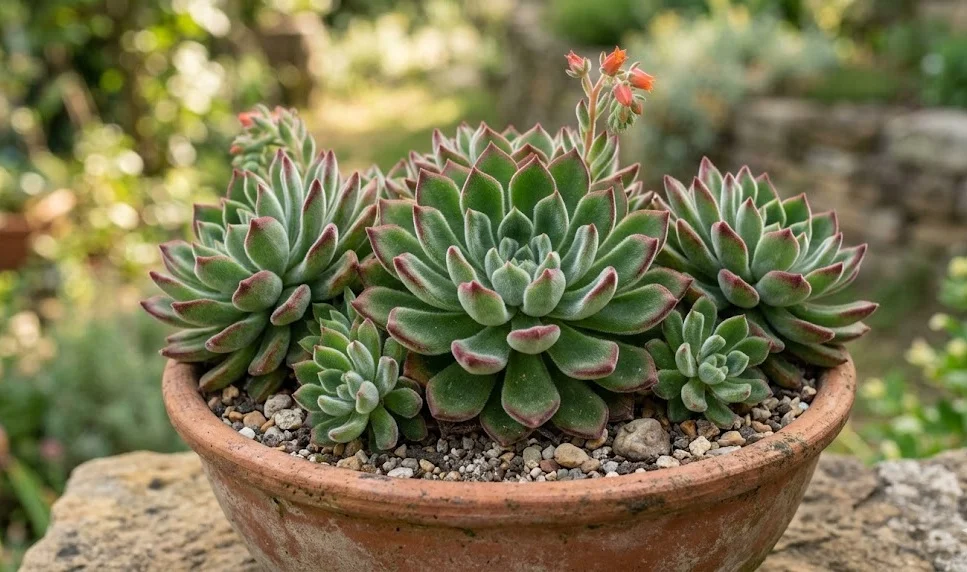

Watering a plush succulent is perhaps the most misunderstood aspect of its care, yet it is the most critical for long-term health. You must follow the “soak and dry” method, which involves watering the plant deeply until liquid runs out of the drainage holes. After this, you should wait until the soil is completely dry from the top to the bottom before you even consider watering again. This cycle mimics the natural rainfall patterns of its native habitat, where heavy storms are followed by long periods of drought.
The physical structure of the soil plays a massive role in how you should manage your watering schedule throughout the year. You should check the moisture level by sticking your finger or a wooden skewer deep into the pot to ensure no dampness remains. If the skewer comes out clean and dry, it is usually safe to proceed with another thorough watering session. Never water on a fixed schedule like “every Monday,” as the plant’s needs change based on the weather and humidity.
You should always aim the water at the base of the plant and avoid getting the velvet-covered leaves wet whenever possible. The fine hairs on the foliage can trap water droplets, which can act like tiny magnifying glasses and burn the leaves under the sun. Furthermore, moisture trapped in the crown of the plant is a leading cause of rot, which can kill a succulent within days. Professionals often use a watering can with a long, thin spout to deliver water precisely where it is needed most.
During the summer months, you will find that the soil dries out much faster, requiring more frequent checks on your part. However, you must still ensure the “dry” part of the cycle is respected to prevent the roots from becoming waterlogged. In the winter, you should significantly reduce watering as the plant enters a period of dormancy and its metabolic rate drops. Over-watering during the cold months is the most common reason why these plants fail to survive until spring.
Avoiding the dangers of crown rot
Crown rot is a silent killer that often starts at the center of the plant where the leaves are most tightly packed. You should be vigilant about any standing water that might accidentally land in this sensitive area during your maintenance routine. If you do notice a stray drop of water in the center, you can use a straw to gently blow it away or a paper towel to blot it up. Taking these few seconds of extra care can save the entire specimen from a slow and unsightly death.
More articles on this topic
The symptoms of rot are often not visible until the damage is already extensive and difficult to reverse. You might notice that the leaves at the base of the plant are becoming translucent, yellow, or mushy to the touch. If the center of the rosette turns black or smells slightly fermented, the rot has likely reached the main stem. At this stage, your best option is often to salvage any healthy leaves for propagation before the entire plant is lost.
To prevent rot, you should ensure that the plant has excellent air circulation around its base and between its leaves. You should avoid overcrowding your succulent collection, as this can create pockets of humid air that encourage the growth of pathogens. If you live in a particularly humid climate, you might need to use a small fan to keep the air moving in your indoor garden. Proper spacing is a simple but effective professional technique to keep your plants dry and healthy.
Another way to protect the crown is to use a top dressing of inorganic material like gravel or decorative stones. You should spread a thin layer of these materials over the soil surface to create a barrier between the damp earth and the lower leaves. This prevents the foliage from sitting directly on wet soil, which is a common entry point for rot-causing fungi. Not only does this provide a cleaner look, but it significantly increases the survival rate of the plant.
Nutrient requirements for vibrant growth
While succulents are adapted to nutrient-poor soils, a little boost during the growing season can produce spectacular results. You should only fertilize your plush plant during the spring and summer when it is actively producing new leaves and stems. Providing nutrients during the winter dormancy can actually harm the plant by forcing growth when it should be resting. A well-timed feeding schedule ensures that the plant has the resources it needs to maintain its vibrant colors and thick leaves.
More articles on this topic
The type of fertilizer you choose should be specifically formulated for cacti and succulents, which typically have a lower nitrogen content. You should look for a balanced mix that includes essential micronutrients like magnesium and potassium to support overall cellular health. High-nitrogen fertilizers can cause rapid but weak growth, making the plant more susceptible to pests and physical damage. A professional approach involves quality over quantity when it comes to supplementing the plant’s diet.
It is a common practice among experienced gardeners to dilute the fertilizer to half or even a quarter of the strength recommended on the package. You should always err on the side of caution, as succulents are very sensitive to fertilizer burn which can damage the delicate root system. Applying a weak solution more frequently is generally better than one strong dose that might shock the plant. Think of fertilization as a subtle supplement rather than a primary food source for your succulent.
Before you apply any liquid fertilizer, you should make sure the soil is already slightly damp from a regular watering. You should never apply fertilizer to bone-dry soil, as the concentrated chemicals can cause immediate and severe damage to the parched roots. By pre-moistening the substrate, you ensure that the nutrients are distributed more evenly and are absorbed more safely. This small step in your routine will make a noticeable difference in the long-term vitality of your collection.
Slow-release vs liquid fertilizers
Choosing between slow-release granules and liquid fertilizers depends on your personal gardening style and the needs of your specific plants. You can use slow-release pellets by mixing them into the soil during repotting or sprinkling them on the surface once a year. These granules gradually break down and provide a steady, low-level supply of nutrients over several months. This is an excellent option for those who prefer a “set it and forget it” approach to plant nutrition.
Liquid fertilizers, on the other hand, offer much more precise control over exactly when and how much your plant is fed. You can adjust the frequency and strength of the application based on how the plant is responding to its environment. This flexibility is highly valued by professional growers who want to fine-tune their plants for exhibitions or photography. Liquid feeding allows for immediate nutrient uptake, which can be beneficial during a sudden burst of growth in late spring.
Regardless of the method you choose, you should keep a simple log of when you last fed your plants to avoid over-fertilization. You will find that keeping track of these details helps you understand the long-term growth patterns of your plush succulent. If you see signs of salt buildup, such as a white crust on the soil or the pot, you should flush the soil with plain water. Balancing the use of fertilizers with regular flushing keeps the substrate healthy and prevents chemical imbalances.
Some gardeners also experiment with organic options like compost tea or very diluted seaweed extract. You should ensure that any organic fertilizer is properly processed and free of pathogens that could introduce rot to your succulent. Organic choices can improve the overall soil biology and provide a more complex range of nutrients than synthetic options. However, they should still be used sparingly and with the same caution as any other specialized succulent food.
Seasonal feeding schedules and strategies
Establishing a clear seasonal strategy for watering and fertilizing is the hallmark of an expert succulent caretaker. You should start your feeding program in early spring, just as you notice the first signs of new growth at the center of the rosettes. This initial boost provides the necessary energy for the plant to recover from winter and start building new tissues. One or two light feedings during the spring are usually sufficient to set the plant on the right track for the year.
As the heat of mid-summer arrives, some succulents may enter a brief period of semi-dormancy to protect themselves from extreme temperatures. You should observe your plant closely during this time and reduce both watering and fertilizing if you notice growth has slowed down. Pushing a plant with extra nutrients when it is trying to survive a heatwave can lead to stress and unexpected collapse. Your role is to work with the plant’s natural rhythm rather than trying to override it with chemicals.
In late summer and early autumn, you can provide one final light feeding to help the plant strengthen its tissues before the cold sets in. You want the plant to be as robust as possible so it can withstand the lower light levels and cooler temperatures of the winter months. After this final application, you should stop all fertilization entirely until the following spring. This clear boundary between the active season and the rest period is essential for the long-term health of the species.
Finally, you should always remember that a succulent can survive much longer without fertilizer than it can with too much of it. You should treat nutrition as a secondary concern compared to proper lighting and correct watering techniques. If your plant looks healthy and is growing at a steady pace, it may not even need supplemental feeding at all. Trust your observations and the visual feedback from the plant to guide your decisions throughout the gardening year.