
Proper hydration and nutrient management are the twin pillars of a successful gardening strategy for these perennials. You must understand that while these plants can tolerate some neglect, they truly shine when their basic needs are met. Water provides the medium for nutrient transport, while fertilizer provides the raw materials for growth and flower production. Your ability to balance these two elements will determine the quality and quantity of your summer blooms.
The first rule of watering is to observe the plant and the soil rather than strictly following a calendar. You should feel the soil several inches below the surface to determine if the roots actually need more moisture. Overwatering can be just as damaging as a drought, as it leads to root suffocation and fungal pathogens. Your intuition as a gardener will grow as you learn to recognize the subtle signs of thirst in your plants.
Applying fertilizer requires a cautious approach to avoid burning the roots or creating excessive, weak foliage growth. You should always follow the manufacturer’s instructions on the packaging to ensure you are using the correct concentration. It is better to provide smaller, more frequent doses of nutrients than one massive application that could overwhelm the plant. Your goal is to provide a steady supply of energy throughout the entire active growing period.
Integration of these two tasks into your regular routine will make your garden chores much more manageable and effective. You should ideally water your plants early in the morning so the moisture can penetrate deeply before the sun gets too hot. This timing also allows the foliage to dry out quickly, which is a major factor in preventing many common leaf diseases. Your garden will thrive when you establish a consistent and thoughtful rhythm of care.
Establishing a watering schedule
The amount of water your plants need will fluctuate greatly depending on the current weather and the stage of growth. You should plan to provide about one inch of water per week, including any natural rainfall that might occur. During periods of intense heat or high winds, you might need to increase this amount to keep the soil from drying out. Your monitoring of the local weather report will help you stay ahead of the plant’s needs.
More articles on this topic
Developing a routine is helpful, but you must remain flexible enough to adapt to changing environmental conditions. You should avoid watering every single day for short periods, as this encourages shallow root systems that are more vulnerable. Instead, provide deep soakings once or twice a week to encourage the roots to grow deep into the cooler earth. Your plants will become much more drought-tolerant and resilient if they have a deep and expansive root structure.
The type of soil you have will also play a significant role in how often you need to bring out the garden hose. Sandy soils drain very quickly and will require more frequent attention than heavy clay soils that hold onto moisture. You should observe how long the earth stays damp after a heavy watering or a rainstorm to gauge its holding capacity. Your understanding of your unique soil profile is essential for creating an effective irrigation plan.
In the autumn, you should begin to taper off your watering as the days get shorter and the temperatures begin to drop. The plants are entering a state of dormancy where they do not need as much moisture to maintain their metabolic functions. Providing too much water during the winter months can lead to root rot and other issues in cold, damp soil. Your seasonal adjustments will help the plants transition safely into their winter rest period.
Techniques for efficient hydration
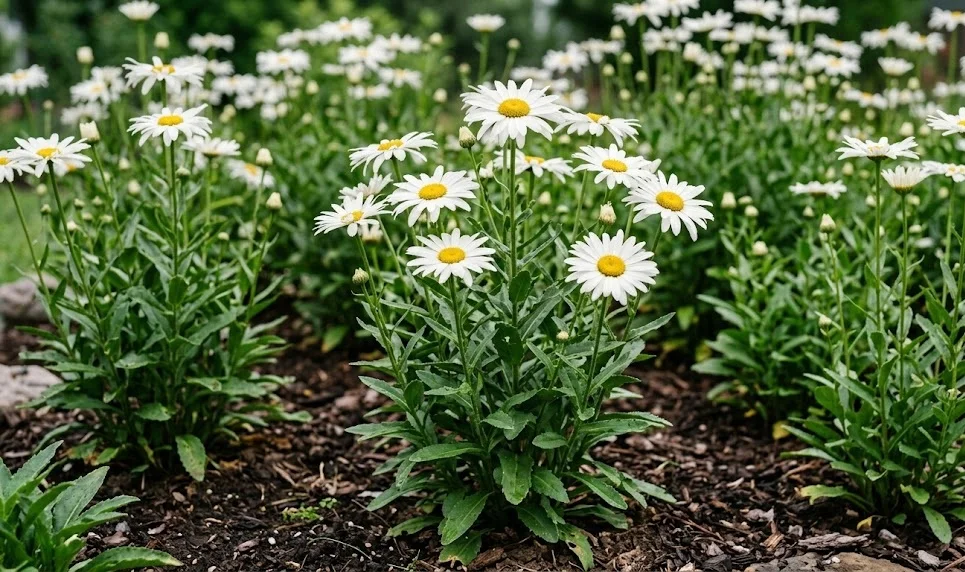
The way you apply water is just as important as the amount of water you actually provide to the garden bed. You should aim the stream of water directly at the base of the plant rather than spraying the leaves from above. Wet foliage is a primary breeding ground for powdery mildew and other fungal infections that can ruin the look of your daisies. Your precision in application will keep the leaves clean and the roots well-hydrated.
More articles on this topic
Using a soaker hose or a drip irrigation system is one of the most efficient ways to water a large floral border. These systems deliver moisture slowly and directly to the soil, which minimizes evaporation and runoff during the process. You can even set these systems on a timer to ensure your plants are watered at the optimal time every morning. Your investment in irrigation technology will save you time and reduce your overall water consumption.
If you prefer to water by hand, you should use a watering can or a hose with a gentle shower attachment. You must be patient and allow the water to sink into the soil rather than letting it run off the surface of the ground. It often helps to water a small area, move to the next, and then return to the first area for a second soaking. Your patience will ensure that the moisture reaches the deep roots where it is needed most.
Mulching the soil around your plants is another technique that drastically improves the efficiency of your watering efforts. You should maintain a two-inch layer of organic material to help block the sun and reduce the rate of evaporation. This layer also keeps the soil temperature more stable, which reduces the thermal stress on the root system during heatwaves. Your mulch will act as a natural sponge that helps keep the environment consistently moist for longer periods.
Understanding nutrient requirements
Daisies are not heavy feeders, but they do require a balanced mix of nitrogen, phosphorus, and potassium to perform their best. You should look for a fertilizer that has an equal ratio of these three main elements, such as a 10-10-10 formula. Nitrogen promotes healthy green leaves, while phosphorus is essential for strong root development and abundant flower production. Your choice of product should reflect the specific needs of the plant during its different growth stages.
Micronutrients like magnesium, iron, and calcium are also important for the overall health and color of your perennials. You should ensure that your soil has a healthy level of organic matter, which naturally provides these trace elements over time. If your plants look yellow despite adequate watering, it might be a sign of a specific nutrient deficiency in the earth. Your ability to read the signs given by the foliage will help you diagnose and fix soil problems.
The pH level of your soil affects the availability of these nutrients to the roots of your flowering plants. You should test your soil every few years to ensure it remains in the neutral range where most nutrients are easily absorbed. If the soil becomes too acidic or too alkaline, the nutrients will be locked away and the plant will suffer regardless of how much you fertilize. Your management of the soil chemistry is the foundation of a successful long-term gardening strategy.
Applying fertilizer at the right time is the key to maximizing its effectiveness and minimizing any potential waste or runoff. You should provide the first dose in early spring when the new green shoots first appear from the ground. A second application can be done in the middle of summer to help the plant sustain its blooming efforts during the heat. Your timing will ensure that the nutrients are available when the plant is most active and hungry.
Organic versus synthetic fertilizers
Many professional gardeners prefer using organic fertilizers because they improve the long-term health and structure of the soil. You should consider using materials like compost, well-rotted manure, or bone meal to feed your flower beds naturally. These products break down slowly, providing a steady stream of nutrients over many months rather than a sudden burst. Your soil will become a living ecosystem that supports many beneficial organisms that help your plants grow.
Synthetic fertilizers are a good option for those who need a quick and precise response to a specific nutrient problem. You should be careful with these products as they can easily burn the delicate roots if they are applied too heavily. They do not improve the soil structure and can sometimes lead to a buildup of salts if used exclusively for many years. Your decision to use synthetic options should be balanced with regular additions of organic matter to the garden.
Liquid fertilizers are very convenient for providing a quick boost to plants that are already in bloom during the summer. You should apply these solutions to the soil after a light watering to ensure they are absorbed quickly and don’t wash away. They are especially useful for plants growing in containers where nutrients are leached out of the soil more rapidly. Your use of liquid supplements will help keep your daisies looking vibrant during the peak of the season.
Ultimately, the best approach is often a combination of both organic and synthetic methods tailored to your specific garden needs. You should use organic compost as your primary source of nutrition and supplement with specialized products when necessary. This balanced strategy ensures that your soil remains healthy and your plants receive the specific elements they need for peak performance. Your flexibility in choosing the right tools for the job will make you a more successful and knowledgeable gardener.
Signs of over and under feeding
Recognizing when your plants have had too much or too little fertilizer is a skill that comes with time and careful observation. You should look for dark green, lush foliage that lacks flowers as a sign that you have provided too much nitrogen. This can make the stems soft and more prone to falling over or being attacked by sap-sucking insects. Your response should be to stop fertilizing and allow the plant to use up the excess nutrients in the soil.
If your plants have pale, yellowish leaves and seem to be growing very slowly, they might be suffering from a lack of nutrients. You should also check the size and frequency of the flowers, as a lack of phosphorus often leads to poor blooming. A light application of a balanced fertilizer can usually fix these issues within a few weeks of the first treatment. Your quick action will help the plant recover its strength and return to its normal growth pattern.
Leaf burn is another common sign that you have applied too much synthetic fertilizer or applied it too close to the roots. You should look for brown, crispy edges on the leaves that appear shortly after you have fed the garden bed. If this happens, you should flush the soil with plenty of fresh water to help dilute the excess salts and protect the roots. Your vigilance will prevent permanent damage to your valuable perennial collection.
Keeping a garden journal can help you track your fertilizing schedule and the subsequent reactions of your various plants. You should note down the date, the type of fertilizer used, and any changes you see in the foliage or flowers over the next month. This data will help you refine your approach and avoid making the same mistakes in future growing seasons. Your record-keeping is a professional habit that will lead to more consistent and predictable results in your landscape.