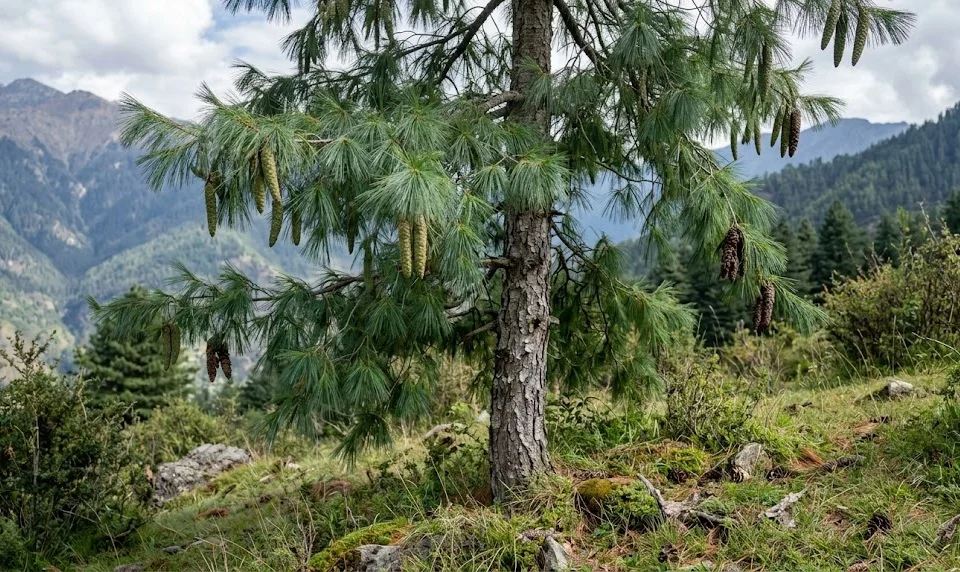

Pruning the Himalayan white pine is an art form that requires a delicate touch and a professional understanding of its growth habits. Unlike many deciduous trees that can be cut back aggressively, pines have a more limited ability to regenerate from old wood, making every cut a permanent decision. When done correctly, pruning enhances the tree’s natural weeping form and maintains its structural integrity for decades. This guide details the technical and aesthetic principles of pruning this majestic conifer to keep it healthy and beautiful.
Structural pruning and crown management
The primary goal of structural pruning is to create a strong, stable framework that can support the tree’s massive size as it matures. You should focus on maintaining a single, dominant central leader to ensure the tree grows straight and develops its iconic pyramidal shape. If you notice a competing “co-dominant” stem developing, you should remove or significantly shorten it while the tree is still young. This prevents the formation of weak bark inclusions that could lead to the trunk splitting during a storm.
Thinning the crown is another essential technique that improves air circulation and light penetration through the dense layers of needles. You should selectively remove some of the smaller, interior branches that are being shaded out and are no longer productive for the tree. This process makes the canopy more “transparent,” which not only looks more elegant but also reduces the wind resistance of the tree. A thinned canopy is far less likely to suffer from branch breakage during high winds or heavy snow loads.
When you are removing a branch, you must always make the cut just outside the branch collar—the slightly swollen area where the limb meets the trunk. You should never make “flush cuts” that remove the collar, as this prevents the tree from properly sealing the wound with callus tissue. Conversely, leaving long stubs is equally problematic, as the dead wood can become an entry point for wood-rotting fungi. Precision in your cutting technique is the best way to protect the tree from long-term health issues.
For a species with such long and graceful branches, “limbing up” or removing the lowest branches should be done sparingly and only for practical reasons. You should avoid the “poodle look” by only removing the bottom limbs if they are interfering with traffic, structures, or essential garden maintenance. If you must remove lower branches, do so gradually over several years to avoid shocking the tree. Maintaining the lower canopy as long as possible preserves the natural, grounded appearance of this impressive conifer.
More articles on this topic
Timing and hygiene for professional pruning
The best time to prune a Himalayan white pine is in the late winter or very early spring, while the tree is still dormant. You should complete your major structural pruning before the sap begins to flow and the new “candles” start to expand. Pruning during dormancy minimizes the loss of energy and reduces the risk of attracting certain pests that are drawn to the scent of fresh pine resin. It also provides a clear view of the tree’s architecture, as the form is not obscured by the rapid growth of spring.
“Candling” is a specific technique used in the late spring to control the length of the new growth and increase the density of the needles. You should wait until the new growth tips have fully elongated but before the needles have started to unfurl. By breaking or cutting these candles in half, you encourage the tree to produce more compact growth and a bushier appearance. This is a common practice for trees in smaller gardens where space is limited and a more refined look is desired.
Hygiene is paramount when pruning to prevent the accidental transmission of diseases between trees. You should sterilize your pruning shears, saws, and loppers with a solution of seventy percent alcohol or a ten percent bleach mixture between every specimen. This is especially important if you are removing wood that appears diseased or is showing signs of cankers. Using sharp, high-quality tools also ensures clean cuts that heal faster and more cleanly than ragged, torn wood.
You should avoid pruning during periods of extreme heat or drought, as the tree is already under significant physiological stress. Likewise, late-autumn pruning should be avoided, as it can stimulate a late flush of growth that will not have time to harden off before the winter. By following the tree’s natural internal clock, you ensure that your maintenance activities support its overall health rather than undermining it. Professional timing is about working in harmony with the plant’s biology.
More articles on this topic
Correcting damage and aesthetic shaping
Storm damage is an unfortunate reality for large trees, and knowing how to respond is a key part of your care routine. You should remove any broken, hanging, or split branches as soon as possible to prevent further tearing of the bark and to eliminate safety hazards. When dealing with large limbs, use the “three-cut method” to prevent the weight of the branch from stripping the bark down the trunk as it falls. This professional technique ensures that the final pruning cut is clean and the surrounding tissue remains intact.
Aesthetic shaping should always follow the natural habit of the Himalayan white pine rather than trying to force it into an artificial form. You should look for ways to highlight the weeping nature of the branches by removing small, crossing limbs that clutter the visual lines. The goal of aesthetic pruning is to make the tree look like a “better version of itself,” not like something that has been heavily managed. A well-pruned tree should not look like it has been pruned at all to the casual observer.
For trees that have become too large for their space, “drop-crotch” pruning can be used to reduce the height or spread without the damaging effects of topping. You should cut back the main stems to a large lateral branch that is at least one-third the diameter of the limb being removed. This allows the lateral branch to take over as the new leader and maintains a more natural appearance while achieving the necessary size reduction. This is a far more professional and sustainable approach than simply cutting off the top of the tree.
Finally, remember that less is often more when it comes to pruning these slow-to-react conifers. You should take a step back frequently to evaluate the tree from a distance and ensure you are achieving the desired effect. It is easy to remove a branch, but it takes years or even decades to grow it back. By approaching the task with respect and a clear plan, you ensure that your Himalayan white pine remains a majestic and healthy center-piece of the garden.