
In the world of ornamental succulents, few factors are as influential as the quality and quantity of light. For the wingpod purslane, light is the primary engine that drives everything from its compact growth habit to its spectacular flowering performance. Understanding how to manage this resource is the key to unlocking the full potential of the species in any garden or balcony setting. As a professional, one must learn to read the subtle signals the plant sends regarding its illumination levels.
The necessity of full sun exposure
To see the wingpod purslane at its absolute best, it must be placed in a location that receives full sun for the majority of the day. In botanical terms, “full sun” means at least six to eight hours of direct, unfiltered sunlight. This intense light provides the energy needed for the plant to produce its fleshy leaves and continuous stream of flowers. Without this level of exposure, the plant will struggle to maintain its characteristic vibrancy and health.
The intensity of the light is just as important as the duration when it comes to flowering. In the early morning and late afternoon, the sun’s rays are less intense, so the hours of midday sun are the most valuable. These peak hours are when the plant’s photosynthetic activity is at its highest, fueling the development of new buds. A south-facing garden bed or an unshaded balcony is the ideal environment for these sun-loving succulents.
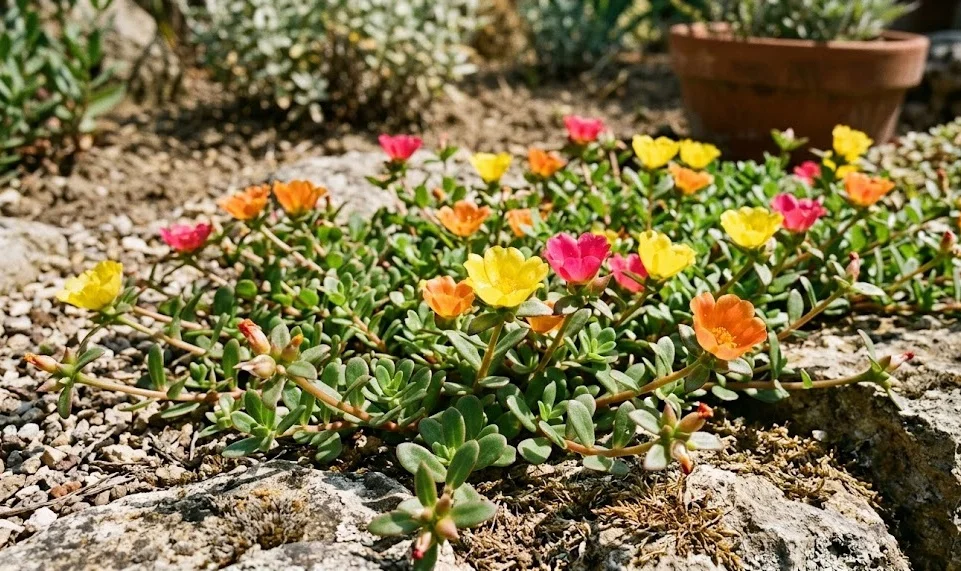
One of the most fascinating aspects of this plant is how its flowers respond directly to the presence of light. The blooms typically open wide in the morning as the sun hits them and close up tightly in the evening or during heavy overcast. This phototropic behavior ensures that the delicate reproductive parts are only exposed when the conditions are best for pollinators. It is a beautiful natural demonstration of the plant’s intimate relationship with the sun.
When the light levels are optimal, the wingpod purslane will grow in a tight, dense mat or a full, cascading mound. The stems will be thick and strong, and the leaves will be closely spaced along the branches. This compact form is not only more attractive but also makes the plant more resilient to wind and physical handling. Achieving this professional look is entirely dependent on providing the highest possible light levels throughout the growing season.
More articles on this topic
Managing light in suboptimal conditions
While the wingpod purslane is a sun-worshipper, many gardeners have to work with environments that are less than perfect. If you only have a partially shaded area, you can still grow these plants, but you must adjust your expectations. In lower light, the stems will naturally stretch as the plant tries to find more sun, a process known as etiolation. This results in a “leggy” appearance with more space between the leaves and fewer flowers overall.
To compensate for lower light levels, you can use reflective surfaces to bounce more sun toward the plants. Placing them near a white wall or using light-colored gravel as a mulch can significantly increase the ambient light reaching the foliage. These small professional tricks can make a big difference in the health and appearance of the plant in a shaded garden. Every bit of extra light you can direct toward the purslane will be rewarded with better growth.
In very hot climates, there is a fine line between “full sun” and excessive heat that can stress the plant. While the wingpod purslane is incredibly heat-tolerant, temperatures consistently above 35 degrees Celsius can sometimes cause the flowers to wilt or close early. In these extreme cases, providing a small amount of light shade during the absolute hottest part of the afternoon can actually be beneficial. The goal is to provide the light without causing the plant to overheat or dehydrate.
If you are growing these plants indoors or on a covered porch, you may need to use artificial lighting to meet their requirements. Standard household bulbs are usually not enough; you will need specialized full-spectrum grow lights that mimic the intensity of the sun. Position the lights close to the plants and keep them on for twelve to fourteen hours a day to simulate a long summer day. This allows city dwellers with limited outdoor space to enjoy the beauty of the wingpod purslane.
More articles on this topic
Indicators of light-related stress
Being able to diagnose whether your plant is getting too much or too little light is a vital skill for any serious gardener. If the wingpod purslane is not getting enough light, the most obvious sign is the loss of its compact shape. The new growth will be pale green or even yellowish, and the stems will become thin and weak. If your plant looks like it is “reaching” for something, it is almost certainly a sign that it needs more sun.
A lack of flowers is another clear indicator that the light levels are insufficient for the plant’s needs. The wingpod purslane will prioritize survival and leaf growth over reproduction if energy is scarce. If your plant is lush and green but has no buds, try moving it to a sunnier spot. Within a week or two of receiving more light, you should see the first new buds begin to form at the tips of the stems.
On the other hand, it is possible, though rare, for the plant to receive too much intense light too quickly. If a plant is moved from a greenhouse or a shaded shop directly into the blazing sun, it can suffer from sunburn. This appears as white or silver patches on the leaves where the chloroplasts have been destroyed by the intense UV rays. While the plant will usually recover, these scorched leaves will not heal and may eventually drop off.
Finally, observe the color of the foliage, as it can change based on the light intensity. Some varieties of wingpod purslane will develop beautiful reddish or purple tints on their stems and leaf edges when exposed to high light. This is a natural protective mechanism and is often considered a desirable aesthetic feature. As long as the plant remains firm and continues to grow, these color changes are a sign of a healthy, sun-drenched specimen.