
Providing the correct balance of hydration and nutrients is essential for maintaining the health and vigor of these fascinating woodland perennials. Because they have a unique growth cycle that includes a period of summer dormancy, their needs change significantly throughout the year. Gardeners must learn to read the subtle signs the plant provides to avoid the common pitfalls of overwatering or underfeeding. A professional approach to these basic maintenance tasks will ensure that your plants remain resilient and produce their characteristic stunning displays every season.
Principles of hydration and spring moisture
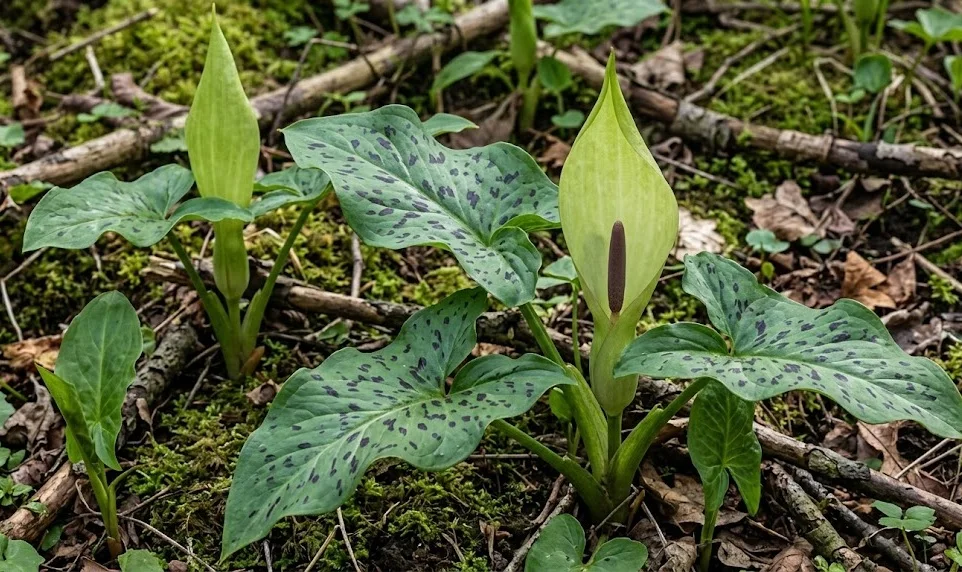
During the active growth phase in early spring, these plants require consistent moisture to support the development of their large, lush leaves. The woodland environments they naturally inhabit are typically damp during this time due to spring rains and snowmelt. If the soil is allowed to dry out completely while the leaves are expanding, the plant may suffer from stunted growth or premature yellowing. Regularly checking the soil moisture a few centimeters below the surface is the most reliable way to monitor their needs.
If natural rainfall is insufficient, supplemental watering should be applied early in the morning to allow the foliage to dry before evening. Use a watering can or a soaker hose to deliver water directly to the base of the plant, avoiding the leaves whenever possible. This targeted approach ensures that the moisture reaches the root zone where it is needed most while minimizing the risk of fungal leaf diseases. The goal is to keep the soil “cool and moist,” mimicking the natural sponge-like quality of forest humus.
As the season progresses and temperatures rise, the plant’s demand for water will gradually increase until it reaches its peak foliage size. During particularly dry spells in late spring, you may need to water more frequently to prevent the leaves from drooping. However, it is important to remember that these plants are adapted to handle some fluctuations in moisture. They have evolved to be resilient, but consistent care will produce much more impressive and long-lasting foliage displays for your garden.
Drainage remains a key partner to hydration; water should move through the soil and not pool around the base of the plant. If you notice that water is sitting on the surface for a long time after irrigation, it may be a sign that the soil is too compacted. In such cases, you should reduce the volume of water applied and look for ways to improve the soil structure. Finding the perfect equilibrium between “moist” and “waterlogged” is the primary challenge for any gardener cultivating these woodland species.
More articles on this topic
Summer watering and dormancy management
When the foliage begins to wither in early summer, the plant’s physiological relationship with water changes dramatically. As it enters its dormant phase, the need for external hydration decreases significantly because the plant is no longer actively transpiring. Overwatering during the summer is one of the leading causes of tuber rot, as the inactive tissues cannot process excess moisture. The soil should be allowed to dry out slightly on the surface, though it should never become parched deep down.
If the summer is exceptionally hot and dry, a very occasional deep watering may be beneficial to keep the deeper soil layers from becoming bone-dry. This helps to protect the dormant tubers from extreme desiccation, which can weaken them for the following year. However, this should be done sparingly and only when the soil feels completely dry several inches down. The presence of a thick mulch layer is often enough to maintain the necessary deep-soil moisture without the need for frequent intervention.
The developing fruit spike, which remains visible after the leaves have gone, still requires some internal moisture to produce healthy berries. While the plant is technically dormant, it is still performing the final stages of its reproductive cycle. A moderate level of background soil moisture supports this process without putting the tuber at risk of fungal infection. Professional gardeners often observe the surrounding woodland plants to gauge whether the environment is becoming dangerously dry.
Once the berries have fallen and the stalk has withered, the plant enters its deepest state of rest. At this stage, you can almost entirely cease supplemental watering until the following spring, unless there is a severe and prolonged drought. Trusting the plant’s natural ability to survive dry periods is a key part of successful woodland gardening. By following the plant’s internal clock, you ensure that it remains healthy and ready for its spectacular spring re-emergence.
More articles on this topic
Essential nutrient sources and soil health
These perennials are not considered “heavy feeders” in the traditional sense, as they have evolved to thrive on the slow release of nutrients from decaying organic matter. In a garden setting, the most effective way to provide nutrition is through the regular application of high-quality compost or leaf mold. This natural approach mimics the forest floor and provides a complex array of micronutrients that synthetic fertilizers often lack. A healthy soil ecosystem, full of beneficial microbes and fungi, is the best foundation for plant health.
A layer of organic mulch applied in the late autumn or early winter serves as a slow-release fertilizer for the coming year. As the mulch breaks down, it releases essential elements into the soil just as the plants are beginning their spring growth surge. This timing is perfect because it ensures that nutrients are available exactly when the plant needs them most for leaf and flower production. Furthermore, the decaying organic matter improves the soil’s cation exchange capacity, allowing it to hold onto nutrients more effectively.
If you feel that your plants are underperforming despite good soil structure, a mild organic fertilizer can be used in very early spring. Look for a product with a balanced N-P-K ratio or one that is specifically formulated for woodland or shade-loving plants. Avoid high-nitrogen fertilizers, as these can cause the foliage to grow too quickly, making it soft and more susceptible to pests or wind damage. A single, light application just as the first leaf tips appear is usually more than enough for the entire year.
Micro-nutrients such as magnesium and calcium are also important for the structural integrity of the large leaves and the development of the tuber. These are typically present in sufficient quantities in well-maintained garden soil that receives regular organic inputs. If you notice unusual discolorations that aren’t related to light or water, it may be worth conducting a professional soil test. However, for most gardens, the mantra of “feed the soil, not the plant” remains the most successful strategy for long-term health.
Application timing and techniques
The timing of nutrient application is just as important as the type of fertilizer used. The window of opportunity for active feeding is quite narrow, limited mostly to the late winter and the very early weeks of spring. Once the plant has finished its flowering stage and begins to move toward dormancy, it can no longer effectively utilize added nutrients. Therefore, any fertilizer applied in mid-summer or autumn is largely wasted and may even harm the local environment through runoff.
When applying compost or granular organic fertilizer, be careful to keep it away from the direct center of the plant. Placing nutrients directly against the emerging stems can sometimes cause localized irritation or invite fungal growth in the humid microclimate of the leaf base. Instead, spread the material in a circle around the drip line of the leaves, where the active feeder roots are located. Gently scratching granular fertilizer into the top few centimeters of soil will help it reach the root zone more quickly.
For liquid organic feeds, ensure the soil is already slightly moist before application to prevent root burn and ensure even distribution. Liquid feeding is a good way to give a quick boost to plants that are struggling, but it should not be the primary method of nutrition. The goal of a professional gardener is to build a self-sustaining soil system rather than relying on frequent liquid interventions. Slow and steady nutrient release is always preferable for these long-lived woodland perennials.
Keep in mind that excessive fertilization can lead to an accumulation of salts in the soil, which can eventually damage the sensitive tubers. This is another reason why organic, slow-release methods are superior to concentrated synthetic products. By observing the growth rate and color of the leaves, you can determine if your current feeding regimen is adequate. A healthy plant will have deep green, robust foliage and a strong, upright fruiting spike later in the season.
Avoiding over-fertilization and nutrient runoff
Over-fertilization is a common mistake that can lead to several problems, including increased susceptibility to diseases and environmental pollution. When too much nitrogen is present, the plant produces weak, watery cells that are easily invaded by fungal spores and sucking insects. It can also lead to an imbalance in the soil chemistry that prevents the plant from taking up other essential minerals. In gardening, more is definitely not always better when it comes to plant nutrition.
Nutrient runoff is an environmental concern, especially if your garden is located near a natural water source or a pond. Excess phosphorus and nitrogen that isn’t used by the plants can wash away during heavy rains, contributing to algal blooms and other ecological issues. By using organic, slow-release materials and applying them only when needed, you significantly reduce the risk of this happening. Professional gardening practices always take the wider local ecosystem into account.
If you suspect that you have over-fertilized, the best course of action is to stop all feeding and allow the natural rainfall to leach some of the excess salts away. You can also add more carbon-rich material, like plain wood chips or dried leaves, to help balance out high nitrogen levels. In most cases, the soil will eventually correct itself if you return to a more conservative management style. Prevention is always easier than correction, so start with minimal inputs and only increase them if the plant shows clear signs of deficiency.
Ultimately, the goal of watering and fertilizing is to support the plant’s natural resilience without making it dependent on constant human intervention. When these perennials are grown in the right soil with the right amount of shade, they require very little in the way of extra feeding. By focusing on soil health and respecting the dormancy cycle, you create a sustainable environment where they can thrive for decades. This hands-off approach is often the hallmark of a truly experienced and successful woodland gardener.