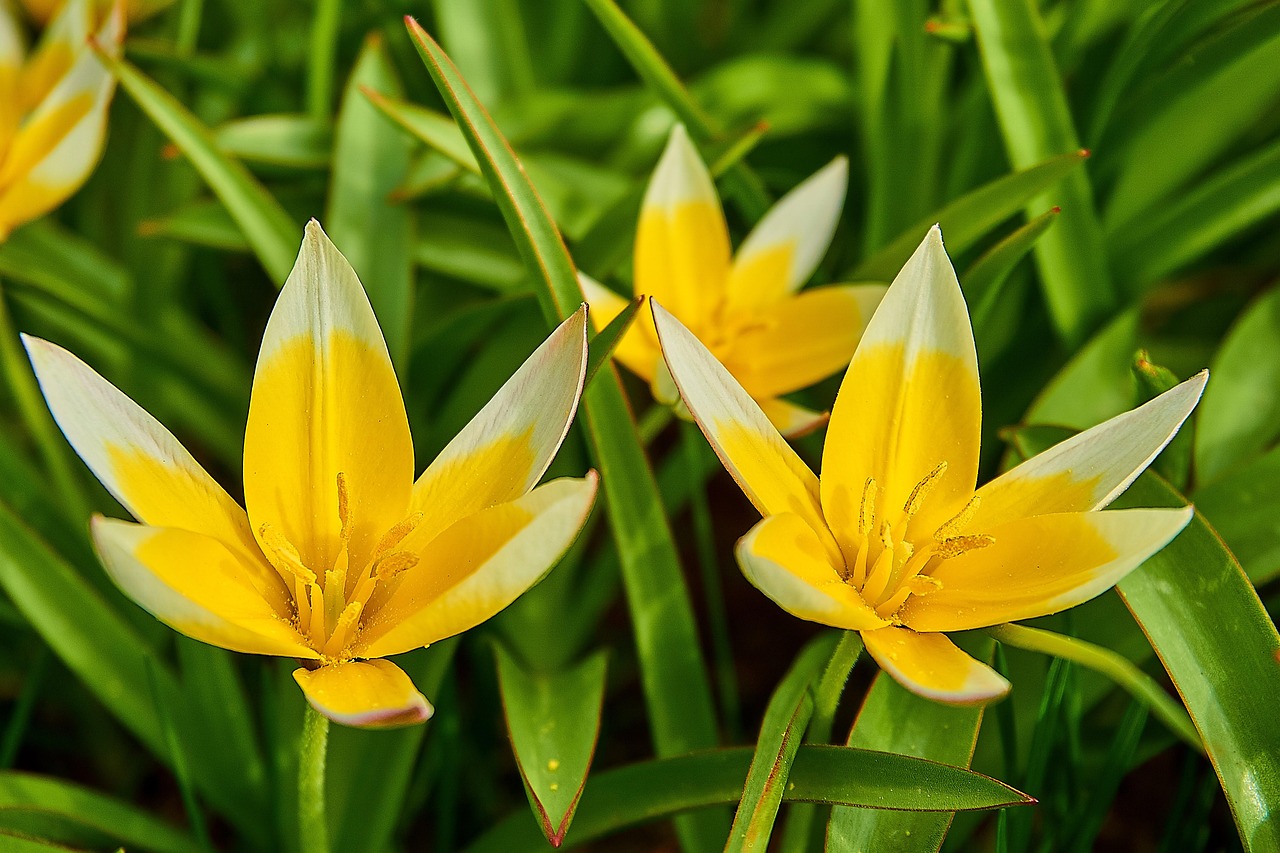

The fundamental requirement for the vigorous growth and prolific flowering of Tulipa praestans is an abundance of direct sunlight. This species, originating from the open, sun-drenched mountainous slopes of Central Asia, is genetically programmed to thrive in bright conditions. A location that receives a minimum of six to eight hours of direct, unfiltered sunlight per day during the spring growing season is considered ideal. This full sun exposure is the primary energy source for the plant, driving the critical process of photosynthesis. It is through photosynthesis that the plant converts light energy into the chemical energy needed to produce its vibrant flowers and, just as importantly, to store food reserves in the bulb for the following year’s survival and performance.
When Tulipa praestans is planted in a location with adequate sunlight, it develops strong, sturdy stems that can easily support its multiple blooms. The foliage will be a healthy, robust green, and the flower colours will be deep, rich, and true to the cultivar’s potential. The plant will have the necessary energy to not only put on a spectacular floral display but also to produce healthy offset bulbs, leading to the gradual naturalization and expansion of the clump over the years. In essence, sunlight is the fuel that powers every aspect of the tulip’s life cycle, from its emergence in spring to its dormancy in summer.
Furthermore, a sunny location also plays a crucial role in disease prevention. Areas with full sun tend to have better air circulation and allow the plant’s foliage to dry more quickly after rain, dew, or irrigation. This rapid drying creates an environment that is far less hospitable to the development and spread of fungal diseases like tulip fire (Botrytis tulipae), which thrive in damp, stagnant conditions. Therefore, choosing a sunny spot is not only beneficial for the plant’s energy production but also serves as a primary line of defence against common pathogens.
The relationship between light intensity and flowering is direct and unambiguous. Insufficient light is the most common reason, after poor nutrition, for tulips failing to re-bloom in subsequent years. A bulb planted in a shady spot may use its stored energy to produce a decent display in its first year, but without enough sunlight to replenish those reserves, it will produce progressively weaker growth and fewer, if any, flowers in the following seasons. This decline is often mistakenly attributed to the bulb not being perennial, when in fact, the blame lies with the suboptimal growing conditions provided.
Consequences of inadequate light
Planting Tulipa praestans in a location that does not provide sufficient sunlight will lead to a range of predictable and undesirable consequences. One of the most immediate and visible effects is etiolation, a condition where the plant’s stems become unnaturally long, thin, and spindly as they stretch in search of more light. These weakened stems are often unable to support the weight of the multiple flower heads, causing them to bend, flop over, or even break, especially in wind or rain. The entire plant will have a leggy and less robust appearance compared to one grown in full sun.
More articles on this topic
In addition to structural weakness, a lack of light will have a significant impact on the quality of the flowers themselves. The plant will likely produce fewer blooms per stem than its potential, and the flowers that do develop may be smaller in size. The colour intensity will also be diminished, resulting in blooms that appear washed-out, pale, or dull. The vibrant, fiery red that is characteristic of the species will lack its usual brilliance, leading to a disappointing and underwhelming floral display. The plant simply does not have the energy to invest in producing high-quality flowers.
The most serious long-term consequence of inadequate light is the failure of the bulb to perennialize. As previously mentioned, the period after flowering is when the leaves work to recharge the bulb. In a shady location, the reduced light levels severely curtail the efficiency of photosynthesis. The bulb is unable to store enough food to sustain itself through dormancy and to initiate the development of the following year’s flower buds. This energy deficit leads to a gradual decline over a few seasons, with the bulb eventually becoming “blind” (producing only leaves) or dying out completely.
Furthermore, plants grown in shady, cool, and damp conditions are significantly more susceptible to diseases and pests. The lack of sun and air circulation creates a perfect microclimate for fungal pathogens to thrive. Slugs and snails are also more prevalent in such environments, and they will readily feed on the tender, weak foliage of the light-starved tulips. A plant that is already stressed from a lack of light has a compromised immune system, making it an easy target for a host of secondary problems that a healthy, sun-grown plant could more easily resist.
Finding the right location in the garden
Identifying the ideal location for planting Tulipa praestans requires observing the patterns of sunlight in your garden throughout the day, specifically during the spring months when the tulips will be actively growing. An open, south-facing bed that is not obstructed by buildings or evergreen trees is typically the best choice. This orientation ensures the maximum possible sun exposure from morning until late afternoon. Remember to consider the angle of the sun in spring, which is lower in the sky than in summer, and how this might affect shadows cast by surrounding structures.
More articles on this topic
A clever strategy for incorporating these sun-loving bulbs into a mixed border is to plant them under the canopy of high-branched deciduous trees or among late-emerging perennials. In the early spring, before the trees leaf out and the perennials reach their full size, the ground beneath them receives almost full sun. This provides the tulips with the light they need during their critical growth and flowering period. By the time the tree canopy casts dense shade in the summer, the tulips have already finished their cycle and entered their dormancy, so the subsequent shade is not detrimental.
This technique of “inter-planting” with deciduous companions allows you to take advantage of seemingly shady spots in your garden. Hostas, ferns, and brunnera are excellent perennial partners. Their foliage emerges just as the tulip flowers are beginning to fade, and their broad leaves grow to cover the area, effectively hiding the untidy, dying tulip foliage. This creates a seamless and attractive succession of interest in the garden bed, solving both the light requirement for the tulips and the aesthetic issue of their declining leaves.
Finally, do not overlook the potential of container gardening. If your garden beds are mostly shady, growing Tulipa praestans in large pots or containers gives you the flexibility to place them in the sunniest spots available, such as on a patio, balcony, or along a driveway. You can move the containers to follow the sun if necessary. This method provides complete control over the growing conditions, allowing you to create the perfect well-drained, sunny environment that these tulips need to thrive, even if your garden’s layout is not naturally conducive to it.

Coming from the mountainous regions of Central Asia, Tulipa praestans is genetically adapted to very high light intensity. In a garden setting, any amount of shade will lead to “etiolation,” where the stems become weak and the flowers lose their characteristic brilliance. I’ve conducted trials showing that even 20% shade during the peak daylight hours can reduce the bulb’s energy storage by nearly a third. This directly impacts the number of flowers the bulb can produce in the following season. For the best display, a south-facing slope with no overhanging trees is ideal. These are not plants for the “woodland garden” despite their small stature.
Dr. Kozlov, your point about etiolation is so true; I tried growing ‘Fusilier’ under a large oak tree once and they were unrecognizable. They looked more like floppy weeds than the sturdy, multi-headed tulips they should be. I’ve now moved them to a rockery that gets sun from dawn until dusk. The difference in the red pigment intensity is quite noticeable as well. It seems the anthocyanins in the petals really need that UV exposure to develop fully.
I use a light meter app to check the PAR (Photosynthetically Active Radiation) levels in various parts of my garden before planting. For my bunch-flowering tulips, I look for spots that hit at least 800-1000 micromoles during midday in April. This might sound excessive, but as the article says, they are “sun-worshippers.” If the light levels are lower, the plants still grow, but they lack that robust, “compact” look that makes them so attractive. It also affects how quickly the flowers open and close each day.
I’ve noticed that the ‘Unicum’ variety with its variegated leaves is particularly sensitive to light levels. If it doesn’t get enough sun, the white margins on the leaves tend to turn a dull cream or even a light green. It seems the plant compensates for the lower light by producing more chlorophyll in those white areas. In full sun, the contrast is sharp and absolutely stunning in the spring garden. I’ve moved mine to the brightest spot I have and they’ve never looked better.