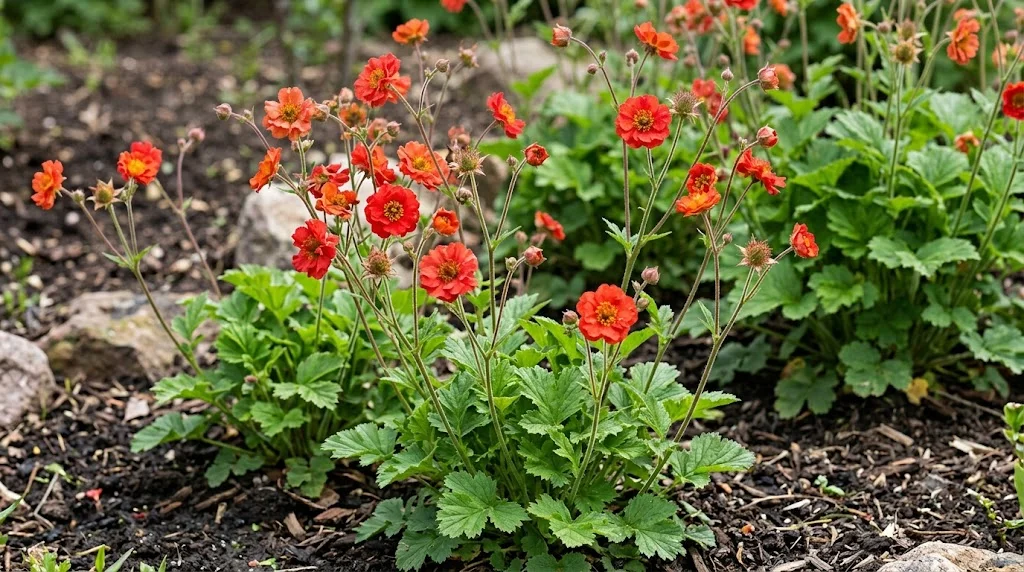

Chilean avens is generally resilient, but stress caused by poor drainage, crowding, drought, or excessive feeding can make it more vulnerable to disease and pests. Most serious problems develop gradually and can be limited when symptoms are recognized early. Regular inspection of leaves, stems, crowns, and surrounding soil is therefore an important part of routine care. Healthy growing conditions remain the most effective form of prevention.
Preventing crown and root problems
Crown rot is among the most damaging problems because it affects the central structure from which new growth emerges. It is usually associated with waterlogged soil, excessive mulch around the crown, or prolonged cool and wet conditions. Early symptoms include yellowing, wilting despite moist soil, and shoots that detach easily. Advanced rot may leave the center brown, soft, and unpleasantly scented.
Prevention begins with planting at the correct depth. The crown should remain level with the surrounding soil rather than being buried beneath compost or mulch. Drainage must be improved before planting in sites that hold winter water. Raised beds or gently elevated planting positions are often useful in heavy soil.
If only part of a clump is affected, lift the plant and cut away all soft or discolored tissue with a sterilized knife. Retain only firm sections with healthy roots and clean growing points. Replant these divisions in fresh, well-drained soil away from the contaminated location. Severely rotted plants should be discarded rather than composted.
Root damage can also result from prolonged drought followed by sudden saturation. Fine roots die in dry soil, and the weakened system may then decay when watered heavily. Maintain a more even moisture pattern to reduce this cycle of stress. Mulching and deep, measured irrigation are useful preventive techniques.
More articles on this topic
Managing leaf spots and fungal growth
Leaf spots may appear as brown, gray, purple, or black lesions on older foliage. Several fungi can produce similar symptoms, especially when leaves remain wet and air circulation is poor. Mild spotting is often cosmetic and does not threaten the entire plant. Extensive infection, however, reduces the leaf area available for photosynthesis.
Remove badly affected leaves using clean tools and dispose of them away from the planting area. Do not strip the entire plant unless the foliage is severely damaged, because healthy leaves continue to support the crown. Clear fallen debris from beneath the clump. Pathogens can survive on old tissue and produce new spores during damp weather.
Water at soil level to reduce prolonged leaf wetness. Increase spacing if neighboring plants have crowded the clump and restricted airflow. Avoid applying excessive nitrogen, which encourages soft, dense foliage. Morning irrigation allows accidental splashes to dry more quickly.
Powdery mildew may form a pale, flour-like coating on leaves during warm weather, particularly when roots are dry but air humidity fluctuates. Improve watering consistency and remove the worst affected tissue. Better air movement can slow further development. Resistant, well-established plants often continue flowering despite a moderate infection.
More articles on this topic
Recognizing sap-feeding pests
Aphids may gather on tender flower stems, buds, and young leaves. They remove sap, causing distortion, reduced vigor, and sticky honeydew deposits. Ants moving repeatedly up the stems can indicate an aphid colony, because they feed on the honeydew. Small infestations are often controlled by natural predators without intervention.
Check buds and the undersides of young leaves during spring. Aphids can be dislodged with a firm stream of water when colonies are still localized. Pinching out a heavily infested stem may also be effective. Avoid broad-spectrum insecticides that harm ladybirds, hoverflies, lacewings, and other beneficial organisms.
Insecticidal soap can be used when physical removal is insufficient. It must contact the insects directly and may require repeat applications. Test the product on a small part of the plant before treating the entire clump. Apply it during cooler conditions and follow all label instructions.
Leafhoppers and other small sap-feeding insects may cause pale stippling or minor discoloration. Their damage is rarely severe on healthy garden plants. Encourage a diverse garden ecosystem rather than treating every insect immediately. Intervention is justified when populations are increasing and plant growth is clearly declining.
Controlling slugs, snails, and chewing damage
Slugs and snails are attracted to tender spring foliage and moist shelter around the crown. Irregular holes, shredded leaf edges, and silvery trails are characteristic signs. Young plants and newly divided crowns can be damaged more seriously than mature clumps. Wet weather and thick organic debris increase the risk.
Reduce hiding places by removing decaying leaves, boards, overturned pots, and dense weeds near vulnerable plants. Water in the morning so the soil surface is less damp at night. Keep mulch thin around the crown. These changes make the habitat less favorable without eliminating useful soil organisms.
Hand collection after dark or during damp weather can reduce local populations. Traps and barriers may provide additional protection, although their effectiveness varies with conditions. Iron phosphate pellets can be considered where permitted and should always be used according to label directions. Avoid methods that endanger pets, wildlife, or beneficial invertebrates.
Other chewing insects occasionally damage leaves, but identification should come before treatment. A few holes usually have little effect on a vigorous perennial. Inspect both leaf surfaces and the surrounding soil to find the actual cause. Unnecessary pesticide use can disrupt natural control and lead to greater pest problems later.
Diagnosing decline and environmental damage
Not every unhealthy appearance is caused by a pathogen or insect. Yellow foliage may result from waterlogging, nutrient imbalance, old age, or root disturbance. Brown leaf edges commonly develop after drought, fertilizer burn, or hot drying winds. A correct diagnosis requires examining the entire growing environment.
Wilting in dry soil usually indicates insufficient water, while wilting in saturated soil suggests damaged or oxygen-starved roots. Feel the soil and inspect the crown before irrigating automatically. Additional water can rapidly worsen a drainage-related problem. Similarly, fertilizer cannot repair roots that are already rotting.
Failure to flower may be linked to excessive shade, recent division, overfeeding, or the age of the plant. A newly planted clump may need time to establish before producing a full display. Old, congested crowns may need division and renewal. Evaluate these factors before assuming that disease is responsible.
Good plant hygiene, balanced irrigation, suitable light, and moderate nutrition prevent many disorders at the same time. Remove damaged material, sanitize tools, and avoid moving contaminated soil between beds. Keep simple notes when a recurring problem appears at the same time each year. Patterns involving weather, watering, or nearby plants often reveal the underlying cause more clearly than a single symptom.