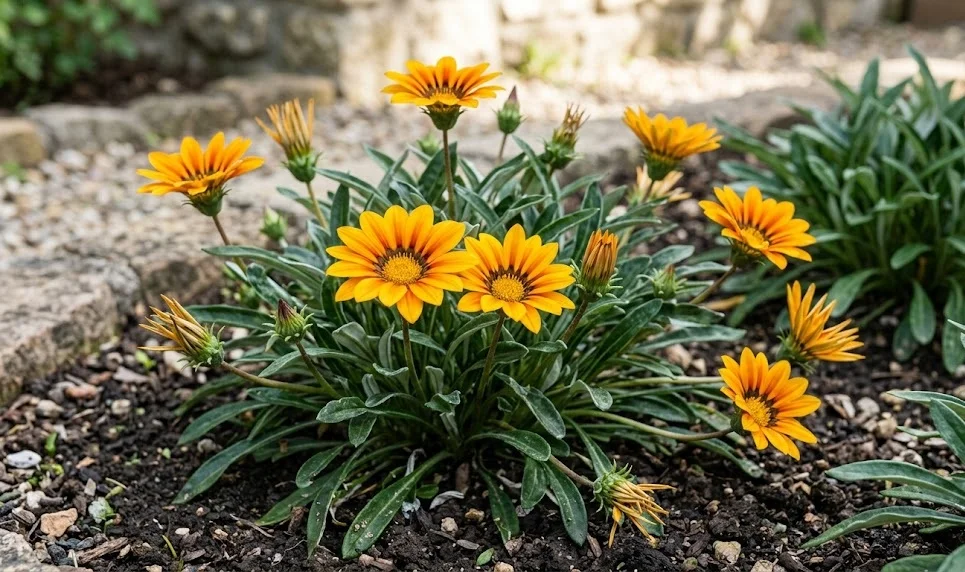

Gazanias are true sun-loving plants, and light intensity directly influences their shape, strength, and ability to flower. Their blooms normally open in bright sunshine and close during darkness or heavily overcast weather. A plant may survive in partial shade, but survival alone does not guarantee a worthwhile display. Providing long, direct exposure to sunlight is therefore the most important decision in gazania cultivation.
How much sunlight gazanias need
Gazanias perform best with at least six hours of direct sunlight each day. Eight hours or more usually supports the strongest flowering and most compact growth. Morning sun is useful, but prolonged midday and afternoon light often produces the best results. Sites shaded for much of the day are unsuitable.
The intensity of sunlight changes with season and latitude. A position that is sunny in spring may become shaded after nearby trees develop foliage. Buildings, fences, and tall crops can also alter the light pattern. Observe the proposed planting area at several times of day before choosing it.
In cooler climates, the warmest south-facing position is generally preferred. In very hot regions, plants may tolerate brief late-afternoon filtering if they still receive abundant direct light earlier. Excessive shade should not be used as the main method of preventing drought stress. Better watering and root-zone management preserve flowering more effectively.
Container-grown gazanias can be repositioned as light conditions change. Rotate pots occasionally so all sides receive similar exposure. Plants leaning strongly in one direction are often reaching for brighter light. Moving them promptly prevents increasingly uneven growth.
More articles on this topic
Recognising insufficient or excessive exposure
The clearest sign of inadequate light is poor flowering. Buds may form slowly, and existing flowers may remain closed for much of the day. Leaves can become longer, softer, and more widely spaced. Stems may lean toward the nearest bright opening.
Shaded plants often stay wetter for longer periods. Reduced evaporation increases the risk of root and crown disease, particularly in heavy soil. The combination of weak growth and dampness can attract pests. Moving the plant is usually more effective than adding fertiliser.
Gazanias generally tolerate strong sun without injury when properly established. Recently transplanted or greenhouse-grown plants can still scorch if exposed suddenly. Pale, papery patches on leaves may develop after an abrupt change. Gradual hardening allows protective tissues to develop.
Extreme heat reflected from paving or walls can raise container temperatures dramatically. Leaves may remain healthy while roots overheat in a small dark pot. Use a sufficiently large container and check moisture regularly. Providing insulation around the pot is preferable to shading the entire plant.
More articles on this topic
Managing light indoors and through winter
Indoor light is usually much weaker than outdoor sunlight. Place overwintering gazanias beside the brightest available window. Clean glass and remove objects that block the light. Even a short distance from the window can significantly reduce intensity.
Turn indoor pots every few days to limit one-sided growth. Weak, elongated shoots indicate that the plant is too warm for the available light. Moving it to a cooler but equally bright position can slow stretching. Supplemental grow lighting may be useful where natural light is limited.
Artificial lights should be positioned close enough to provide useful intensity without heating the foliage. A regular daily lighting period supports compact growth better than occasional illumination. Darkness is still necessary for normal plant rhythms. Equipment should be used according to electrical and horticultural safety guidance.
When returning plants outdoors in spring, increase sun exposure gradually. Indoor leaves are not immediately prepared for intense ultraviolet light. Begin with sheltered morning sun and extend the duration over several days. This transition reduces scorching and protects new growth.