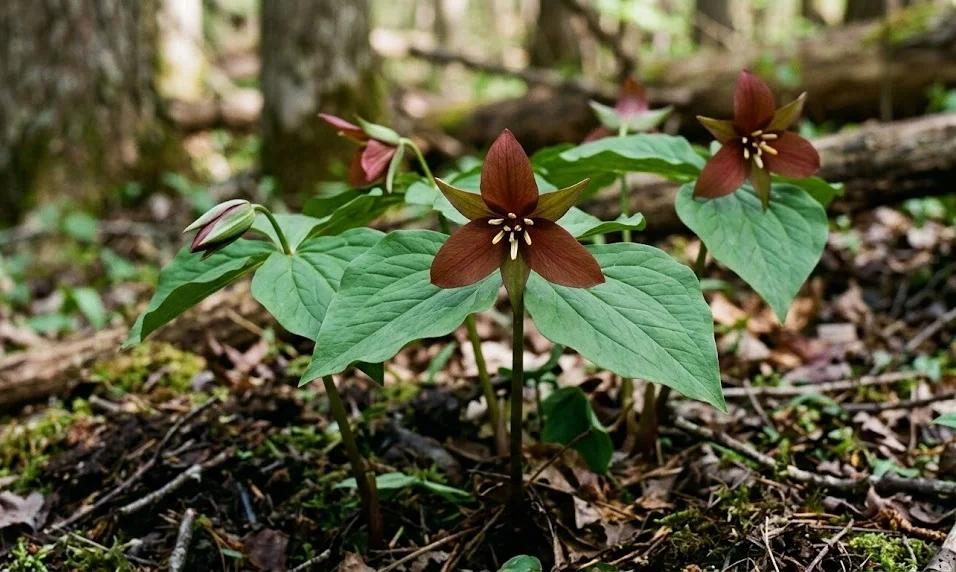

Red trillium depends on reliable spring moisture and a steady supply of nutrients released from humus-rich woodland soil. It does not tolerate prolonged drought during active growth, yet it can also deteriorate when planted in saturated ground. Feeding should remain restrained because excessive fertiliser encourages weak tissue rather than durable rhizome development. The most effective programme follows the plant’s seasonal cycle instead of treating it like a continuously growing border perennial.
Assessing soil moisture correctly
The surface of a woodland bed can appear dry even when deeper soil remains adequately moist. Check the ground several centimetres below the mulch before watering. It should feel cool and slightly damp without releasing water when squeezed. This simple test prevents both unnecessary irrigation and damaging neglect.
Soil type strongly influences watering frequency. Sandy soil loses moisture rapidly and may need smaller, more frequent applications. Clay retains water longer but can become poorly aerated after heavy rainfall. Loamy soil enriched with organic matter usually provides the most stable conditions.
Tree roots can create hidden competition during spring and summer. A bed that receives regular rainfall may still be dry beneath mature woody plants. Monitor trilliums near large trees more carefully than those in open shade. Competition often becomes stronger as the tree canopy fully develops.
Wilting is a late sign of moisture stress and should not be used as the main watering signal. Leaves may become dull, curled, or scorched before the entire stem collapses. Repeated drought can reduce the following year’s flowering. Preventive moisture management is far better than trying to revive severely stressed plants.
More articles on this topic
Watering during spring emergence and flowering
Begin monitoring moisture as soon as shoots appear. Early growth is rapid, and the developing leaves rely on an active root system. If rainfall is insufficient, provide a slow, deep watering. The aim is to moisten the full root zone rather than merely wetting the surface.
Water in the morning whenever practical. Morning irrigation allows foliage to dry during the day and reduces extended surface dampness overnight. Direct the water toward the soil instead of repeatedly soaking flowers and leaves. A watering can with a rose or a low-pressure hose provides gentle distribution.
Recently planted trilliums require special attention during dry spring weather. Their roots occupy a limited area and cannot yet draw moisture from a wide volume of soil. Check them more often than mature colonies. Consistency is more important than applying large quantities at irregular intervals.
Flowering plants should not be allowed to dry suddenly. Moisture stress can shorten the blooming period and interfere with seed development. However, constant saturation is equally damaging because roots need oxygen. Adjust the schedule according to rainfall, temperature, and soil drainage.
More articles on this topic
Reducing irrigation after dormancy begins
When leaves begin to yellow naturally, the plant’s water consumption falls. Continue providing modest moisture until the foliage has completed its decline. Abruptly drying the soil while leaves are still green can reduce energy storage. Once the stems have died back, irrigation can be reduced substantially.
Dormant rhizomes still require protection from extreme desiccation. Long summer droughts can dry shallow woodland soil to damaging levels. Check the bed occasionally, particularly under dense tree canopies. Water only enough to restore moderate moisture rather than keeping the area continuously wet.
Container-grown specimens dry faster than plants in the ground. Even during dormancy, potting compost can become completely dehydrated. Move containers into cool shade and inspect them regularly. A dormant pot should remain faintly moist but never stand in water.
Autumn watering is usually needed only during unusually dry conditions. Natural rainfall often replenishes the soil before winter. Ensure that irrigation does not leave the bed saturated as temperatures fall. Cold, stagnant moisture around the rhizome increases the likelihood of decay.
Building fertility with organic matter
Annual mulching is the most natural method of feeding red trillium. Apply leaf mould, composted leaves, or finely composted bark around the plant. These materials break down gradually and improve both fertility and soil structure. They also support fungi and microorganisms associated with healthy woodland soils.
The mulch layer should remain relatively thin and open. Excessively deep material can bury emerging buds and retain too much moisture around the crown. Pull compacted mulch apart before spring growth begins. Add new material only where the previous layer has decomposed.
Well-rotted garden compost can be used when leaf mould is unavailable. It should have a mature, earthy smell and contain no recognisable fresh waste. Avoid compost containing high concentrations of fertiliser or manure. Red trillium responds best to gentle, biologically active amendments.
Organic matter should be spread across the wider root zone. Placing a concentrated heap directly over the rhizome provides little benefit and may create unhealthy conditions. A broad application encourages gradual root expansion. It also improves the soil for compatible woodland companion plants.
Using supplementary fertiliser carefully
Supplementary feeding is most useful in poor, newly created, or heavily leached soils. Apply a mild, balanced fertiliser shortly after growth begins. A slow-release organic product is usually safer than a highly soluble formulation. Always follow the lower end of the recommended application range.
Avoid fertilisers dominated by nitrogen. Excess nitrogen produces lush, soft foliage that may be more vulnerable to slugs, disease, and weather damage. It can also divert growth away from balanced rhizome development. A moderate nutrient profile supports both foliage and future flowering.
Liquid feeding may be helpful for container-grown plants because nutrients wash from pots more quickly. Use a dilute solution at extended intervals during active growth. Never apply fertiliser to completely dry compost. Water first, then feed once the root zone is evenly moist.
Stop supplementary feeding well before natural dormancy. The plant must be allowed to complete its seasonal cycle without artificial stimulation. Late feeding cannot keep trillium foliage permanently green. It may instead create soft growth or leave unused salts in the soil.