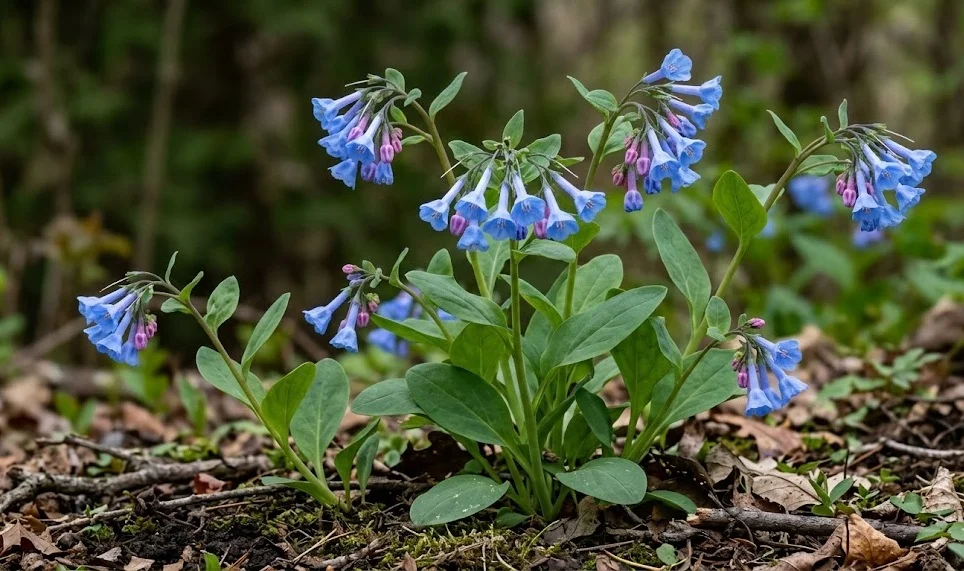

Virginia bluebells are among the most rewarding spring perennials for a lightly shaded garden, especially where the soil stays cool and humus-rich. Their pink buds and clear blue, bell-shaped flowers bring colour to borders at a time when many plants are only beginning to wake up. The plant is naturally adapted to deciduous woodland conditions, so its needs are closely tied to the rhythm of spring light, reliable moisture and summer dormancy. Good care begins with accepting that it is not meant to look ornamental throughout the entire year.
Understanding the plant’s seasonal rhythm
Virginia bluebells emerge early in spring, often before nearby trees have produced a dense canopy of leaves. This timing allows the plant to use the bright but gentle spring light reaching the woodland floor. Its foliage develops rapidly, followed by arching stems covered with clusters of flowers. The display may look delicate, but the plant is a strong perennial when it is growing in the right place.
After flowering, the leaves gradually yellow and retreat as temperatures rise. This is not usually a sign of disease, drought damage or nutritional deficiency. Virginia bluebells are spring ephemerals, which means they complete most of their yearly growth before summer becomes hot and dry. Their underground roots remain alive while the visible part of the plant disappears.
Gardeners often become concerned when the foliage begins to collapse in late spring or early summer. In reality, this resting phase is a normal survival strategy. The plant conserves energy underground rather than trying to maintain leaves during dry, warm weather. Removing fading foliage too early, however, can weaken future flowering because the leaves are still sending energy back into the roots.
The best approach is to observe the plant’s natural cycle rather than attempting to force continuous growth. Allow the foliage to decline on its own after flowering has finished. Once the leaves are fully yellow or brown, they can be removed gently. This keeps the planting area neat without interrupting the plant’s ability to store energy.
More articles on this topic
Choosing the right growing position
Virginia bluebells thrive best in partial shade, particularly beneath deciduous trees or beside shrubs that allow sunlight through in early spring. They appreciate morning sun or filtered light while they are actively growing. Intense afternoon sun can dry the soil too quickly, especially in warmer gardens. A position that receives bright spring light and summer shade usually produces the strongest plants.
The soil should be moisture-retentive but never permanently waterlogged. Rich loam with plenty of organic matter is ideal because it holds water while still allowing excess moisture to drain away. Heavy clay can work if it is improved with compost, leaf mould or well-rotted garden material. Very sandy soil may need repeated additions of organic matter to prevent it from drying out too rapidly.
A sheltered place is often better than an exposed bed. Cold spring winds can shorten the display by drying the leaves and stressing the flower stems. Virginia bluebells do not need tropical warmth, but they do benefit from protection against harsh, drying conditions. Planting close to hedges, woodland edges or established shrubs can create a calmer microclimate.
Avoid placing them where the soil is frequently disturbed. Repeated digging, hoeing or the replacement of annual plants can damage the underground root system. Their dormant period makes them easy to forget, which can lead to accidental disturbance in summer. Marking the area with low-growing companion plants can help prevent this problem.
More articles on this topic
Maintaining healthy soil
A deep layer of organic matter is one of the most useful long-term investments for Virginia bluebells. Leaf mould, composted bark and mature garden compost all improve the soil structure around the roots. These materials help the ground remain evenly moist during spring growth. They also support beneficial soil organisms that contribute to healthy root development.
Mulching is especially valuable in gardens where the soil tends to dry out after rainfall. Apply a loose layer of organic mulch around the plants in autumn or very early spring. Keep the mulch slightly away from the crown so moisture does not remain trapped against the base of the stems. The aim is to protect the soil, not to bury the plants deeply.
Virginia bluebells prefer soil that is mildly acidic to neutral, although they can tolerate a range of ordinary garden conditions. Extremely alkaline ground may reduce nutrient availability and lead to weaker growth. In strongly chalky soils, mixing in leaf mould and compost can improve the root environment. It is usually more effective to improve the planting pocket than to attempt to change an entire garden’s soil chemistry.
Compaction is another issue that can gradually reduce plant performance. Soil beneath trees may become packed down by foot traffic, pets or regular maintenance work. Compacted ground limits air movement and makes it harder for roots to explore the soil. Creating a lightly mulched planting zone and avoiding unnecessary trampling will help maintain a healthier root area.
Managing spring growth and flowering
The main care period for Virginia bluebells occurs from late winter through the end of spring. As shoots emerge, inspect the area for heavy mulch, fallen branches or compacted leaves that may block growth. A thin natural leaf layer is helpful, but a dense mat can prevent new stems from reaching the surface. Gently clear only what is necessary, leaving the soil undisturbed.
Flowering usually improves when the plant has access to sufficient moisture during its active growth period. Dry spring weather can shorten the bloom and reduce the size of the foliage. Water deeply when the top few centimetres of soil begin to dry, especially for recently planted clumps. Avoid shallow daily watering, which encourages roots to remain close to the soil surface.
Spent flowers can be left in place if natural reseeding is desired. Seedheads may produce new plants in favourable woodland-style beds, although seedlings can take time to reach flowering size. Removing faded flowers can make the planting look tidier, particularly in formal borders. Either approach is suitable as long as the leaves are left intact until they fade naturally.
Do not expect every clump to flower identically each year. Weather, spring rainfall, late frost and the amount of available light can all influence the display. A plant that produces fewer flowers one season may simply be adjusting to conditions rather than declining permanently. Consistent soil care is more important than trying to force stronger flowering with heavy feeding.
Working with summer dormancy
The summer dormancy of Virginia bluebells can leave an empty space in the border. This is one reason they are often planted among later-emerging perennials. Hostas, ferns, hardy geraniums, astilbes and shade-tolerant grasses can cover the gap after the bluebells have faded. These companions should be positioned carefully so they do not crowd the bluebells during spring growth.
Avoid digging in the area once the foliage has disappeared. The roots remain underground and can be easily damaged by planting annuals, dividing nearby perennials or installing edging. It is useful to remember that the plant may be invisible for several months but is still very much alive. A simple plant marker can prevent accidental disturbance.
Watering during summer dormancy should be moderate rather than excessive. The soil should not become bone dry for long periods, especially in the first year after planting. At the same time, the resting roots do not need constant wetness. A light mulch helps maintain a more stable moisture level without making the soil soggy.
Some gardeners try to compensate for disappearing foliage by applying fertiliser in summer. This is rarely helpful because the plant is not actively producing leaves at that stage. Excess nutrients may instead encourage weeds or nearby companion plants to grow too aggressively. It is better to focus on improving soil texture and preserving a stable root environment.
Combining Virginia bluebells with other plants
Virginia bluebells look most natural when planted in groups rather than as isolated individual plants. A drift of several clumps creates a stronger spring effect and resembles the way woodland perennials often grow in nature. Groups also make the disappearing foliage less noticeable because companion plants can gradually fill the surrounding space. Planting in repeated patches across a border can create a more balanced design.
They pair particularly well with other early spring woodland plants. Snowdrops, hellebores, primroses, pulmonarias and early ferns can create a layered display of foliage and flowers. The key is to choose plants with similar moisture and shade preferences. Combining species with conflicting needs often leads to weak growth or extra maintenance.
Later-growing perennials should be selected with restraint. Very vigorous plants can overwhelm bluebell shoots before flowering has finished. Dense groundcovers may also compete heavily for water and nutrients at the wrong time of year. Choose companions that emerge gradually or can be trimmed back if they begin to crowd the spring display.
Colour planning can make a noticeable difference in a small garden. The cool blue flowers combine beautifully with white, soft yellow, silver-green and pale pink plants. Dark foliage from heucheras or certain ferns can provide contrast without disrupting the woodland atmosphere. Strong red or orange companions can work too, but they create a more dramatic effect than the relaxed, natural look many gardeners prefer.
Long-term care and renewal
Established Virginia bluebells can remain productive for many years when the soil stays undisturbed and reasonably moist. Their performance is usually linked more closely to site conditions than to frequent intervention. A plant in the right place often spreads slowly and becomes more impressive with time. A plant in dry, exposed or heavily compacted soil may gradually weaken despite regular attention.
Clumps can be monitored each spring for changes in vigour. Smaller leaves, fewer flowers or unusually early dormancy may suggest that the soil is becoming too dry or crowded. In many cases, adding compost around the planting area is enough to improve the situation. More drastic action is only needed when the roots are severely congested or the site has changed significantly.
Tree roots can become more competitive as nearby trees mature. What was once a lightly shaded, moist bed may become drier and darker over several years. If the plants begin to struggle, consider improving the soil with leaf mould and watering deeply during spring droughts. In some cases, moving a portion of the clump to a more suitable place may be the best solution.
Patience is essential with woodland perennials. Virginia bluebells may take a season or two to settle after planting or division. Their growth can appear slow compared with summer-flowering border plants, but their spring display is worth the wait. A calm, low-intervention approach usually produces the most natural and resilient results.
Recognising and correcting common problems
Poor flowering is often linked to insufficient spring light or dry soil during active growth. A dense evergreen canopy can leave the plant too shaded even in early spring. Likewise, a hot, dry position may cause the foliage to collapse before the plant has stored enough energy. Improving light access and soil moisture usually gives better results than adding strong fertiliser.
Yellowing leaves can be completely normal once flowering has finished. The important distinction is timing. Leaves that yellow while the plant is still in full growth may indicate drought stress, root disturbance or poor drainage. Leaves that fade naturally in late spring are simply part of the plant’s seasonal cycle.
Weak, floppy stems may appear when the soil is very rich in nitrogen or when the plant is grown in excessive shade. Overfeeding can produce lush foliage without improving flower quality. Dense shade can also make stems stretch towards available light. Reducing fertiliser use and improving the balance of spring light can correct the problem over time.
A declining clump should not be judged after a single season. Weather patterns can strongly affect spring woodland plants, especially after an unusually dry autumn or late frost. Look for repeated changes over two or three years before deciding that a plant has failed. This measured approach prevents unnecessary disturbance and helps the garden develop more naturally.