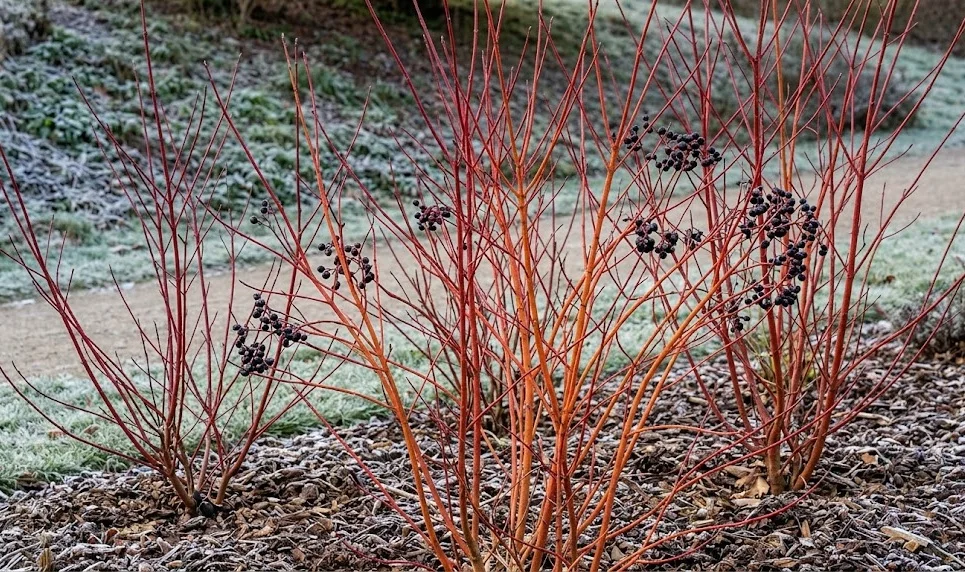

Pruning common dogwood is both a health practice and an ornamental technique. The shrub naturally produces many stems over time, and without renewal it can become congested, woody, and less colourful in winter. Young stems usually carry the strongest red tones, while older wood becomes duller and less decorative. A thoughtful pruning routine keeps the plant vigorous, well-shaped, and suitable for its place in the garden.
Why pruning matters
Common dogwood grows as a multi-stemmed shrub, which means renewal from the base is part of its natural pattern. Pruning encourages this renewal and prevents the plant from relying only on aging wood. When old stems are removed, light reaches the crown and new shoots develop more strongly. This improves both appearance and long-term plant health.
Pruning also manages size. In fertile soil, common dogwood can grow quickly and spread widely. If it is left untouched in a small space, it may shade neighbouring plants and lose its intended shape. Selective cutting allows the gardener to keep its vigour useful rather than disruptive.
Airflow is another reason to prune. Dense, tangled stems hold moisture and make the shrub more vulnerable to fungal problems. Removing crossing, dead, weak, or inward-growing stems improves the inner structure. A more open shrub is easier to inspect and usually remains healthier.
Pruning should be connected to the purpose of the plant. A shrub grown mainly for flowers and berries should not be cut as hard every year. A shrub grown mainly for winter stem colour can be renewed more strongly. The best pruning method depends on whether the priority is wildlife value, screening, flowering, stem colour, or size control.
More articles on this topic
Timing and pruning methods
Late winter or early spring is usually the best time for renewal pruning. At this stage, the plant is still dormant or just beginning to wake, and the structure is easy to see. Removing old stems before growth starts directs spring energy into fresh shoots. This timing also reduces the period during which cut surfaces remain exposed before active healing begins.
For routine care, remove a selection of the oldest stems close to the base. This method keeps some mature wood for flowering while encouraging new growth for future colour. It is often the most balanced approach for garden shrubs. Each year or every few years, the oldest and least attractive stems can be taken out.
Hard cutting back, or coppicing, is useful when strong young stems are the main goal. In this method, most or all stems are cut back close to the ground in late winter or early spring. The plant then responds with vigorous new shoots. However, flowering and fruiting may be reduced in that year because much of the older flowering wood has been removed.
Light shaping can be done after flowering if necessary. This is useful where the shrub borders a path or needs to remain within a defined outline. However, repeated surface trimming should be avoided because it can create a dense outer layer and a weak interior. Selective cuts preserve a more natural and healthier form.
More articles on this topic
Cutting technique and aftercare
Clean, sharp tools are essential for pruning common dogwood properly. Secateurs are suitable for thinner shoots, while loppers or a pruning saw may be needed for older stems. Cuts should be clean and positioned to avoid long stubs. Ragged wounds increase the risk of dieback and disease entry.
When removing stems at the base, care should be taken not to damage young shoots emerging from the crown. These shoots are valuable because they will form the next generation of ornamental stems. Old wood should be cut as low as practical without tearing the surrounding bark. Working slowly around the base gives a better result than cutting blindly into the clump.
After heavy pruning, the shrub should be supported with sensible care. A layer of compost or mulch helps conserve moisture and feeds the soil gently. If spring is dry, watering encourages strong regrowth. Heavy fertilizer is not necessary and may produce soft, weak shoots.
Pruned material should be cleared away, especially if any stems were diseased or dead. Healthy straight stems can sometimes be used for hardwood cuttings during the dormant season. Diseased material should be disposed of rather than composted casually. Good hygiene completes the pruning process and helps the shrub recover cleanly.