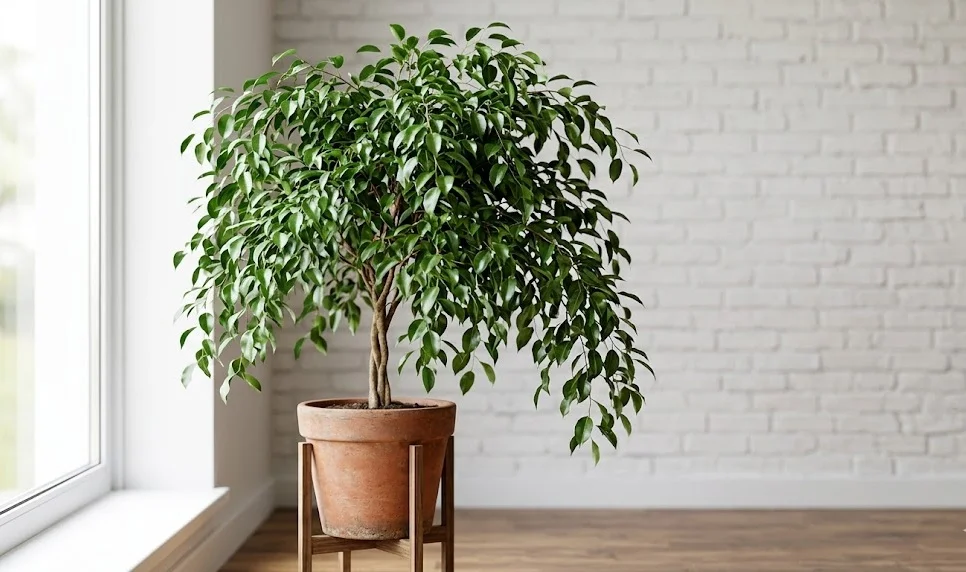

Planting and propagating weeping fig successfully depends on clean technique, suitable timing, and respect for the plant’s sensitivity to disturbance. Although the plant is common in interiors, it is not careless in its response to root handling or environmental change. A good start makes the difference between a specimen that struggles for months and one that settles quickly into steady growth. The aim is to create a root environment that is airy, stable, and proportionate to the plant’s size.
Preparing the plant and container
The right container should match the root ball rather than the visual size of the canopy. A pot that is slightly larger than the existing root system is safer than a very spacious one. Too much unused soil stays wet for too long and can weaken young roots. Drainage holes are essential because the plant cannot tolerate stagnant water around the roots.
Before planting, the potting mix should be prepared so it drains freely while still retaining moderate moisture. A balanced indoor plant mix can be improved with perlite, fine bark, or coarse mineral material. The texture should feel open rather than heavy or muddy. If the mix collapses into a dense mass after watering, it is not ideal for long-term root health.
The plant should be watered lightly a day before repotting if the soil is extremely dry. Slight moisture makes the root ball easier to handle and reduces breakage. However, a saturated root ball can fall apart and become difficult to manage. The goal is flexible, workable moisture rather than wet heaviness.
Tools and work surfaces should be clean, especially when propagating or trimming roots. Dirty blades can transfer pathogens into fresh cuts. Sharp scissors or pruners create cleaner wounds than torn cuts. This small detail improves recovery and reduces the risk of infection.
More articles on this topic
Correct planting technique
When removing the plant from its old pot, support the base of the stem and slide the root ball out gently. Pulling from the branches can break stems or disturb the crown. If roots are circling tightly, they can be loosened carefully around the outer edge. Severe tearing should be avoided because the plant may respond with heavy leaf drop.
The planting depth should remain the same as before. Burying the stem too deeply can keep bark moist and encourage decay. Planting too high leaves upper roots exposed and vulnerable to drying. A stable, level position helps both root function and visual balance.
Fresh potting mix should be placed around the root ball and firmed lightly. Pressing too hard removes air spaces that roots need. Leaving large gaps, on the other hand, causes uneven drying and unstable anchoring. Gentle firming creates good contact without compacting the entire pot.
After planting, water thoroughly until excess water drains out. This settles the mix around the roots and reveals whether drainage is working properly. Any water collected in the saucer should be discarded. The plant should then be placed in bright filtered light and left undisturbed while it adapts.
More articles on this topic
Propagation from cuttings
Stem cuttings are the most practical method for propagating weeping fig indoors. Semi-ripe shoots with several healthy leaves are usually suitable. The cutting should be taken below a node because this is where roots are most likely to develop. A clean cut reduces tissue damage and improves the chance of success.
Lower leaves should be removed so that no foliage sits below the rooting medium. Large leaves can be reduced slightly if moisture loss is a concern. The cutting should not be stripped excessively, because some leaf area is needed for energy production. Balance is important during rooting.
A light rooting mix is better than ordinary heavy potting soil. Perlite, fine bark, coco coir, or a seed-starting medium can work when kept evenly moist but not waterlogged. The cutting needs oxygen around the developing roots. Overly wet conditions often cause rot before rooting begins.
Humidity around the cutting improves success, but it should be managed carefully. A clear cover or propagation dome can reduce moisture loss, but it must be ventilated regularly. Condensation should not drip constantly onto the leaves. Bright indirect light and warm conditions encourage rooting without overheating the cutting.
Aftercare for young plants
Newly rooted cuttings should be introduced gradually to normal room conditions. Removing humidity protection too suddenly can cause wilting. A gradual opening over several days allows the young plant to adjust. This transition is just as important as the rooting stage itself.
The first pot for a rooted cutting should be small. A young root system cannot use the moisture held in a large container. Starting small gives better control over watering and encourages stronger root development. The plant can be moved up later when roots fill the pot.
Fertilizer should be used cautiously with young plants. Fresh roots are tender and can be damaged by strong nutrient concentrations. A weak, balanced feed can be introduced after clear new growth appears. Until then, light, warmth, and careful watering are more important.
Young weeping figs should be shaped early but gently. Pinching or light pruning can encourage branching once the plant is growing strongly. Heavy cutting before the roots are established can slow development. A patient approach produces a fuller, healthier young tree over time.