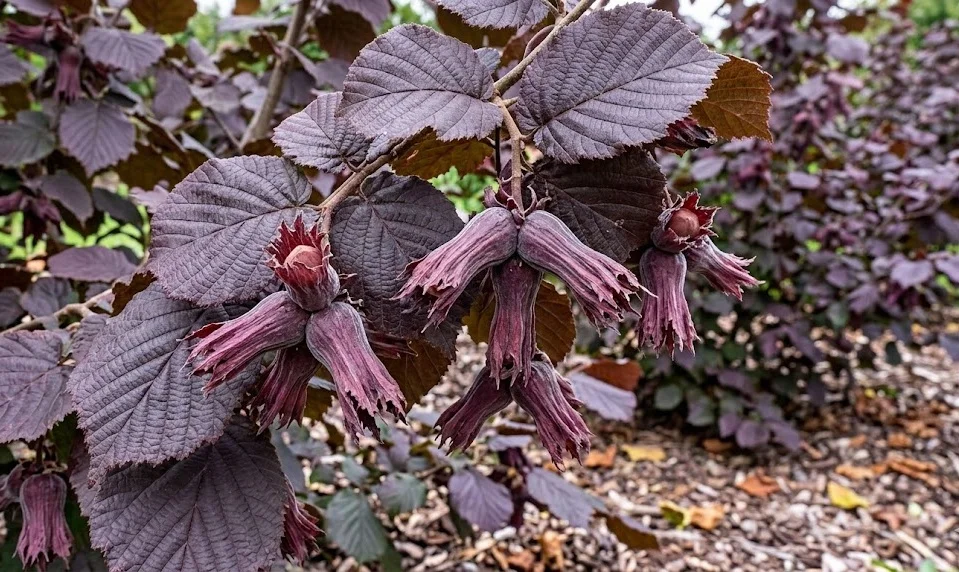

Purple-leaved filbert is usually hardy in temperate gardens, but good overwintering still depends on autumn preparation, root protection, and avoiding late-season stress. The plant enters winter best when its shoots have matured properly and its roots are neither dry nor waterlogged. Young shrubs and container specimens need more attention than old, established plants. Winter care is mostly about stability, not forcing growth or overprotecting unnecessarily.
Preparing the shrub in autumn
Autumn preparation begins by reducing stress after the main growing season. If the weather has been dry, the plant should receive deep watering before cold weather settles in. Hydrated roots and stems tolerate winter wind better. Dry soil before freezing can increase the risk of winter desiccation.
Fertilization should be handled carefully in late summer and autumn. High-nitrogen feeding should be avoided because it encourages soft late growth. Soft shoots may fail to harden before frost and can die back. Compost used as a mild surface dressing is safer than strong fertilizer at this time.
Sanitation is important where leaf disease was present. Fallen leaves can carry fungal spores through winter. Removing diseased foliage reduces infection pressure in spring. Healthy leaves can often be composted, but heavily infected material should be discarded.
Pruning should be limited in autumn. Removing broken or diseased branches is acceptable, but major shaping is better left for the appropriate dormant or post-flowering period. Heavy pruning late in the season can stimulate growth at the wrong time. The shrub should enter dormancy calmly.
More articles on this topic
Protecting roots and the planting area
Roots are more vulnerable to temperature fluctuation than woody stems. A mulch layer helps stabilize soil temperature and reduce frost heaving. Organic mulch also protects shallow feeder roots from drying winds. The layer should remain breathable and should not touch the stem base.
Newly planted shrubs benefit most from winter root protection. Their root systems have not yet spread widely into surrounding soil. Mulch gives them a more stable environment during freeze-thaw cycles. This is especially useful in exposed gardens or light soils.
Drainage remains important through winter. Wet soil that freezes and thaws repeatedly can damage roots and weaken the plant. If water collects around the planting area, corrective drainage should be planned. Winter protection should never trap water around the crown.
Container-grown plants need special care. Pots freeze faster than open ground because roots are exposed from all sides. Containers can be moved to a sheltered position against a wall or placed on insulating material. The pot should still drain freely after rain or snow.
More articles on this topic
Managing frost, snow, and wind
Purple-leaved filbert usually tolerates winter cold, but young shoots may suffer in severe exposure. Wind can dry stems and buds, especially when the soil is frozen and roots cannot replace lost moisture. A sheltered site reduces this risk naturally. Temporary windbreaks can help young plants during their first winters.
Snow is usually harmless when it lies lightly on the shrub. Heavy wet snow can bend or split branches, particularly on broad, multi-stemmed plants. It should be removed gently by lifting or brushing, not by striking the branches. Sudden force can break frozen wood.
Ice accumulation is more difficult to manage. Branches coated with ice should not be bent or shaken aggressively. It is safer to let the ice melt naturally unless a branch is clearly at risk of tearing. Preventive structural pruning in earlier seasons reduces storm damage.
Late winter sun can warm bark during the day, followed by rapid freezing at night. This fluctuation may stress young stems in exposed sites. Mulch and wind protection help moderate extremes around the plant. Healthy, mature wood is usually much less affected.
Spring recovery after winter
Spring inspection should be done once severe frosts have passed. Dead, broken, or frost-damaged shoots can be removed cleanly. It is wise to wait until buds begin swelling before judging marginal wood. Some stems that look lifeless in winter may still be alive.
Mulch can be refreshed in spring, but old compacted layers should be loosened first. The soil should warm gradually and breathe properly. If mulch has shifted against the stems during winter, it should be pulled back. This prevents collar moisture problems as temperatures rise.
Watering may be needed if spring is dry. Plants often begin growth before gardeners notice moisture stress. New leaves and catkins require steady water supply. Deep watering is especially important for shrubs planted the previous autumn.
Fertilization can resume lightly once active growth begins. Compost or balanced organic fertilizer supports new shoots without forcing excessive softness. Winter-damaged plants should not be overfed in an attempt to speed recovery. Careful pruning, steady moisture, and patience are more effective.