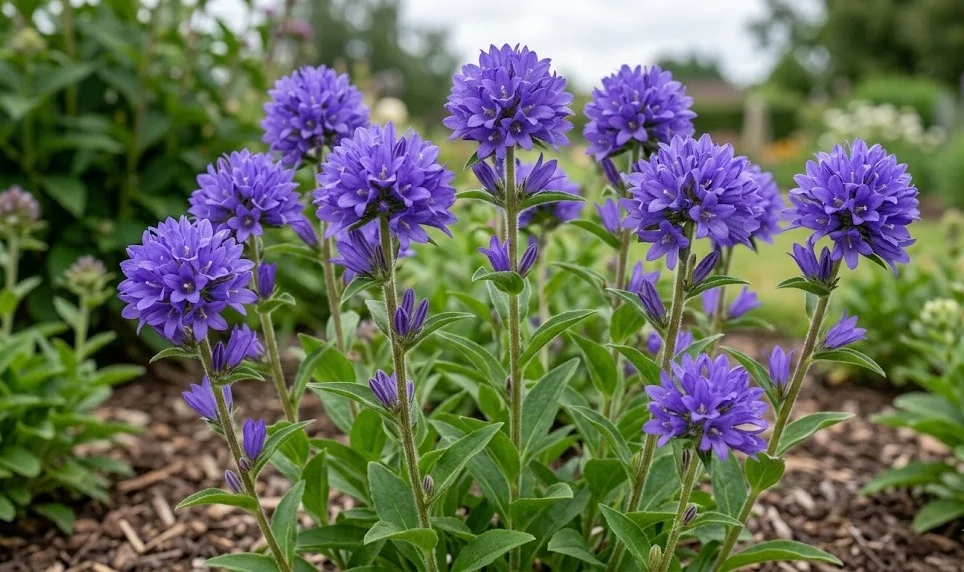

Clustered bellflower is a hardy perennial with a naturally upright habit, dense flower clusters, and a reliable presence in mixed borders. It is valued for its violet-blue, purple, or occasionally white blooms, which gather near the tops of the stems in compact heads. The plant suits cottage gardens, wildlife plantings, perennial beds, and naturalistic borders where structure and pollinator value are equally important. Good care begins with understanding that this species prefers balance: enough sun, steady moisture, open soil, and timely maintenance.
Understanding the growth habit
Clustered bellflower forms a basal clump of leaves before sending up flowering stems in late spring or early summer. The stems are typically firm, leafy, and vertical, giving the plant a more architectural look than many softer bellflowers. Flower buds develop in close clusters, creating a strong visual concentration of color rather than a loose spray. This growth habit makes the plant especially useful where a border needs height without excessive spread.
The foliage is usually green, slightly rough-textured, and arranged in a way that supports the upright flowering stems. Lower leaves are larger and help feed the crown early in the season. Stem leaves become smaller toward the top, allowing the flower clusters to remain visually dominant. Healthy foliage is an important sign that the plant is receiving enough light and nutrients without being forced into weak growth.
Clustered bellflower is a perennial, so its care should be planned over several seasons rather than only for one flowering cycle. The crown strengthens gradually when the plant is grown in suitable soil and not overwatered. Mature clumps often produce more stems and fuller flower heads than young plants. Regular observation helps determine when the plant needs division, support, or a slight change in care.
In garden design, clustered bellflower works best when its natural shape is respected. It should not be crowded by aggressive neighbors that shade the crown or compete heavily for water. Medium-height perennials, ornamental grasses, and open-textured plants combine well with it. The goal is to create air movement around the stems while still allowing the flower clusters to stand out.
More articles on this topic
Choosing the right growing position
A good planting position is one of the most important parts of clustered bellflower care. The plant generally performs best in full sun or light partial shade, depending on the local climate and summer heat. In cooler regions, a sunnier position usually encourages stronger stems and more abundant flowering. In hotter regions, light afternoon shade can help preserve flower color and reduce stress.
Soil should be fertile enough to support steady growth but not so rich that the stems become soft and floppy. A loamy, well-drained garden soil is ideal because it holds moisture without staying saturated. Heavy clay can be improved with compost and mineral grit to create better structure. Very sandy soil benefits from organic matter that increases water retention and nutrient availability.
Drainage is especially important because clustered bellflower dislikes having its crown sit in stagnant moisture. Wet winter soil can be more damaging than occasional summer dryness. Raised beds, gentle slopes, or improved border soil often give better results than compacted low spots. A plant that begins the season in well-aerated soil is usually more resilient against disease.
Spacing also affects long-term plant health. Crowded plants may flower, but they often develop weak stems and are more vulnerable to mildew or leaf spots. Allowing enough room around each clump encourages a balanced shape and better air circulation. Proper spacing also makes it easier to remove spent stems and inspect the plant during the season.
More articles on this topic
Soil preparation and mulching
Before planting or renovating a clump, soil preparation should focus on structure rather than excessive feeding. Compost is useful because it improves both moisture retention and microbial activity. It should be mixed into the planting area rather than piled directly against the crown. This creates a root zone that supports steady development without encouraging rot.
A neutral to slightly alkaline soil is often suitable for clustered bellflower, although the plant can adapt to a range of garden conditions. Extremely acidic or nutrient-poor soil may result in weaker growth and fewer flowers. If soil quality is uncertain, visible plant performance is often the best practical guide. Strong foliage, firm stems, and good flowering indicate that the soil is functioning well.
Mulch can help regulate moisture and suppress weeds around the plant. A thin layer of composted bark, leaf mold, or garden compost is usually enough. The mulch should be kept slightly away from the crown to avoid trapping moisture around the base. This detail matters most in damp climates and during winter.
Weed control is part of soil care because weeds compete with clustered bellflower for water, nutrients, and light. Hand weeding is preferable near the crown because deep hoeing can disturb shallow roots. A clean planting area also reduces hiding places for slugs and other pests. Consistent, light maintenance is better than occasional aggressive disturbance.
Seasonal watering and moisture management
Clustered bellflower prefers evenly moist soil during active growth, especially when stems are elongating and buds are forming. It should not be allowed to dry completely for long periods in spring and early summer. Water stress at this stage can reduce flower size and shorten the blooming period. Deep watering is more effective than frequent shallow sprinkling.
Once established, the plant has moderate drought tolerance, but flowering quality still improves with reliable moisture. In hot weather, soil should be checked below the surface rather than judged only by appearance. If the top layer is dry but the root zone remains cool and slightly moist, watering can usually wait. This approach prevents both drought stress and unnecessary overwatering.
Overwatering can cause more serious problems than short dry spells. Constantly wet soil encourages root weakness, crown rot, and fungal disease. Leaves may yellow or stems may collapse if the roots cannot breathe. Good drainage and careful watering should always work together.
Container-grown clustered bellflower needs closer attention than plants in open ground. Pots dry faster in sunny or windy positions, yet they can also become waterlogged if drainage holes are poor. A free-draining potting mix and a container with adequate depth are essential. Water should be applied thoroughly, then allowed to drain away completely.
Feeding for healthy flowering
Clustered bellflower does not need heavy fertilization when grown in decent garden soil. Too much nitrogen can produce lush leaves at the expense of sturdy stems and flowers. A moderate spring feeding with compost or a balanced organic fertilizer is usually sufficient. The aim is to support compact, flowering growth rather than rapid softness.
In poor soil, a slow-release perennial fertilizer can be useful at the beginning of the growing season. It should be applied according to the product rate and kept away from direct contact with the crown. Excess fertilizer can disturb the natural rhythm of the plant and make it more attractive to pests. Gradual nutrient availability is far better than sudden stimulation.
Flowering can also be supported by maintaining soil biology. Organic matter improves the way nutrients become available to the roots. Earthworms, fungi, and beneficial microorganisms all contribute to a healthier root environment. This is why compost-based feeding often suits clustered bellflower better than repeated liquid feeding.
After flowering, feeding should be modest. The plant still needs to rebuild the crown, but late heavy fertilization can encourage tender growth before cold weather. In late summer, good light and healthy foliage are more important than extra fertilizer. A plant that matures gradually is better prepared for winter and the next flowering season.
Flowering care and deadheading
Deadheading helps keep clustered bellflower tidy and may encourage smaller secondary blooms. Spent flower clusters should be removed before they turn fully brown and begin setting seed. Cutting back to a healthy leaf joint preserves some foliage while removing the declining flower head. This keeps the plant looking fresh in a mixed border.
If seed production is desired, some flower heads can be left in place. Seed heads may provide interest and allow natural self-sowing in suitable conditions. However, too much self-sowing can create unwanted seedlings in formal beds. Gardeners who want control should remove most spent flowers before seed ripens.
After the main flowering period, the entire stem can often be cut back if it becomes unattractive. This can encourage fresh basal growth, especially when soil moisture remains adequate. Cutting too low during hot drought should be avoided because the plant may struggle to regenerate. Timing should always reflect the plant’s condition and the weather.
Support is sometimes needed in rich soil or exposed positions. Stems may lean after heavy rain, strong wind, or overly lush growth. Discreet supports placed early in the season are more effective than trying to rescue collapsed stems later. Good light and moderate feeding remain the best natural support system.
Long-term maintenance and renewal
Clustered bellflower benefits from periodic division when clumps become congested. Older clumps may flower less heavily in the center while producing stronger growth around the edge. Division restores vigor by giving younger sections more space and better soil contact. This is usually done in spring or early autumn when weather is mild.
The plant should be monitored for signs of decline over several seasons. Reduced flowering, crowded crowns, weak stems, and poor air circulation can all indicate that renewal is needed. Lifting and dividing the clump also gives an opportunity to remove dead or woody material. Replanting only the healthiest sections improves long-term performance.
Good hygiene is part of year-round care. Diseased leaves, collapsed stems, and rotting debris should not be allowed to accumulate around the crown. Removing old material reduces overwintering sites for pests and disease organisms. Clean maintenance is especially important in humid gardens.
With balanced care, clustered bellflower becomes a dependable perennial that returns with strength each year. It rewards careful placement, steady moisture, and moderate feeding with dense flower clusters and a long garden presence. The plant does not demand complicated treatment, but it responds clearly to thoughtful cultivation. Its best performance comes from consistency rather than intervention.