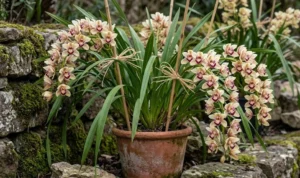

Beautiful crocus responds best to watering and feeding that respects its autumn-flowering nature. It does not need constant attention, but it does need the right support during active growth. The corm stores energy for the following season, so moisture and nutrients must be available when leaves are working. At the same time, excess water and excessive fertiliser can quickly cause decline.
Matching watering to the seasons
Watering should begin with observation of the plant’s growth cycle. Beautiful crocus starts into active growth as conditions become cooler and more humid. At this stage, roots develop and flowers emerge, so dry soil can limit establishment. Light watering may be useful if autumn remains unusually dry.
During the leaf stage, the soil should stay gently moist. This does not mean wet, sticky, or saturated soil. A good test is to check whether the soil feels cool and slightly damp below the surface. If it clings heavily to the fingers, it is probably too wet.
Winter rain is often enough in open garden soil. In regions with dry winters, occasional watering may be needed while leaves remain green. Water in the morning so the surface can dry during the day. This reduces the risk of fungal problems on low foliage.
Once the leaves begin to yellow, gradually reduce watering. The plant is entering dormancy and no longer needs the same moisture level. After the foliage has died back, summer dryness is usually beneficial. Dormant corms should never be kept in persistently wet ground.
More articles on this topic
Avoiding overwatering and rot
Overwatering is one of the quickest ways to damage beautiful crocus. The corm is a storage organ, and it can rot when surrounded by stagnant moisture. Symptoms may include weak shoots, missing flowers, yellowing leaves, or a soft smell in the soil. By the time the problem is visible, the corm may already be badly affected.
Heavy soils need particular care because water drains away slowly. Adding water on a schedule can be harmful if the soil is already moist. Always check conditions before watering. The plant prefers intelligent neglect to constant routine irrigation.
Beds near lawns, vegetable plots, or summer bedding schemes may receive more water than the crocus needs. This hidden irrigation can cause problems during dormancy. If the site is watered frequently in summer, consider moving the corms to a drier area. A gravel border or raised bed is often safer.
Containers also carry risks because drainage holes can block and compost can become sour. Use pots with generous drainage and a gritty compost mix. Never allow the pot to stand in water after rain or irrigation. In wet climates, containers may need shelter during the dormant season.
More articles on this topic
Feeding during active growth
Feeding is most useful after flowering, when the foliage is active. At this stage, the plant is rebuilding the corm for the next season. A modest dose of bulb fertiliser can improve flowering strength over time. The feed should contain enough potassium to support firm tissues and flower initiation.
A balanced organic fertiliser can also be used if applied sparingly. The goal is steady nutrition, not rapid leafy growth. Too much nitrogen can produce soft foliage and fewer flowers. It can also make the plant more attractive to pests and disease.
Feed should be applied to moist soil, not dry soil. Nutrients move more evenly when the root zone is gently damp. If the weather is dry, water lightly before or after feeding. Avoid dropping concentrated fertiliser directly onto leaves or shoots.
One feeding in autumn or early winter is often enough in fertile garden soil. In poor soil, a second light feeding during the leaf stage may help. Stop feeding as the leaves yellow. Dormant corms cannot use nutrients efficiently.
Improving soil fertility naturally
Soil improvement can reduce the need for frequent feeding. Fine compost, leaf mould, and well-rotted organic matter can improve structure and microbial activity. They should be used in moderation because the plant does not like rich, heavy soil. A thin annual top-dressing is usually better than deep digging.
In gravel gardens, fertility is naturally lower, but this is not necessarily a problem. Beautiful crocus often flowers well in lean soil if drainage is excellent. Too much fertility can encourage neighbouring plants to overwhelm it. A restrained approach keeps the planting balanced.
Wood ash may provide potassium in suitable soils, but it should be used cautiously. It can raise pH and may not suit every garden. Only small amounts should be applied, and never as a thick layer around the corms. Soil testing is useful if repeated amendments are planned.
Mulches should not bury the crown area. A thin layer of grit or fine gravel is often the best surface finish. It keeps the flowers clean, reduces splash, and maintains an open surface. Thick compost mulch can trap moisture and should be avoided directly over the corms.
Watering and feeding in containers
Container cultivation gives excellent control over drainage, but it also requires closer management. Use a gritty, free-draining compost that does not collapse into a dense mass. A clay pot can help excess moisture evaporate, while plastic pots retain water longer. The choice should match the local climate and watering habits.
Water containers thoroughly during active growth, then allow excess water to drain completely. Small sips every day are less useful than occasional careful watering. The compost should not dry to dust while leaves are green. It should also not remain wet for days after watering.
Feeding container plants is important because nutrients are limited. A diluted liquid bulb feed can be applied while leaves are growing strongly. Use weaker concentrations than for hungry bedding plants. The corms need support, not forcing.
During dormancy, move pots to a position where they are protected from heavy summer rain if necessary. The compost can remain barely moist, but it should not be wet. Check occasionally for pests, especially vine weevil larvae in some regions. Healthy dormant corms should feel firm when inspected.