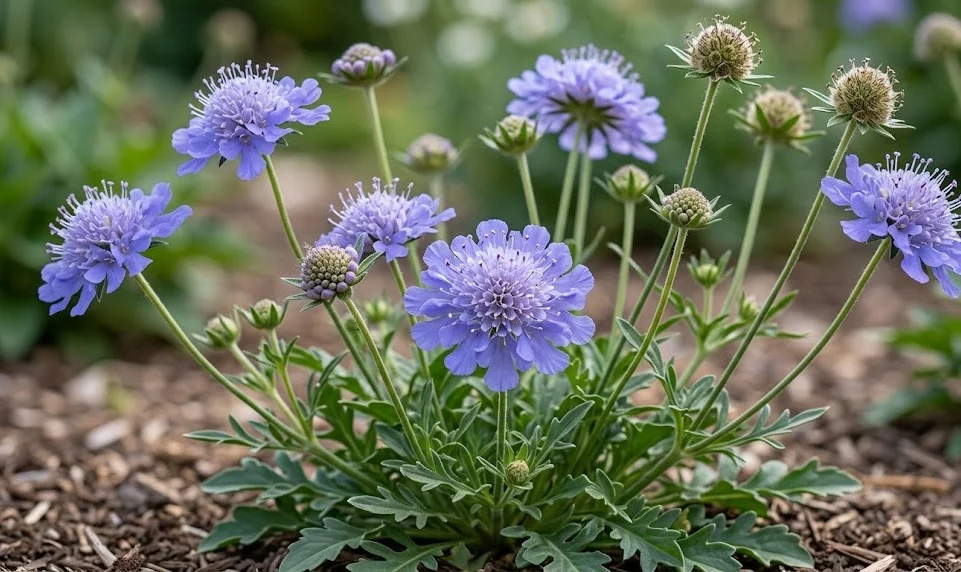

The watering needs of the Caucasian pincushion flower are relatively straightforward but require a disciplined approach to ensure long-term health. You should aim to keep the soil consistently moist during the first growing season while the root system is still developing. However, once the plant is established, it becomes remarkably drought-tolerant and can handle shorter periods of dry weather. The key is to find a balance that avoids both bone-dry soil and the much more dangerous waterlogged conditions.
When you do water, it is much better to apply a large amount of water deeply rather than giving the plants frequent light sprinkles. Deep watering encourages the roots to grow further down into the soil in search of moisture, making the plant more resilient. You should apply the water directly to the base of the plant, avoiding the foliage as much as possible to prevent disease. Early morning is the best time for this task, as it allows any accidental moisture on the leaves to evaporate quickly.
Environmental factors like temperature and wind will significantly influence how often you need to reach for the garden hose. During the peak of summer or in very windy areas, moisture evaporates from the soil and the leaves much more rapidly than in the spring. You should regularly stick your finger into the soil to check the moisture level a few inches below the surface. If the top two inches are dry to the touch, it is generally time to provide your plants with a good drink.
Overwatering is one of the most common mistakes that can lead to the decline of these beautiful perennials in a domestic garden. If the leaves start to turn yellow and the stems feel soft or mushy, you are likely giving the plant too much water. You must ensure that your garden beds have adequate drainage to allow excess water to move away from the sensitive root zone. A professional gardener knows that observing the plant’s reaction to the environment is the best guide for any watering schedule.
Managing water in different soil types
The type of soil you have in your garden will dictate the efficiency of your watering routine for the Caucasian pincushion flower. Sandy soils drain very quickly and may require more frequent watering during the hot months of the year to keep the plants hydrated. In contrast, clay soils hold onto water for much longer, meaning you need to be very careful not to create a swampy environment. Understanding your soil’s texture is the first step in creating a sustainable and effective irrigation plan for your landscape.
More articles on this topic
If you are working with heavy clay, you should focus on improving the structure rather than just adjusting your watering frequency. Adding organic matter like compost or well-rotted manure helps create air spaces that allow water and oxygen to reach the roots. You might also consider planting your pincushion flowers on slight mounds to help gravity pull excess water away from the crown. This structural approach is often more effective than simply trying to manage water through the timing of irrigation.
In very sandy areas, using a thick layer of organic mulch can help slow down the evaporation of moisture from the soil surface. This allows the plant more time to absorb the water you provide before it disappears into the deeper layers of the earth. You can also use drip irrigation systems or soaker hoses to deliver water slowly and directly to the roots over an extended period. This method is highly efficient and reduces the amount of water lost to the atmosphere through evaporation or runoff.
Regardless of your soil type, you should avoid watering your plants during the hottest part of the day when evaporation is at its peak. This not only wastes water but can also cause temperature shock to the plant’s delicate tissues if the water is very cold. Focus on maintaining a stable moisture level that mimics the natural cycles of the plant’s native highland habitat. Consistent and thoughtful water management is one of the pillars of professional agricultural care for these stunning flowers.
Nutrient requirements and fertilization timing
Fertilizing the Caucasian pincushion flower is an exercise in moderation, as these plants do not require high levels of nutrients to thrive. In fact, over-fertilizing can lead to excessive foliage growth at the expense of the beautiful flowers you are trying to cultivate. You should start the season by applying a light, balanced fertilizer in early spring as soon as you see the first signs of green. This provides the necessary boost for the plant to produce strong stems and a healthy set of initial leaves.
More articles on this topic
A slow-release granular fertilizer is often the best choice for perennials, as it provides a steady stream of nutrients over several months. You should scatter the granules around the base of the plant and lightly scratch them into the soil surface with a hand tool. Be sure to water the area immediately after application to help the nutrients move down into the root zone where they are needed. This controlled approach prevents the “flush” of growth that often comes from using highly concentrated liquid fertilizers.
During the peak of the flowering season, you might consider a secondary light application of a fertilizer higher in phosphorus to support bloom production. However, this is usually only necessary if your soil is particularly poor or if the plant shows signs of diminished flowering. If your plants are growing vigorously and blooming well, it is often better to skip the extra fertilizer and let them grow naturally. Professional horticulturists often rely more on soil health and organic matter than on chemical inputs for these hardy species.
As the summer winds down and the plant prepares for dormancy, you should stop all fertilization to allow the growth to harden off. Applying nitrogen late in the season can stimulate new, tender growth that will be easily damaged by the first frosts of autumn. The goal is to have a plant that is sturdy and prepared for the winter, rather than one that is still trying to grow rapidly. Timing your nutrient applications with the natural growth cycle is essential for maintaining the long-term health of your collection.
Choosing between organic and synthetic options
When selecting a fertilizer for your Caucasian pincushion flowers, you must decide between organic and synthetic products based on your garden’s needs. Organic fertilizers, such as compost, bone meal, or seaweed extract, improve the overall health of the soil microbiome while feeding the plant. These options are generally safer for the environment and provide a broader range of micronutrients that synthetic products might lack. Many professional gardeners prefer organics because they build long-term soil fertility rather than just providing a quick chemical fix.
Synthetic fertilizers offer the advantage of precise nutrient ratios and immediate availability to the plant’s roots in a predictable way. They are particularly useful if you need to correct a specific nutrient deficiency that you have identified through a soil test. However, you must be careful with application rates, as the concentrated salts in synthetic fertilizers can burn the roots if used incorrectly. If you choose this route, always follow the manufacturer’s instructions to the letter to avoid damaging your prized perennials.
Using high-quality compost as a mulch is perhaps the most natural way to provide both moisture retention and a slow source of nutrition. Each year, you can add an inch or two of fresh compost around the base of your plants in the early spring. This mimics the natural cycle of decomposition found in the wild and encourages a diverse population of beneficial soil organisms. These organisms help break down nutrients into forms that the plants can easily absorb, creating a self-sustaining system.
Ultimately, the best strategy often involves a combination of both organic soil building and targeted supplemental feeding when necessary. You should observe your plants closely and adjust your approach based on their growth, color, and flowering performance. Every garden is unique, and what works in one location might need to be tweaked for another due to local conditions. Staying flexible and responsive to the plant’s needs is the mark of a truly skilled and professional agriculturalist.
Recognizing nutritional and hydration stress
Being able to read the visual cues of your Caucasian pincushion flower is vital for adjusting your watering and fertilization routines. If the leaves are a pale green or yellowish color, it may indicate a nitrogen deficiency or a problem with the soil’s pH levels. Conversely, dark green leaves with very few flowers could be a sign that you are over-fertilizing with nitrogen, causing the plant to prioritize foliage. Regular monitoring allows you to make small adjustments before these minor issues become major health problems for the plant.
Hydration stress is usually much easier to spot, but it requires quick action to prevent permanent damage to the delicate flower tissues. Wilting is the most obvious sign, but you might also notice the edges of the leaves turning brown and crispy during a drought. If the plant is getting too much water, you might see “edema,” where the leaves look swollen or develop small bumps on the underside. Understanding these physical manifestations of stress allows you to intervene with the right solution at the right time.
Sometimes, a lack of certain micronutrients like iron or magnesium can cause specific patterns of yellowing between the veins of the leaves. If you see this happening despite regular fertilization, it might be time to conduct a professional soil test to see what is missing. Adjusting the soil pH is often the key to unlocking these nutrients and making them available to the plant again. A scientific approach to garden management ensures that you are treating the cause of the problem rather than just the symptoms.
Keep a garden journal to record when you water and fertilize, along with the weather conditions and the plant’s response. This data becomes an invaluable resource over the years, helping you refine your care schedule for your specific microclimate. You will start to notice patterns and become more intuitive about when your Caucasian pincushion flowers need your attention. This level of detail-oriented care is what separates a casual hobbyist from a professional-grade gardener or farmer.