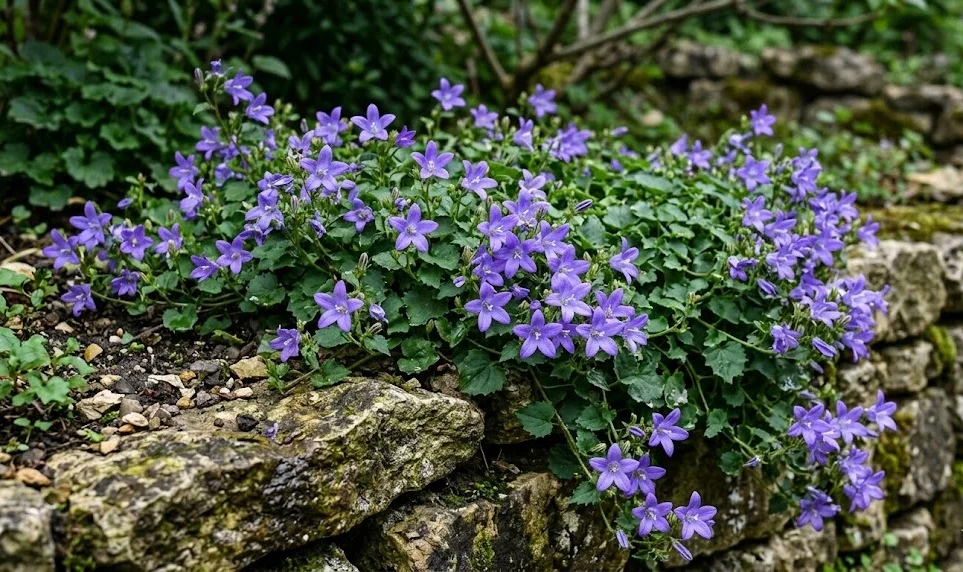

Proper pruning is the secret to maintaining the youthful vigor and spectacular floral display of this trailing perennial. Without regular intervention, the plant can become woody at the center or overly aggressive in its spread, losing the neat appearance that makes it so desirable. A professional gardener uses specific cutting techniques at different times of the year to encourage fresh growth and extend the blooming season. By following a structured pruning schedule, you can keep your bellflowers looking their best and prevent them from overwhelming their garden neighbors.
Deadheading for continuous bloom
Deadheading is the process of removing spent flowers before they can form seeds, which encourages the plant to produce more blooms. You should use a pair of sharp garden snips or your fingers to pinch off the faded purple stars throughout the early summer. This simple task prevents the plant from diverting its energy into seed production and keeps it focused on floral beauty. A professional knows that regular deadheading can extend the flowering period of this species by several weeks.
Beyond just promoting more flowers, deadheading also improves the overall tidiness of the plant’s appearance. You should look for the brown, withered remains of old flowers and clear them away to reveal the fresh green foliage beneath. This creates a much cleaner look in the garden and prevents the plant from looking “messy” after its first major flush of blooms. Keeping up with this task every few days is a small investment of time that yields big rewards for the landscape’s aesthetic.
When you are deadheading, be careful not to damage the new buds that are often waiting just below the spent flowers. You should make your cuts just above a set of healthy leaves or a new flower spike to encourage the plant to branch out. This technical precision is what allows a professional to shape the plant while simultaneously boosting its productivity. Understanding the plant’s growth points is a fundamental skill for any gardener who wants to master this species.
If the plant is acting as a large-scale ground cover, individual deadheading might be too time-consuming for a professional maintenance schedule. In this case, you can use a set of hedge shears to lightly “shear” the top of the entire mat after the first major bloom has faded. You should remove about a third of the height, which will clear away the old flowers and stimulate a fresh flush of green foliage. This faster method is highly effective for maintaining a neat and uniform look across a wide area of the garden.
More articles on this topic
Rejuvenation pruning techniques
After several years of growth, you might notice that the center of your bellflower is becoming woody and producing fewer leaves and flowers. You should perform a “rejuvenation prune” by cutting the entire plant back significantly in the early spring or after the main flowering season. This drastic step might look alarming at first, but it stimulates the plant to produce a brand-new set of vigorous stems from the crown. A professional rejuvenation every few years is the best way to maintain a youthful and high-performing specimen.
When performing a hard prune, you should aim to leave about five to ten centimeters of stem above the ground level. You must ensure that your tools are sharp and sanitized to make clean cuts that will heal quickly and resist infection. Providing a bit of extra water and a light feeding after a major pruning will help the plant recover from the stress and fuel its new growth. This process of renewal is a standard professional practice for many mat-forming perennials that tend to age out over time.
You can also use pruning to control the spread of the plant and keep it within its designated boundaries in the garden. You should look for the long, trailing stems that are reaching into other plants or overgrowing the edge of a path and trim them back. This doesn’t hurt the plant, but it does help you maintain the balance of your garden design and protect less vigorous neighbors. A professional approach involves proactive management of the plant’s footprint throughout the entire growing season.
If a plant has been damaged by pests, disease, or extreme weather, a hard prune can often be the best way to save it. You should remove all the damaged tissues and cut back to healthy, green growth to give the plant a fresh start. This “clean slate” approach allows the plant to focus its resources on rebuilding rather than trying to support compromised stems. Being willing to cut back hard when necessary is a hallmark of an expert gardener who prioritizes long-term health over immediate appearance.
More articles on this topic
Seasonal trimming schedule
The timing of your pruning tasks should follow the natural lifecycle of the plant to achieve the best results with the least amount of stress. You should start the year with a light cleanup in early spring, removing any winter-damaged foliage before the new shoots emerge. This opens up the center of the plant to light and air, setting the stage for a healthy and productive spring growth spurt. A professional knows that a clean start is the key to a successful year for any garden perennial.
During the peak of the summer, your focus should shift to the light maintenance tasks like deadheading and controlling the plant’s spread. You should avoid any heavy pruning during periods of extreme heat or drought, as this can place too much stress on the plant’s hydration system. Instead, wait for a cooler, overcast day to perform any necessary trimming or shaping of the foliage mat. This seasonal awareness is a critical part of professional horticulture that ensures the plant’s needs are met year-round.
As the autumn approaches, you can perform a final tidy-up of the stems to prepare the plant for its dormant phase. You should remove any particularly long or unruly stems that might be damaged by winter winds or heavy snow. However, avoid cutting the plant back too far in the late autumn, as the old foliage can provide some natural protection for the crown during the winter. A professional balances the need for tidiness with the practical requirement for winter insulation and protection.
Finally, keep a record of how the plant responds to different pruning techniques and timings in your specific garden environment. You might find that your particular site allows for more aggressive cutting or requires a more gentle approach to maintain the best results. Learning from your own observations and adjusting your schedule over time is the best way to become a true expert on the Serbian bellflower. This ongoing process of refinement is what makes professional gardening both a science and an art form.