
Pruning and cutting back are essential maintenance tasks that ensure the long-term health and productivity of a winter bunching onion patch. While it may seem counterintuitive to remove healthy green growth, these practices stimulate new shoots and prevent the plants from becoming overly woody or exhausted. A professional approach to pruning involves using the right techniques at the correct time to maximize the plant’s regenerative abilities. Mastering these skills is a hallmark of an experienced gardener who values both yield and plant longevity.
The primary reason for cutting back bunching onions is to encourage a continuous supply of young, tender greens for the kitchen. As the stalks age, they can become tough, fibrous, and lose some of the sweetness that makes them so desirable. By harvesting the outer leaves or cutting the entire clump back to a few centimeters above the ground, you trigger a rapid growth response. This “rejuvenation” ensures that the plant remains in a youthful, productive state throughout the growing season.
Timing is a critical factor when deciding when to perform a major cutback on your onion stand. In early spring, removing any dead or damaged foliage from the winter allows the plant to focus its energy on fresh, clean growth. During the peak of summer, a light pruning can help the plant cope with heat stress by reducing the amount of surface area that loses water through transpiration. Late autumn is another ideal time for a tidy-up to prepare the plants for the coming dormant season.
Using the correct tools is vital for preventing the spread of disease and ensuring a clean cut that heals quickly. Sharp, bypass shears or a dedicated garden knife are the best options for working with the relatively soft tissues of the onion. Dull tools can crush the stems, creating jagged wounds that are much more susceptible to fungal and bacterial infections. Always clean your tools with a disinfectant between different beds to maintain the highest standards of garden hygiene.
Techniques for harvesting and trimming
There are two main schools of thought when it comes to harvesting and pruning winter bunching onions: selective leaf removal and total clump cutting. Selective harvesting involves taking only the outermost, largest leaves while leaving the central growing point intact. This method provides a steady, albeit smaller, supply of onions without ever leaving the garden bed looking bare. It is the preferred technique for home gardeners who want to harvest a few stalks every day for fresh meals.
More articles on this topic
The “total cut” method involves shearing the entire clump down to about five centimeters above the soil level. This is often done when the patch has become overgrown or when a large quantity of onions is needed for preserving or professional use. While the bed may look empty for a few days, the onions will quickly push out a flush of uniform, high-quality growth. This technique is excellent for refreshing a bed that has started to look messy or uneven.
When pruning, it is important to avoid cutting too deep into the crown of the plant, as this can damage the meristematic tissue where new growth originates. Leaving at least a few centimeters of the green stem above the soil surface provides the plant with enough photosynthetic material to recover quickly. If you accidentally cut too low, the plant may struggle to regrow and could even die if the weather conditions are stressful. Precision and care are the marks of a professional in the field of horticulture.
After a significant pruning or harvest, providing the plants with a light watering and a small dose of liquid fertilizer can speed up the recovery process. The plant needs to replenish its energy stores to produce the next round of leaves, and a boost of nutrients can make a big difference. Monitoring the plants for several days after pruning ensures that they are responding well and shows no signs of infection at the cut sites. This follow-up care is an essential part of a holistic maintenance routine.
Rejuvenating older clumps and managing flowers
Over time, perennial bunching onion clumps can become so large and dense that the center starts to lose vigor. Pruning can help manage this density, but eventually, the clump may need to be divided as part of a more intensive rejuvenation strategy. Cutting the foliage back significantly before division makes the plants much easier to handle and reduces transplant shock. This combination of pruning and propagation ensures that your onion patch remains productive for many years to come.
More articles on this topic
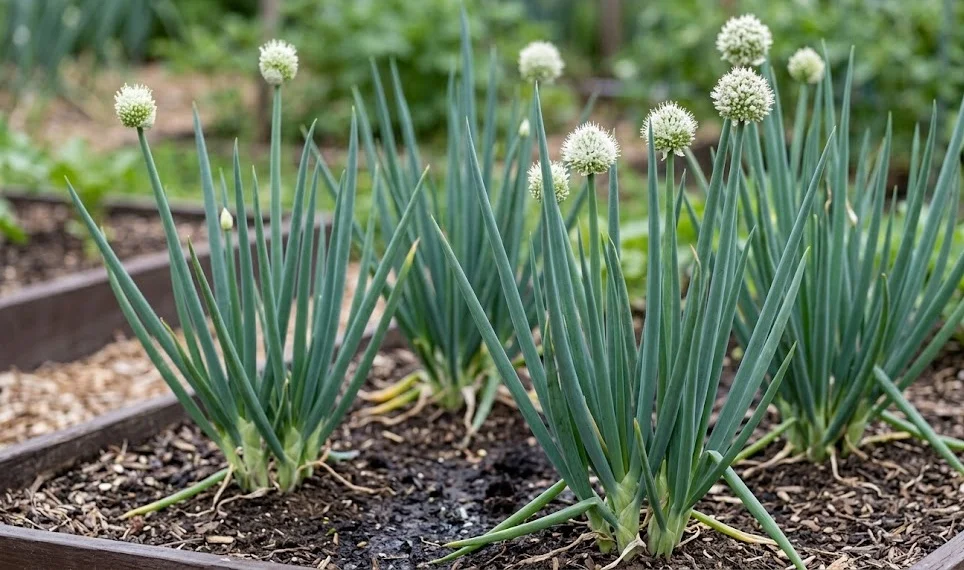
Managing the flower stalks, or “scapes,” is another important aspect of pruning that many gardeners overlook. While the globe-shaped white flowers are attractive and attract pollinators, they draw a significant amount of energy away from leaf production. If you want the plant to focus on growing succulent greens, it is best to cut off the flower stalks as soon as they appear. These young scapes are actually edible and have a mild, onion-like flavor that is prized in some culinary traditions.
If you choose to let a few plants go to seed, you should prune the remaining foliage to give the flowering stalks plenty of light and air. Once the seeds have matured and been collected, the mother plant should be cut back heavily to encourage it to return to its vegetative state. This balance between seed production and leaf harvest requires a professional level of planning and execution. A well-managed garden is one where every stage of the plant’s life is directed toward a specific goal.
Finally, always be observant of how different varieties of winter bunching onions respond to your pruning techniques. Some cultivars are much more vigorous and can handle frequent, heavy cutting, while others may prefer a more conservative approach. Keeping a garden journal and noting the recovery times of your different beds will help you refine your methods over time. Continuous learning and adaptation are what make gardening a lifelong and rewarding professional pursuit.