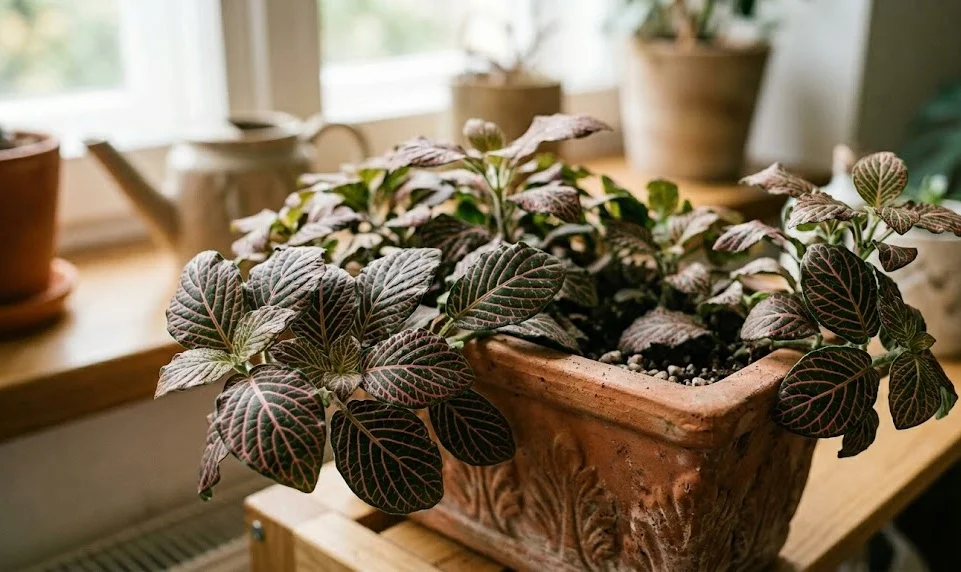

Pruning is an essential maintenance task that helps to keep your nerve plant looking its best while promoting healthy and compact growth over the long term. These plants have a natural tendency to become somewhat leggy or “stretched” if they are not regularly trimmed and shaped by their owners. By removing the tips of the stems, you encourage the plant to produce more lateral branches, which leads to a much fuller and more attractive appearance. Understanding the correct techniques for pruning will help you manage the size and shape of your plant with confidence.
The best time to perform any significant pruning is during the spring or early summer when the plant is in its most active phase of growth. During this period, the plant has plenty of energy to quickly heal the cuts and produce a flush of fresh, vibrant new leaves. You can also do light maintenance throughout the year, but avoid heavy cutting during the winter when the plant’s recovery will be much slower. Regular, small interventions are often more effective than infrequent, drastic pruning sessions for maintaining a steady and beautiful shape.
Before you begin pruning, you should ensure that you are using a very sharp and clean pair of scissors or small pruning shears. Using dull or dirty tools can crush the delicate stems or introduce harmful bacteria and fungi into the fresh wounds of the plant. You can easily sterilize your tools with a bit of rubbing alcohol or a mild bleach solution before and after each use for the best results. Taking the time to prepare your equipment is a simple but important step in ensuring the health and safety of your indoor plants.
When you are ready to make a cut, you should aim for a spot just above a leaf node where a pair of leaves is attached to the main stem. This is the point from which new growth will eventually emerge, allowing the plant to branch out and become bushier. You can remove as little as just the growing tip or as much as several inches of the stem, depending on your goals for the plant’s shape. Be careful not to remove more than about one-third of the total foliage at any one time to avoid over-stressing the plant.
Techniques for encouraging bushier growth
The most common pruning technique for nerve plants is called “pinching,” which involves removing just the very tip of each growing stem. You can often do this with your fingernails or a small pair of scissors, simply snipping off the top set of developing leaves. This simple action redirects the plant’s hormones away from vertical growth and encourages it to activate the dormant buds located at the leaf nodes below. Over time, this consistent pinching will result in a dense and low-growing mound of colorful foliage that looks fantastic in any pot.
More articles on this topic
If your plant has already become quite leggy with long, bare stems, you might need to perform a more significant “cut back” to rejuvenate it. You should identify the stems that are the most stretched out and cut them back to a point where you still see some healthy leaves or active nodes. While the plant may look a bit sparse immediately after this process, it will soon respond with a burst of new, more compact growth from the remaining stems. This is a great way to “reset” a plant that has been neglected or kept in too little light for a long period of time.
You should also take the opportunity during pruning to remove any leaves that are damaged, yellowed, or showing signs of pests or disease. This not only improves the overall appearance of the plant but also helps it focus its resources on the healthiest and most productive parts. Removing dead or dying material from the center of the plant also improves air circulation, which is vital for preventing fungal issues in the dense foliage. A clean and well-maintained plant is always much more resilient and visually appealing than one that is cluttered with old growth.
After you have finished pruning your nerve plant, it is a good idea to provide it with a bit of extra care to help it recover from the stress. A light watering and a consistent environment with plenty of humidity will provide the perfect conditions for the new growth to emerge. You should avoid fertilizing immediately after a heavy pruning session, as the plant needs a little time to stabilize its energy levels first. Within a few weeks, you will start to see tiny new leaves appearing at the nodes, marking the success of your pruning efforts.
Propagation and creative shaping ideas
One of the best things about pruning your nerve plant is that the healthy stem cuttings you remove can be used to grow entirely new plants. Instead of throwing the trimmings away, you can place them in water or moist soil to start a whole new generation of colorful foliage. This makes pruning a very productive task that allows you to expand your collection or share beautiful plants with your friends and family. It is a wonderful way to get more value out of your regular maintenance routine and learn more about the plant’s life cycle.
More articles on this topic
You can also use pruning as a creative tool to shape your nerve plant for specific decorative purposes or to fit into a particular space. Some growers like to keep their plants very low and spreading for use as a ground cover in a large indoor terrarium or glass bowl. Others prefer a more upright and rounded shape that stands out on a shelf or a dedicated plant stand in the living room. By selectively removing certain stems and encouraging growth in others, you can effectively “sculpt” your plant over time into the perfect form.
For those who enjoy a more wild and natural look, you can choose to prune less frequently and allow the stems to trail gracefully over the edges of the pot. This creates a beautiful hanging effect that is particularly striking when the plant is placed in a elevated position or a wall-mounted planter. You will still need to do some light trimming to prevent the plant from becoming too thin at the top, but the overall effect can be quite dramatic. Pruning gives you the power to decide exactly how your nerve plant will enhance your home’s interior design.
Ultimately, pruning is a skill that you will improve upon with every session as you learn how your specific plant responds to your interventions. Do not be afraid to experiment a little with different techniques and see what works best for your personal style and the plant’s health. The nerve plant is quite resilient and will usually forgive a few mistakes as long as its basic needs for light and water are met. With a bit of regular attention and a pair of sharp scissors, you can keep your nerve plant looking spectacular for many years to come.