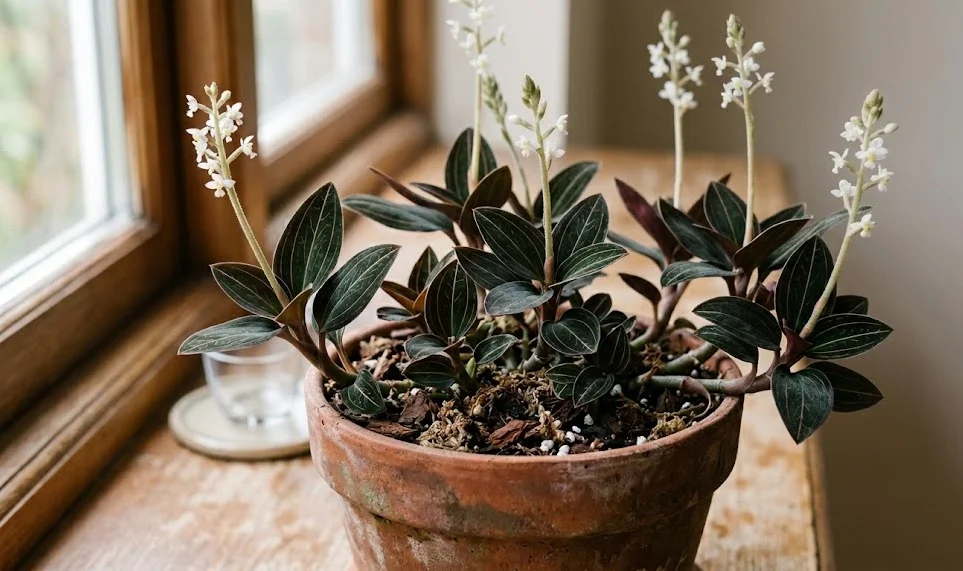

The black jewel orchid is a stunning terrestrial plant that differs significantly from most tropical epiphytes found in local nurseries. Its primary appeal lies in the deep, velvety maroon leaves decorated with striking golden or silver veins that seem to shimmer under ambient light. Maintaining this plant requires a shift in perspective for those used to standard orchid care, as it prioritizes foliage over flashy blooms. Understanding its natural forest floor habitat is the first step toward successful cultivation in a home or greenhouse environment.
In its native Southeast Asian environment, this orchid crawls along the damp forest floor rather than clinging to tree branches. This means the root system is designed to navigate leaf litter and organic matter that stays consistently moist. Unlike many orchids that need to dry out between waterings, this species prefers a stable level of hydration. You will find that providing a humid and shaded environment mimics its ancestral home perfectly and encourages lush growth.
The growth habit of this plant is quite unique as it tends to creep horizontally across the soil surface via thick rhizomes. These fleshy stems store some water and nutrients, allowing the plant to survive minor fluctuations in its surroundings. As it grows, the stems might become heavy and trail over the sides of the pot, creating a beautiful cascading effect. Regular observation is necessary to ensure the rhizomes are healthy and not becoming soft or mushy due to excessive moisture.
While the foliage is the main attraction, this orchid does produce delicate white and yellow flowers on upright spikes during the winter months. These blooms provide a lovely contrast to the dark leaves and can last for several weeks if the conditions remain cool. Many growers choose to enjoy the flowers, though some prefer to remove the spikes to keep the plant’s energy focused on leaf production. Regardless of your preference, the blooming phase signifies a healthy and mature specimen that has received proper seasonal care.
Selecting the ideal substrate and container
Choosing the right potting medium is crucial because this plant is a terrestrial species and cannot survive in standard bark chips alone. A mixture of high-quality peat moss, perlite, and a small amount of fine orchid bark usually provides the best balance of drainage and water retention. The goal is to create a spongy environment that allows the roots to breathe while remaining damp to the touch. Professional growers often add a bit of charcoal to keep the medium fresh and prevent the buildup of harmful salts over time.
More articles on this topic
The container you select should ideally be wider than it is deep to accommodate the creeping nature of the rhizomes. Plastic pots are often preferred over terracotta because they help retain moisture longer, which is vital for this particular species. Ensure that the pot has ample drainage holes at the bottom to prevent water from stagnating around the delicate roots. If you prefer a decorative ceramic pot, use it as a cachepot so you can easily remove the inner plastic liner for maintenance.
Repotting should typically occur every year or two when the rhizomes have reached the edge of the container. It is best to perform this task in the spring when the plant is entering its active growth phase. Handle the plant gently during the process, as the fleshy stems and roots are quite brittle and can snap under pressure. Always use fresh substrate during repotting to provide a new boost of nutrients and to ensure the medium hasn’t become overly acidic or compacted.
Before placing the plant into its new home, take a moment to inspect the root system for any signs of decay. Healthy roots should be firm and tan or brownish in color, often covered in fine hairs that help absorb water. If you notice any black or slimy sections, prune them away with sterilized scissors before finishing the potting process. Tamping the soil down lightly around the base will help stabilize the plant as it settles into its new surroundings.
Managing humidity and air circulation
This orchid thrives in high humidity levels, ideally ranging between fifty and seventy percent throughout the year. In a standard home environment, the air is often too dry, especially during the winter months when heating systems are active. Using a pebble tray filled with water beneath the pot can provide a localized boost in moisture through evaporation. Alternatively, a small humidifier placed nearby can maintain the consistent levels required for the velvet leaves to stay vibrant.
More articles on this topic
While humidity is essential, stagnant air can lead to fungal issues and rot on the soft foliage. Providing gentle air circulation with a small fan can prevent moisture from sitting too long on the leaf surfaces after misting. Be careful not to point the fan directly at the plant, as a constant draft can cause the leaves to dry out prematurely. A balanced approach where the air feels fresh but moist is the golden rule for keeping jewel orchids happy.
Misting the leaves can be beneficial, but it must be done with caution and ideally early in the morning. This allows any excess water to evaporate before the temperatures drop at night, reducing the risk of crown rot. If you choose to mist, use distilled or rainwater to avoid leaving unsightly mineral spots on the dark, velvety foliage. Some collectors prefer using a terrarium or a glass dome to create a self-sustaining humid microclimate for their specimens.
Observe the leaf tips closely, as they serve as an indicator of the overall environmental quality. If the tips begin to turn brown and crispy, it is a clear sign that the humidity is too low for the plant’s needs. On the other hand, if you see spots of mold or soft patches, the air may be too still and the humidity excessively high. Adjusting the placement of the plant within your home can often resolve these issues without the need for complex equipment.
Temperature requirements for steady growth
The black jewel orchid is essentially a warm-to-intermediate grower that prefers temperatures similar to those humans find comfortable. During the day, it enjoys a range between twenty and twenty-eight degrees Celsius to support active photosynthesis. At night, a slight drop in temperature is natural and can actually help stimulate the blooming process in late autumn. However, it is vital to keep the plant away from sudden temperature swings or cold drafts from windows.
Exposure to temperatures below fifteen degrees Celsius for extended periods can cause the plant to stop growing and may lead to damage. If the environment becomes too cold, the leaves might lose their luster and the stems could become susceptible to collapse. During the winter, ensure the plant is situated in a room that stays consistently warm even when the outdoor temperatures plummet. Protection from air conditioning units in the summer is equally important to avoid chilling the delicate tissues.
During heatwaves, the plant may require extra attention to prevent heat stress and dehydration. If temperatures exceed thirty degrees, increase the humidity and ensure the substrate remains moist to help the plant cool itself. Moving the orchid to a lower shelf or a cooler part of the room can also provide relief during the peak of summer. You will notice that growth may slow down during extreme heat, which is a normal protective response for the species.
Stability is the most important factor when it comes to the thermal environment of this orchid. Once you find a spot where the plant is thriving, try to avoid moving it frequently to different rooms with varying conditions. The plant acclimates to its specific location over time, and consistency allows it to focus its energy on producing new, beautiful leaves. By monitoring the room temperature regularly, you can ensure your jewel orchid remains in its “comfort zone” year-round.
Maintaining leaf health and aesthetics
The primary reason most people grow this orchid is for its spectacular foliage, so keeping the leaves clean is a priority. Dust can accumulate on the velvety surface, blocking sunlight and making the plant look dull over time. Use a very soft, damp cloth or a soft brush to gently remove debris without damaging the delicate hairs on the leaf surface. Avoid using commercial leaf shine products, as these can clog the pores and harm the plant’s ability to breathe.
As the plant ages, it is normal for the oldest leaves at the base of the stems to turn yellow and eventually fall off. You can remove these manually once they have withered to keep the plant looking tidy and to prevent pests from hiding in the debris. If you notice a large number of leaves falling off at once, it may indicate an issue with watering or a lack of nutrients. Always inspect the stem for firmness whenever you see significant leaf loss.
The intensity of the leaf color is often a direct reflection of the lighting conditions the plant receives. In very low light, the leaves may become a deeper green, while slightly brighter light can enhance the maroon and reddish tones. If the leaves start to look bleached or pale, the plant might be getting too much light, and it should be moved to a more shaded area. Finding the right balance will ensure the golden veins remain prominent and the background color stays rich.
Handling the leaves as little as possible is recommended to preserve their pristine appearance. The natural oils from human skin can sometimes leave marks or affect the sensitive texture of the velvet foliage. If you must move the plant, try to hold it by the pot rather than grasping the stems or leaves directly. This careful approach will ensure that your black jewel orchid remains a showstopper in your collection for many years.
Understanding the flowering cycle
Flowering usually occurs once a year, typically starting in late autumn and continuing through the mid-winter period. The plant sends up a tall, fuzzy spike from the center of the growth, which eventually opens into small, fragrant white flowers. While these blooms are not as large as those of other orchids, they possess a delicate charm that complements the dark foliage perfectly. The fragrance is often subtle, described as a clean, sweet scent that is most noticeable in the evening.
During the flowering stage, the plant requires consistent moisture and a slightly cooler environment to prolong the life of the blooms. If the air is too dry or hot, the flowers may wither prematurely before they have fully opened. Avoid getting water on the flower spike itself during watering, as this can lead to rot or spotting on the petals. Keeping the plant in a stable location during this time will ensure the best possible display of its winter beauty.
Once the flowers have finished blooming and the spike begins to turn brown, it is time to perform some basic maintenance. You should cut the spike off near its base using a pair of sterilized scissors to prevent the plant from wasting energy on seed production. This encourages the orchid to return its focus to the rhizomes and the production of new leaves for the coming season. Some growers find that the plant takes a short rest period after flowering before new growth appears.
It is worth noting that a plant that refuses to bloom might be receiving too much nitrogen or may not be getting the slight nighttime temperature drop it needs. While the leaves are the main attraction, a successful bloom is a sign that you have mastered the overall care requirements. Do not be discouraged if a young plant skips a year of flowering, as it often needs to reach a certain size before it has the energy to produce a spike. Continued patient care will eventually be rewarded with a beautiful winter show.
Long-term growth and vitality
With proper care, a black jewel orchid can live for many decades and grow into a large, impressive specimen. Over time, the rhizomes will branch out, creating a dense mat of foliage that can fill a large bowl or a wide container. This slow but steady expansion is very rewarding to observe, as each new leaf brings a fresh burst of color and texture. Mature plants can be divided to create new individuals, allowing you to share this unique species with other enthusiasts.
As the plant gets older, the center of the pot may occasionally become sparse as the rhizomes grow outward toward the edges. You can encourage a fuller look by gently pinning the creeping stems back toward the center of the soil using U-shaped floral pins. This encourages the nodes to root into the substrate, leading to a more compact and bushier appearance. Periodically refreshing the top layer of soil with fresh compost can also provide an extra boost of vitality to an established plant.
Monitoring the overall vigor of the plant is the best way to ensure its long-term survival in your home. A healthy orchid will produce leaves that are firm to the touch and stems that feel turgid and strong. If the plant appears limp despite proper watering, it may be time to investigate the root zone or consider a full repotting. Staying proactive with maintenance tasks like cleaning and pruning will prevent small issues from becoming major problems.
Ultimately, the key to success with this species is patience and a keen eye for detail. It is a plant that rewards consistent, gentle care rather than aggressive interventions or frequent changes in routine. By treating it as the forest floor inhabitant it is, you will create an environment where it can truly flourish. Your black jewel orchid will stand as a testament to your gardening skill, offering year-round beauty through its exquisite and velvety leaves.