
Establishing a new colony of Caucasian stonecrop begins with a clear understanding of the planting process and the various methods available for increasing your stock. This hardy groundcover is incredibly forgiving, making it a perfect subject for both novice and experienced gardeners who want to expand their landscape. Whether you are starting from nursery-bought pots or taking cuttings from a friend’s garden, the steps for success remain largely the same. By following professional planting techniques, you ensure that your new plants take root quickly and begin their journey toward forming a dense, beautiful mat.
The best time to plant this species is during the mild weather of spring or early autumn when the soil is workable and temperatures are moderate. Planting during these windows allows the root system to establish itself before the extremes of summer heat or winter cold arrive. While it is possible to plant during the summer, it requires much more frequent monitoring and watering to prevent the young plants from drying out. A well-timed start provides the biological momentum needed for the plant to thrive throughout its first year in the garden.
Before you begin, it is important to prepare the area by removing all existing weeds and loosening the soil to a depth of several inches. Even though this stonecrop can grow in poor soil, a little initial preparation goes a long way in helping the roots penetrate the earth. You should also consider the final spread of the plant when deciding on the spacing for your new additions. Proper planning at the preparation stage saves time and effort later, as the plants will be able to grow into their space without unnecessary competition.
When the site is ready, carefully remove the plant from its container and check the root ball for any signs of being pot-bound. If the roots are circling the base, gently tease them outward to encourage them to explore the new soil once planted. Place the plant in the hole so that the top of the root ball is level with the surrounding soil surface. Firm the earth around the plant with your hands to remove any large air pockets, and then water the area thoroughly to settle the soil.
Site selection and environmental preparation
Choosing the perfect location for your stonecrop is the most critical factor in determining how quickly it will fill the space. This plant is a true sun-lover, and it will produce its best foliage color and most abundant flowers when given at least six hours of direct sunlight. While it can tolerate partial shade, the growth will be much slower, and the stems may become elongated and less dense. For the best results, look for spots in your garden that receive southern or western exposure throughout the day.
More articles on this topic
The drainage of the site must be assessed before planting to ensure the long-term health of the succulent roots. Areas where water tends to collect after a heavy rain are unsuitable for this species unless the drainage is actively improved. You can test the drainage by digging a small hole, filling it with water, and observing how quickly it disappears. Ideally, the water should drain away within an hour, indicating that the soil is porous enough for the stonecrop’s needs.
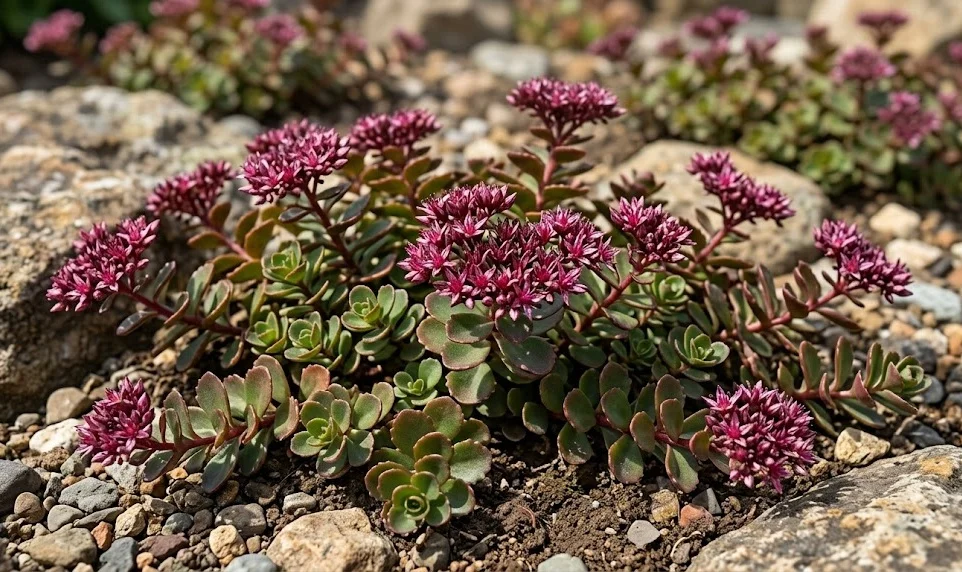
If your chosen site is a slope or a rocky embankment, you have found a natural home for this adaptable plant. The gravity-assisted drainage of a hillside prevents moisture from sitting around the crown, which is the most common cause of failure. Furthermore, the creeping stems are excellent at anchoring the soil, making the plant a functional choice for erosion control. In these types of locations, the stonecrop can truly showcase its natural beauty as it cascades over the edges of stones and crevices.
Consider also the proximity to other plants and garden features when finalizing your site selection. This stonecrop spreads horizontally, so it should not be planted too close to delicate, low-growing plants that might be smothered by its progress. It works wonderfully as a living mulch under taller perennials or as a border along gravel paths where its colors can pop against the neutral tones. By thinking about the entire garden composition, you can place your stonecrop where it will be both functional and visually stunning.
Propagation by division for immediate results
Division is perhaps the easiest and most satisfying way to multiply your Caucasian stonecrop plants while also rejuvenating older patches. This process involves physically separating a large, established clump into several smaller sections, each with its own roots and stems. Because the divisions already have an established root system, they tend to settle in and begin growing much faster than cuttings. This method is best performed in the spring when the plant is just starting to wake up from its winter dormancy.
More articles on this topic
To start the division, use a garden spade or a sharp trowel to lift a portion of the existing mat from the ground. Be sure to dig deep enough to include the primary root structures, although the trailing stems will often have their own small roots as well. Once the section is lifted, you can pull it apart by hand or use a clean knife to cut it into smaller pieces. Each new piece should have at least a few healthy stems and a decent amount of root material attached to it.
Once you have your divisions ready, they should be replanted as soon as possible to prevent the roots from drying out in the air. Treat these new plants exactly as you would a nursery-bought specimen, ensuring they are placed at the correct depth and watered in well. Because they are already adapted to your local garden conditions, they usually transition to their new locations with very little stress. This allows you to quickly fill large areas of the garden with minimal financial investment.
This technique also provides an opportunity to share your garden’s success with friends and neighbors who might appreciate a hardy new plant. Since the stonecrop grows relatively quickly, you will often find yourself with more divisions than you actually need for your own space. Sharing these plants is a great way to spread the joy of gardening and promote the use of sustainable, low-water species. Regular division every few years keeps your original plants healthy and provides a constant supply of new material for the landscape.
Propagation by cuttings for mass production
If you need to create a large number of new plants for an expansive area, propagation by stem cuttings is an incredibly efficient method. Every single stem of the Caucasian stonecrop has the potential to become a whole new plant under the right conditions. This process can be done at almost any time during the growing season, although the success rate is highest in late spring or early summer. It is a fascinating way to watch the plant’s natural survival mechanisms in action as it quickly develops new roots.
To take cuttings, simply snip off healthy stems that are about three to four inches long using a pair of clean garden scissors. Remove the leaves from the bottom inch of the stem, as this is the part that will be inserted into the growing medium. It is often recommended to let the cuttings sit in a shaded, dry spot for a day or two to allow the cut ends to callus over. This simple step helps to prevent rot once the cuttings are placed in a moist environment to begin rooting.
You can root these cuttings directly in the garden soil if the weather is mild and you can keep the area consistently moist. Alternatively, many gardeners prefer to start them in small pots filled with a sandy, well-draining potting mix to have more control over the environment. Insert the callused end of the stem into the soil and firm it gently so that the cutting stands upright. Keep the pots in a bright location but away from direct, scorching sunlight until you see signs of new growth at the tips.
Within a few weeks, the cuttings will develop a functional root system and can be transplanted to their permanent home in the garden. This method allows you to produce dozens or even hundreds of new plants from just a single mother plant in a very short time. It is an economical way to cover large slopes or create long borders without the high cost of buying individual plants. Watching a small handful of stems transform into a lush carpet of green is one of the most rewarding aspects of gardening.