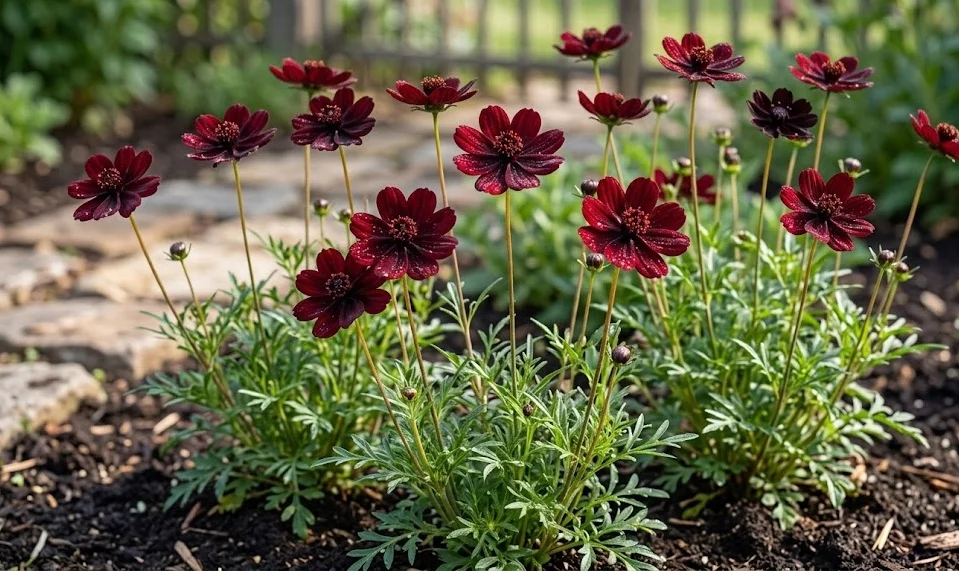

Chocolate cosmos is best planted with the same care given to a valuable tender perennial, because its future performance depends heavily on the condition of its tuberous roots. A strong start gives the plant better branching, richer flowering, and greater resilience through summer heat. Planting depth, soil texture, timing, and aftercare all influence how quickly it settles in. Propagation is usually done by division or cuttings rather than seed, which makes careful handling especially important.
Timing the planting correctly
Chocolate cosmos should be planted after the danger of frost has passed and the soil has begun to warm. Cold soil slows root activity and can leave tubers vulnerable to rot. In many temperate gardens, late spring is safer than early spring, even if the weather appears mild for a few days. Waiting until nights are consistently gentle often produces stronger growth.
Plants bought in pots can be hardened off before planting outdoors. This gradual adjustment helps the foliage cope with wind, sun, and temperature changes. A week of daytime outdoor exposure followed by sheltered nights is often useful. Sudden exposure can scorch leaves or shock soft greenhouse-grown shoots.
Bare tubers or dormant divisions need even more caution. They should not be planted into wet, cold ground simply because the calendar says spring has arrived. Starting them in pots under protected conditions can be a safer method in colder regions. Once shoots are growing strongly, they can be moved into their final position.
Autumn planting is generally risky in climates with frost or wet winters. The plant needs time and warmth to establish roots before dormancy. If planted too late, the tubers may sit inactive in damp soil and decline. In mild, dry-winter regions, autumn planting may succeed, but drainage must be excellent.
More articles on this topic
Preparing the planting site
The planting site should be bright, warm, and well drained. Chocolate cosmos does not enjoy heavy, compacted soil around its root system. Before planting, the soil should be loosened deeply enough to allow roots to spread without obstruction. Mature compost can be incorporated to improve structure and biological activity.
If the soil is clay-based, drainage improvement is essential. Raised beds or mounded planting areas are often better than simply digging a hole in heavy soil. A planting hole filled with loose compost inside dense clay can behave like a sump, collecting water around the roots. It is better to improve a broader area so water can move away naturally.
For container planting, choose a pot that is wide and deep enough to protect the root zone from rapid drying. A free-draining peat-free or loam-based compost with added grit can work well. The container must have open drainage holes and should not stand permanently in a saucer of water. Good pot feet can help excess moisture escape after rain.
Spacing also deserves attention. Chocolate cosmos needs enough room for air circulation and graceful stem development. Crowding it between vigorous neighbors can reduce flowering and increase disease pressure. A spacing of roughly thirty to forty-five centimeters is often suitable, depending on the cultivar and growing conditions.
More articles on this topic
Planting technique for strong establishment
When planting a potted chocolate cosmos, water it before removal from the pot. A moist root ball holds together better and suffers less disturbance. The plant should be set at the same depth it was growing in the container. Burying the crown too deeply can increase the risk of rot.
The planting hole should be wide enough to accommodate the roots comfortably. Backfill gently, firming the soil just enough to remove large air pockets without compacting it. After planting, water thoroughly so the soil settles around the roots. A light mulch can then help conserve moisture, but it should not be piled against the crown.
Dormant tubers should be handled carefully because damaged tissue can decay. Any clearly soft or rotten areas should be removed with a clean knife before planting. The tuber should be placed so that growing points are correctly oriented and not buried excessively. If orientation is uncertain, shallow pot starting can reduce the risk of failure.
Newly planted specimens should be watched closely for the first few weeks. The soil should remain lightly moist, not saturated. If weather turns unexpectedly cold, temporary fleece or shelter can protect young growth. Strong early care helps the plant move from survival into active growth.
Propagation by division and cuttings
Division is a practical method when an established plant has developed a healthy tuberous clump. It is usually done when the plant is dormant or just beginning growth. Each division should have viable roots and at least one strong growing point. Small, weak pieces are slower to establish and may fail if conditions are not ideal.
Clean tools are important during division. Cuts should be neat, and damaged tissue should be minimized. Some gardeners allow cut surfaces to dry briefly before potting to reduce the risk of infection. Divisions are best started in free-draining compost under protected conditions until growth is clear.
Basal cuttings can also be used when new shoots appear from the crown. Young shoots are taken carefully with a small heel or firm base and placed into a suitable propagation mix. Warmth, humidity, and bright indirect light help rooting. The compost should stay lightly moist but never waterlogged.
Propagation from seed is usually not the dependable route for named chocolate cosmos plants. Many cultivated forms are sterile or do not come true from seed. Vegetative propagation preserves the desirable flower color, fragrance, and habit of the parent plant. For gardeners who want reliable results, divisions and cuttings remain the preferred methods.