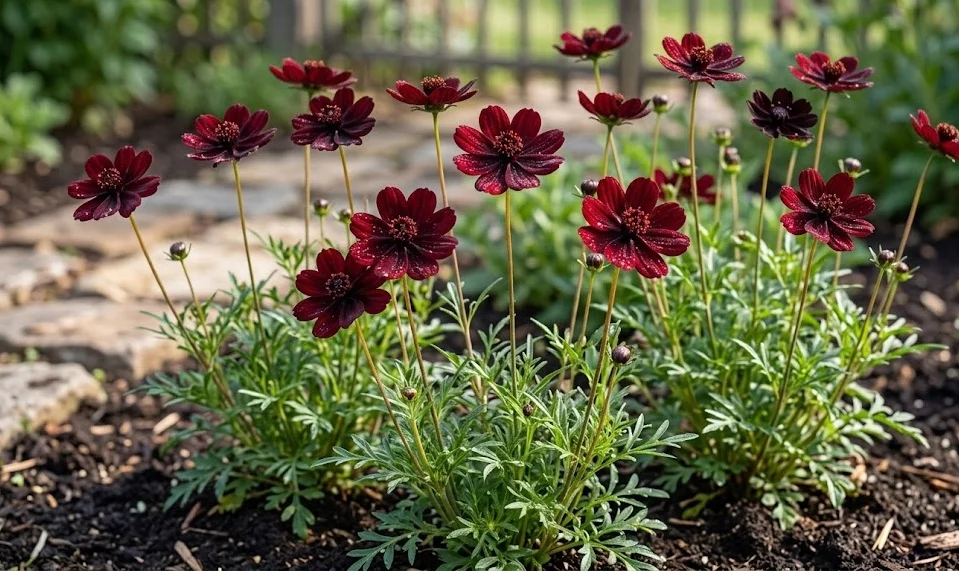

Chocolate cosmos needs winter care because it is not reliably hardy in cold, wet climates. Its tuberous roots can survive from year to year, but only if they are protected from freezing, rotting, and excessive moisture. The correct overwintering method depends on local climate, soil drainage, and whether the plant is grown in a border or container. Careful preparation at the end of the season greatly improves the chances of strong spring regrowth.
Recognizing when to begin winter preparation
Winter preparation should begin as the growing season slows. Shorter days, cooler nights, and reduced flowering all indicate that the plant is moving toward dormancy. It is not necessary to act the moment the first cool evening arrives. However, waiting until repeated hard frosts can damage the crown and tubers.
The top growth may continue to look attractive into autumn. As long as the foliage remains healthy, it can help feed the tuberous roots. This stored energy supports the following year’s growth. Removing the foliage too early can weaken the plant unnecessarily.
A light frost may blacken the stems and leaves. Once this happens, the plant has usually finished its useful above-ground growth. The dead stems can then be cut back, leaving short stubs to mark the crown if the plant is being lifted. Cutting too low before lifting can make handling more difficult.
Rainfall is as important as temperature. In wet autumns, tubers may be at risk even before severe cold arrives. Cold, saturated soil is especially dangerous. Gardeners in heavy-soil areas should prepare earlier than those with dry, free-draining conditions.
More articles on this topic
Lifting and storing tubers
In cold climates, lifting the tubers is often the safest overwintering method. The plant should be carefully dug up after the top growth has been cut back. A fork is usually better than a spade because it reduces the risk of slicing through tubers. The root clump should be lifted with as much care as possible.
Excess soil can be gently removed, but the tubers should not be scrubbed harshly. Damaged or diseased pieces should be inspected and removed. The clump can be allowed to dry briefly in a frost-free, airy place. This curing period helps reduce surface moisture before storage.
Storage conditions should be cool, frost-free, dark, and moderately dry. The tubers can be packed in barely moist compost, sand, vermiculite, or similar material. They should not be kept wet, but they also should not become completely shriveled. Occasional inspection during winter is important.
Any soft or rotting tubers should be removed promptly. Rot can spread if infected material remains in contact with healthy roots. If the storage medium becomes too wet, it should be replaced or dried. If tubers begin to shrivel badly, the medium may need the slightest increase in moisture.
More articles on this topic
Overwintering in containers
Container-grown chocolate cosmos can often be overwintered in the pot. This avoids disturbing the roots and is convenient for patio plants. After frost blackens the top growth, stems can be cut back and the pot moved to a protected place. A frost-free greenhouse, cool conservatory, shed, or garage may be suitable if temperatures remain safe.
The compost should be kept only barely moist during dormancy. A common mistake is watering dormant pots as if they were still in active growth. The tubers need enough moisture to avoid complete desiccation, but wet compost can cause rot. Checking once in a while is better than watering automatically.
The pot should not be sealed in plastic or kept in stagnant damp conditions. Air movement helps prevent mold and decay. If the compost surface grows mold, it may be too wet or poorly ventilated. Removing debris and improving airflow can help.
In late winter or early spring, the pot can be brought into brighter, slightly warmer conditions. Watering should increase gradually only when new growth appears. Starting too wet before shoots emerge can harm dormant roots. Once growth is active, the plant can be repotted if necessary and prepared for the outdoor season.
Protecting plants left in the ground
In mild climates, chocolate cosmos may survive outdoors if drainage is excellent. The greatest danger is often wet soil rather than cold alone. Plants in raised beds or sandy soils have a better chance than those in heavy clay. Even so, outdoor overwintering always carries some risk.
A protective mulch can help insulate the crown. Dry leaves, straw, bark, or composted material may be used, depending on local conditions. The mulch should protect against temperature swings without creating a wet, airless blanket. In very damp regions, a rain shelter can be more valuable than a thick mulch.
Marking the planting position is useful during winter. Dormant chocolate cosmos leaves little visible evidence above ground. Without a marker, the tubers may be accidentally disturbed during soil work. A simple label also reminds the gardener not to overwater or dig in that spot.
Spring uncovering should be gradual. Heavy mulch should be eased away as temperatures rise and new growth begins. Leaving wet mulch packed around emerging shoots can invite rot and slug damage. Once shoots are visible, normal spring care can resume carefully.