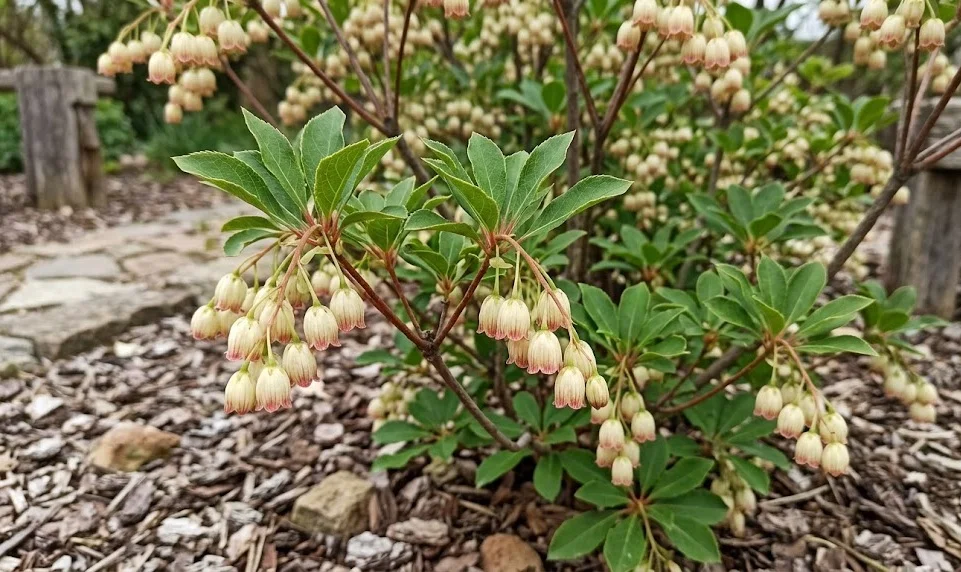

The light requirements of the redvein enkianthus are a delicate balance that significantly influences its growth habit and flowering potential. In its native habitats in Japan and other parts of East Asia, it typically grows as an understory plant in mountainous woodlands. This means it has evolved to thrive in environments where the light is filtered through the canopy of larger trees. Replicating this “dappled” light in a garden setting is often the key to achieving the most beautiful results.
Ideally, the shrub should be placed in a location that receives full morning sun followed by filtered or dappled shade in the afternoon. The morning sun provides the energy needed for robust growth and flower production without being too intense. Afternoon shade protects the delicate foliage from the harshest rays of the day, which can cause leaf scorch and stress. If forced to choose between too much sun and too much shade, this plant generally leans toward favoring a bit more protection.
In cooler, more northern climates, the plant can often handle a bit more direct sunlight throughout the day. The lower intensity of the northern sun and the cooler ambient temperatures reduce the risk of the leaves drying out. Conversely, in southern gardens, providing significant shade during the midday hours is absolutely essential for the plant’s survival. Always consider your specific geographic location and local microclimate when deciding where to plant your enkianthus.
The amount of light the plant receives will also directly affect the intensity of its autumn color and the density of its blooms. Plants grown in too much shade will often become leggy and produce fewer of the characteristic bell-shaped flowers. On the other hand, those in the perfect light balance will have a more compact, tiered structure and a spectacular display of red and orange leaves in the fall. Finding that “sweet spot” of illumination is the mark of a truly observant gardener.
Sun versus shade dynamics
The term “full sun” usually refers to six or more hours of direct sunlight, which can be a bit much for this species in many regions. If you do plant it in a sunny spot, you must be extremely diligent about maintaining consistent soil moisture to compensate. Without adequate water, the leaves will quickly turn brown at the edges and may drop prematurely in a self-preservation response. A thick mulch layer is your best ally if the plant is exposed to more sun than is ideal.
More articles on this topic
“Partial shade” is the most recommended light condition, typically defined as two to four hours of direct sun or dappled light throughout the day. This environment most closely mimics the forest edges where the species is often found in the wild. Under these conditions, the plant will maintain a healthy growth rate and develop the intricate branching pattern it is known for. The leaves will stay a vibrant green throughout the summer instead of taking on a yellowish or scorched appearance.
Deep shade, where there is very little direct or reflected light, should be avoided if you want the plant to reach its full aesthetic potential. In heavy shade, the growth will be very slow, and the shrub may lose its elegant, architectural form as it stretches toward the light. The flowers will also be much less numerous and may lack the distinct red veining that gives the plant its common name. While the plant may survive in the shade, it will rarely thrive or provide the visual impact you desire.
You can modify the light levels in your garden by selectively pruning the canopy of overhanging trees. Thinning out a few branches above the enkianthus can allow more dappled light to reach the shrub without exposing it to the full force of the sun. This technique of “light management” is a professional way to create the perfect environment for understory species. It allows you to use the existing structure of your garden to benefit the smaller, more delicate residents.
Bloom density and light exposure
The development of flower buds for the following year begins shortly after the current season’s flowers have faded. This process requires a significant amount of energy, which the plant produces through photosynthesis in its leaves. Therefore, adequate light during the summer months is crucial for a spectacular blooming season the following spring. If the plant is too shaded during this critical period, the bud set will be poor, and the flowers will be sparse.
More articles on this topic
The color intensity of the flowers themselves is also influenced by the quality and quantity of light they receive. In brighter locations, the red veins on the cream-colored bells tend to be more pronounced and vibrant. Plants in deeper shade may produce flowers that are more uniformly pale or even slightly greenish. If your primary goal is to enjoy the unique floral display, prioritize a site with good morning illumination.
As the days shorten in the autumn, the light levels change, triggering the plant’s transition into its famous fall foliage phase. The brilliant reds and oranges are the result of chemical changes in the leaves that are highly dependent on light exposure. A specimen that receives more light will typically have a much more intense and reliable color change than one in the shade. This is one of the many reasons why the positioning of the shrub is so important for the overall garden design.
Reflected light from nearby white walls or fences can also play a role in the plant’s development. This indirect light can provide a boost to plants in shaded areas without the heat intensity of direct solar radiation. However, be careful not to place the shrub too close to surfaces that reflect intense afternoon heat, such as dark stone or metal. The goal is to provide light while keeping the surrounding air and soil as cool and moist as possible.
Managing intense summer heat
In regions where summer temperatures frequently exceed 30°C, the interaction between light and heat becomes the primary concern. During these heatwaves, the plant’s ability to move water to its leaves can be outpaced by the rate of evaporation. Even if the soil is wet, the foliage can suffer if it is exposed to direct, burning sunlight during the hottest part of the day. Temporary shading, such as using a garden umbrella or a light shade cloth, can be a lifesaver during these extremes.
The direction the planting site faces is a key factor in how much heat the plant will have to endure. An east-facing location is usually ideal, as it receives the cool morning sun but is shielded from the hot afternoon rays. A south-facing wall should be avoided, as it can act like a radiator, trapping and reflecting heat onto the plant throughout the day. Western exposures can also be difficult because the light is at its most intense and the air temperature is at its highest.
Misting the foliage in the early morning can help raise the local humidity and cool the plant down before the day gets hot. This mimics the mountain mists of its native home and provides a refreshing start for the shrub. However, avoid misting late in the day, as this can encourage fungal growth if the leaves don’t dry before nightfall. It is a simple supplemental care task that can make a big difference during a stressful summer.
If you notice the leaves starting to curl or turn a bronze color in the middle of summer, it is likely a sign of light and heat stress. This is the plant’s way of reducing the surface area exposed to the sun to conserve moisture. Take note of these signals and consider if there are ways to provide more shade for the following year. Gardening is a continuous process of observation and adjustment based on the needs of your specific plants.