
Light is the primary engine of growth for the hollyhock, dictating everything from the height of its stalks to the number of blossoms it produces. As a plant that naturally thrives in open, sunny meadows and cottage gardens, Alcea is biologically programmed to seek out maximum solar radiation. Understanding the nuances of light intensity, duration, and quality is essential for any gardener looking to replicate the stunning displays seen in professional horticultural exhibitions. A hollyhock in the wrong light will never reach its true potential, regardless of how much water or fertilizer it receives.
The necessity of full sun exposure
To achieve their iconic vertical stature, hollyhocks require a minimum of six to eight hours of direct, unfiltered sunlight every day. This high light requirement is linked to the plant’s massive photosynthetic demand; it takes an incredible amount of energy to build a stem that can grow several inches in a single week. In full sun, the plant produces thick, sturdy cell walls that allow the stalk to remain upright without becoming excessively brittle. When grown in these optimal conditions, the foliage remains a deep, vibrant green, and the flower buds are tightly packed along the spike.
If hollyhocks are planted in an area that receives less than the required amount of light, they will quickly exhibit signs of “etiolation.” This condition causes the plant to stretch toward the nearest light source, resulting in weak, spindly stems that lack the structural integrity to support their own weight. Furthermore, the distance between the leaves and the flower buds (the internodes) will increase, giving the plant a sparse and “leggy” appearance. In a professional garden setting, such plants are often a disappointment as they require constant, heavy staking and produce fewer, smaller flowers.
The quality of sunlight also matters, with morning sun being particularly beneficial for the health of the hollyhock. Morning light provides the energy needed to start the day’s growth while simultaneously helping to dry any dew that has settled on the leaves overnight. This rapid drying is one of the most effective natural defenses against hollyhock rust and other fungal pathogens that require moisture to germinate. If you must choose between an area with morning sun and one with afternoon sun, the morning-lit site is almost always the superior choice for disease prevention.
In regions with extremely high temperatures, there is a subtle distinction between “full sun” and “scorching heat.” While the hollyhock loves light, intense mid-afternoon sun in a desert-like climate can lead to temporary wilting or leaf scorch if the plant isn’t adequately hydrated. In these specific environments, a location that provides a brief respite from the sun during the hottest hour of the day can actually be beneficial. However, for the vast majority of temperate gardens, more sun is almost always better than less when it comes to the Alcea species.
More articles on this topic
Light and the blooming cycle
The transition from a vegetative rosette to a flowering spike is a process heavily influenced by the amount of light the plant receives. Hollyhocks are often considered “long-day” plants, meaning they are triggered to begin their reproductive phase as the days reach their maximum length in mid-summer. This internal biological clock ensures that the flowers open when pollinators like bees and butterflies are most active. A plant kept in a shaded area may have its blooming delayed or, in extreme cases, may fail to produce a flower spike entirely during its second year.
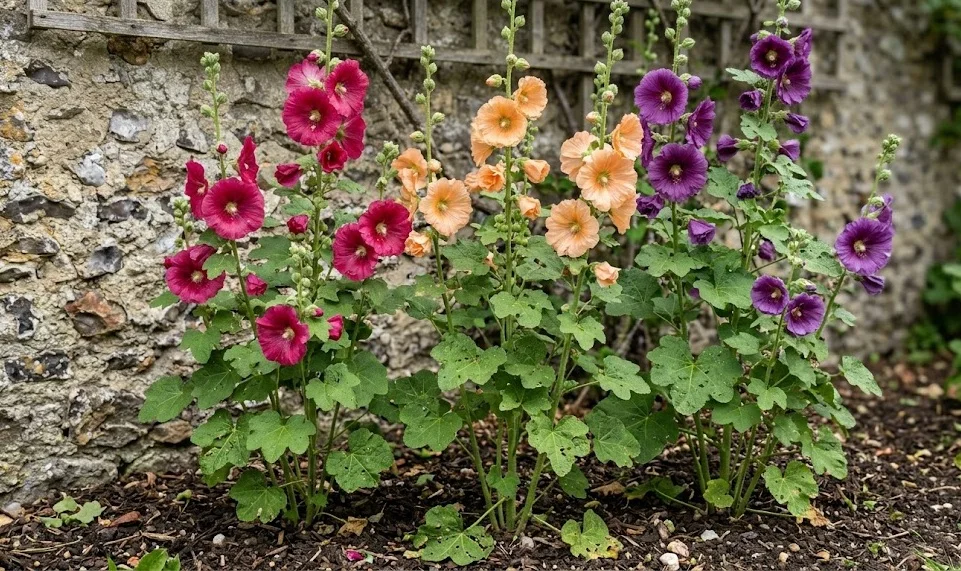
Light intensity also plays a critical role in the pigmentation and “saturation” of the hollyhock flowers. The deep reds, vibrant purples, and even the subtle pastels of different cultivars are most intense when the plant has had access to plenty of UV radiation. Plants grown in partial shade often produce flowers that appear “washed out” or pale compared to their sun-grown counterparts. For gardeners who are focused on the aesthetic impact of their floral displays, providing maximum light is the only way to ensure the colors are true to the variety’s description.
The density of the flower spike is another factor determined by the available light during the bud-development stage. High light levels encourage the plant to produce a greater number of buds in a smaller area, leading to the “wall of color” effect that hollyhocks are famous for. In lower light, the plant prioritizes survival over reproduction, leading to a “thinner” spike with fewer blossoms. Observing the spacing of the buds as the stalk begins to rise can give you an early indication of whether the light levels in that spot are sufficient for a world-class display.
Furthermore, light influences the longevity of the individual blossoms once they have opened. While it seems counterintuitive, a plant with a healthy, sun-driven metabolism is better equipped to maintain the turgor pressure in its petals, keeping them looking fresh for longer. A hollyhock in the shade may have flowers that wilt more quickly because the plant’s overall energy reserves are lower. By maximizing light, you are effectively “charging the battery” of the plant, allowing it to sustain its beautiful display through the heat of the summer.
More articles on this topic
Strategic placement and light management
Managing light in the garden often requires a bit of strategic thinking regarding the placement of taller plants and structures. Because hollyhocks can reach heights of eight feet or more, they can easily shade out smaller plants in the garden, but they can also be shaded by trees or nearby buildings. When planning your garden layout, place hollyhocks on the northern or eastern side of smaller perennials to ensure they don’t cast a permanent shadow over their neighbors. Conversely, make sure they are not placed in the “rain shadow” or “light shadow” of large deciduous trees.
The concept of “reflected light” can also be used to a gardener’s advantage, especially in smaller urban gardens. Planting hollyhocks against a white-washed wall or a light-colored fence can increase the total amount of light the plant receives by reflecting the sun’s rays back onto the foliage. This can be a game-changer for a garden that is borderline on its total sun hours, providing that extra boost of energy needed for a full bloom. However, be cautious of dark-colored walls, which can absorb too much heat and potentially stress the plant during a heatwave.
Seasonality is another factor to consider, as the angle of the sun changes significantly from spring to late summer. A spot that is in full sun in May might be in partial shade by July as nearby trees leaf out or the sun’s path shifts lower in the sky. When selecting a planting site, try to visualize the sun’s movement throughout the entire growing season. Professional garden designers often use sun-path apps or simple observation over several weeks to ensure their chosen location will remain sunny during the critical mid-summer blooming period.
Finally, remember that the light requirements of hollyhocks can be used to solve specific garden design challenges. If you have a sunny, “difficult” spot where other plants struggle with the heat, hollyhocks may be the perfect solution. Their deep taproots and sun-loving nature make them ideal for those bright, exposed corners of the property that receive the brunt of the summer sun. By matching the plant’s innate needs with the unique light profile of your garden, you create a harmonious environment where the hollyhock can truly shine as the star of the show.