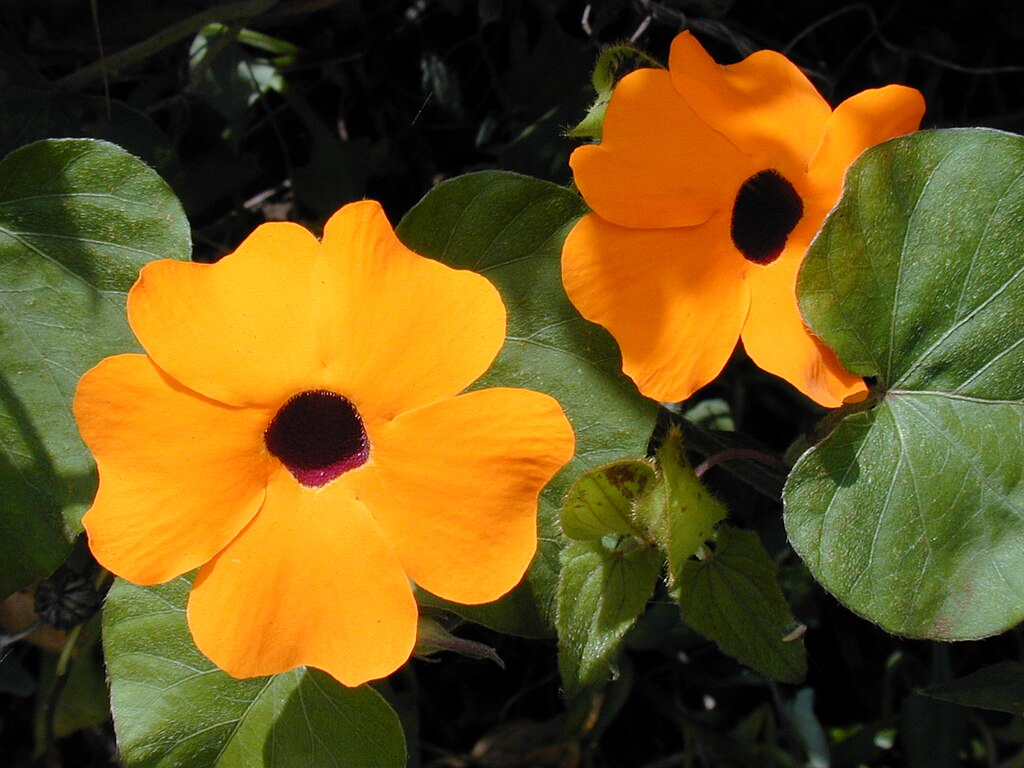

The quantity and quality of light that a black-eyed susan vine receives is the single most influential factor determining its flowering performance. As a plant originating from sun-drenched regions of Africa, Thunbergia alata is a quintessential sun-worshipper. Its entire physiology is geared towards converting bright sunlight into the energy required for its famously rapid growth and the production of a continuous and abundant display of flowers. Providing insufficient light is the most common reason for a disappointing, flowerless vine, making a thorough understanding of its light needs a prerequisite for successful cultivation.
To achieve the lush foliage and profusion of colourful blooms for which it is prized, the black-eyed susan vine requires a location that provides at least six to eight hours of direct, unfiltered sunlight per day. This period of full sun exposure fuels the process of photosynthesis, which in turn provides the energy needed to develop and open new flower buds. When deprived of adequate light, the plant will prioritize survival over reproduction; it will produce elongated, weak stems with sparse leaves in an attempt to reach for more light, a phenomenon known as etiolation, and will produce few, if any, flowers.
The ideal location for this vine is therefore one with a southerly or westerly aspect, where it can bask in the sun for the majority of the day. This could be against a wall, on a trellis, or in a hanging basket that is not shaded by overhead structures. The intensity of the sun is also a consideration. In climates with extremely hot and intense midday sun, a location that offers some light, dappled shade during the hottest part of the afternoon can be beneficial, preventing the leaves from scorching and reducing moisture stress on the plant.
It is important to observe the potential planting site at different times of the day to accurately assess its sun exposure. Obstructions such as trees, buildings, or other garden structures can cast shadows that may not be apparent at first glance. A spot that seems sunny in the morning may be in deep shade by the afternoon. Accurately mapping the sun’s path across the intended location is a crucial step in ensuring the vine is sited for optimal performance and floral display.
The impact of full sun on flowering
The direct correlation between sunlight and flowering in Thunbergia alata cannot be overstated. The plant’s internal mechanisms for initiating flower bud development are triggered by high light intensity. In a full sun location, the vine receives the maximum amount of solar energy, enabling it to produce the carbohydrates necessary to support a heavy bloom set. The result is a plant that is densely covered in flowers from early summer right through to the first frosts of autumn.
More articles on this topic
In contrast, a vine planted in a location that receives only partial sun, meaning fewer than six hours of direct light, will exhibit a markedly different growth habit. While it may still grow and produce healthy-looking foliage, the flowering will be significantly reduced. The plant will appear more leafy and less colourful, defeating the primary purpose for which most gardeners grow it. The few flowers that do appear may also be smaller and less vibrant than those on a plant grown in full sun.
This response is a fundamental survival strategy. In lower light, the plant conserves its energy, investing it in growing larger leaves and longer stems to maximize its light-capturing ability, rather than expending energy on the resource-intensive process of producing flowers and seeds. Therefore, when a black-eyed susan vine fails to bloom, the first and most important factor to investigate is whether it is receiving enough direct sunlight throughout the day.
It is also worth noting that the duration of daylight (photoperiod) can influence flowering. As a plant from near the equator, it is generally day-neutral, meaning it will flower regardless of day length as long as other conditions are met. However, the long days of summer in temperate regions, combined with high light intensity, create the perfect storm of conditions for its most prolific blooming period, reinforcing the need for a location that maximizes this sun exposure.
Recognizing signs of inadequate light
The black-eyed susan vine provides several clear visual cues when it is not receiving sufficient light. The most obvious sign, as previously mentioned, is a lack of flowers or a very sparse bloom. If the plant is producing lush, green foliage but no flowers, it is almost certain that it needs a sunnier location. This is a classic symptom of a plant that has enough energy for vegetative growth but not enough to enter its reproductive, or flowering, phase.
More articles on this topic
Another key indicator of insufficient light is etiolation, characterized by leggy growth. The stems of the plant will become unusually long and thin, with greater distances between the leaf nodes. This is the plant’s physical attempt to stretch and reach towards a perceived light source. The foliage on a light-deprived plant may also be a paler shade of green compared to the deep, rich green of a healthy plant grown in full sun.
The overall density of the plant will also be affected. In full sun, Thunbergia alata grows into a dense, full vine with abundant foliage. In a shady spot, the growth will be much more open and sparse, with a less vigorous appearance. The plant simply does not have the energy to produce the same volume of leaves and side shoots, resulting in a thin and straggly look.
If these symptoms are observed, the most effective remedy is to move the plant to a sunnier location. If the vine is grown in a container, this is a relatively simple task. If it is planted in the ground, it may be necessary to transplant it to a more suitable site. While transplanting can cause some temporary stress to the plant, the long-term benefit of providing adequate light will far outweigh the short-term setback.
Sunlight for indoor and overwintering plants
When a black-eyed susan vine is brought indoors for the winter, providing adequate light becomes the primary challenge. Light levels inside a home are significantly lower than outdoors, even in the brightest of windows. To keep the plant healthy through the winter, it is absolutely essential to place it in the location that receives the most direct sunlight possible. Typically, this will be a large, unobstructed, south-facing window.
Even in a south-facing window, the intensity and duration of winter sunlight are much reduced compared to summer. The plant will likely enter a state of semi-dormancy, with minimal new growth. It may also drop some of its leaves as it adjusts to the lower light conditions. This is a normal part of the overwintering process, and the goal is simply to keep the plant alive until spring, not to encourage active growth or flowering.
If a sufficiently bright natural light source is not available, supplementing with artificial lighting is highly recommended. A full-spectrum grow light, positioned several inches above the plant and run for 12 to 14 hours per day, can provide the light energy the plant needs to survive the winter in good health. Without adequate light, an overwintering vine is very likely to decline, becoming weak and susceptible to pests and diseases.
For cuttings that have been taken for overwintering, the light requirements are the same. Once rooted, the small plants need bright light to maintain their health. A sunny windowsill or a spot under a grow light will provide the necessary conditions to keep them sturdy and prevent them from becoming leggy. This ensures that when spring arrives, they are healthy, compact plants ready for vigorous growth once moved outdoors.

The black-eyed susan vine is a quintessential sun-worshipper that requires a minimum of six to eight hours of direct sunlight each day to produce its best display of flowers. In my research, I’ve found that plants grown in even partial shade tend to have much fewer blooms and a more open, leggy habit. The vibrant colors of the flowers are also much more intense when the plant is exposed to full sun. If you’re gardening in a northern climate, it’s especially important to choose the brightest possible spot for this vine. A south-facing wall or an open, unshaded area of the garden is ideal. I’ve seen specimens that were practically unrecognizable when grown in too much shade; they simply don’t have the same vigor or impact.
Dr. Kozlov, I couldn’t agree more; I’ve seen the exact same results in my own garden trials. One thing I’ve noticed is that the early morning sun is particularly important for this vine, as it helps stimulate the flowering buds. If the plant is shaded during the morning hours, it seems to delay the onset of blooming. I always recommend placing the black-eyed susan vine where it can soak up as much of that early-season sun as possible. It really makes a difference in the overall quantity and quality of the flowers.
I’ve found that the quality of the light is also important for the health of the foliage. In full sun, the leaves are a deep, vibrant green and seem to be much more resistant to diseases. When I tried growing a black-eyed susan vine in a spot with only filtered light, the leaves were much paler and seemed to be much more susceptible to aphids and other pests. It’s clear that this vine has evolved to thrive in bright, open conditions. I’ve since moved mine to the sunniest part of my garden and it’s doing much better. It’s a great reminder that understanding a plant’s natural habitat is the key to its success in the garden.
I’ve noticed the same thing with the foliage on my vines, techfan92! In the sunnier spots, the leaves are much tougher and less attractive to pests. I’ve also found that the flowers tend to last longer when the plant is healthy and vigorous. I’m definitely going to make sure all my future vines are planted in the brightest possible locations. It’s such a simple way to improve the health and beauty of your garden. Thanks for sharing your experience!
One thing to consider is the impact of reflected light on your vines. I’ve found that planting them against a white wall or fence can significantly increase the amount of light they receive, which can lead to an even more spectacular display of flowers. It also helps to boost the local temperature, which the black-eyed susan vine also appreciates. I’ve used this trick in several of my garden designs with great results. It’s a very simple and effective way to get the most out of your plants. Just make sure to monitor the soil moisture, as these spots can also dry out more quickly.