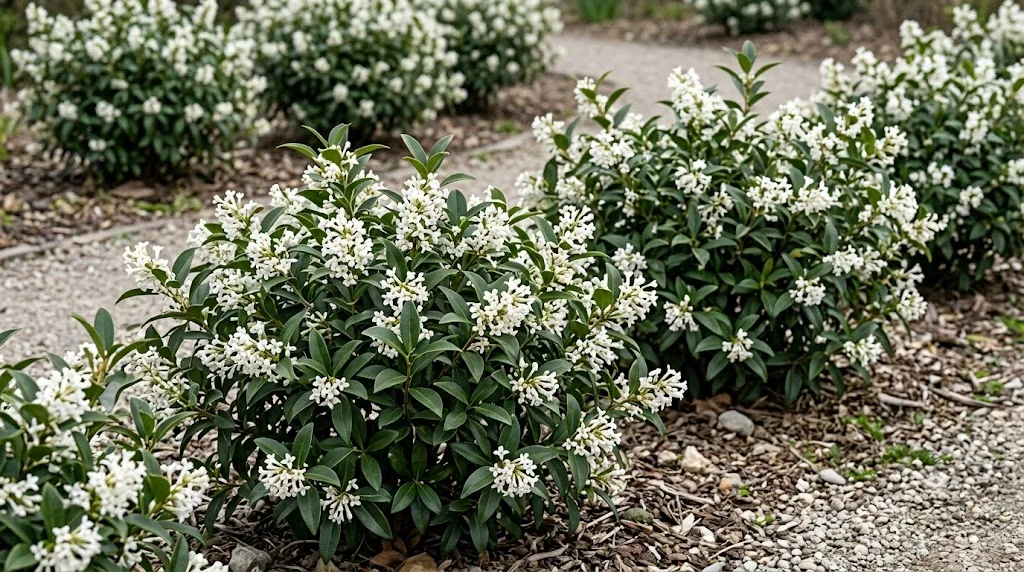

Burkwood osmanthus is generally a robust shrub, but environmental stress can make it vulnerable to root disorders, leaf spotting, scale insects, aphids, and other occasional problems. Many apparent diseases begin with unsuitable soil moisture, poor airflow, frost damage, or mechanical injury rather than an aggressive pathogen. Accurate diagnosis is therefore essential before treatment is chosen. Regular inspection, balanced care, and prompt removal of damaged material usually provide better control than routine preventive spraying.
Healthy shrubs have dense, glossy leaves, firm shoots, and a balanced pattern of new growth. Sudden changes in colour, texture, leaf retention, or shoot development deserve attention. The location of symptoms can reveal whether the cause is associated with roots, weather exposure, feeding, or a localised pest. Observing the entire plant is more useful than examining one damaged leaf in isolation.
Pests often establish first on sheltered inner branches, shoot tips, or the undersides of leaves. Sticky honeydew, black surface mould, distorted foliage, webbing, and clusters of insects are common warning signs. A hand lens can help identify small scale insects or mites. Early populations are easier to manage and cause less lasting damage.
Disease prevention begins with correct planting and care. Free-draining soil, appropriate spacing, moderate nutrition, and watering at the root zone all reduce risk. Overfed plants may produce tender growth that attracts sap-feeding insects. Waterlogged or drought-stressed roots weaken natural defence mechanisms and make the shrub less resilient.
Root problems and water-related decline
Root rot is most likely in soil that remains saturated for long periods. Affected plants may develop yellow leaves, weak growth, wilting despite wet soil, and progressive dieback. The roots can become dark, soft, and poorly anchored. In advanced cases, the shrub may decline rapidly because damaged roots can no longer absorb water.
More articles on this topic
Improving drainage is more important than applying a surface treatment. Compacted ground should be relieved where possible, and automatic irrigation should be adjusted to prevent repeated saturation. Plants in containers must have unobstructed drainage holes and a free-draining growing medium. Severely affected specimens may not recover if most of the root system has decayed.
Drought can produce symptoms that resemble disease, including brown leaf margins, premature leaf drop, and shoot-tip death. Evergreen leaves may remain attached after the damage has occurred, making the timing of stress difficult to recognise. Checking moisture below the surface helps distinguish drought from root rot. Dry soil requires deep irrigation, while wet, sour soil requires improved aeration and less water.
Irregular watering can be almost as damaging as a single dry period. Repeatedly allowing the root zone to dry and then saturating it stresses fine roots and disrupts nutrient uptake. A layer of mulch and less frequent but deeper irrigation create more stable conditions. Consistency is particularly important for young and container-grown shrubs.
Leaf spots, moulds, and shoot dieback
Leaf spots may appear as brown, black, grey, or purplish lesions of varying size. A small number of spots on older leaves is usually cosmetic and may not require treatment. Extensive spotting accompanied by yellowing or premature leaf fall suggests that growing conditions should be reviewed. Poor airflow, prolonged leaf wetness, and stressed roots often contribute to outbreaks.
More articles on this topic
Affected leaves that fall around the shrub can be collected and removed to reduce the amount of infected material nearby. Dense growth may be thinned lightly after flowering to improve air movement through the crown. Watering should be directed toward the soil rather than over the foliage. Tools used to remove diseased material should be cleaned before they are used on healthy plants.
Sooty mould develops as a dark coating on honeydew produced by sap-feeding insects. The mould itself usually grows on the sugary deposit rather than invading living leaf tissue. Heavy coatings can reduce photosynthesis and spoil the appearance of the shrub. Controlling the insects responsible for honeydew is the central part of treatment.
Shoot dieback can follow frost injury, physical damage, root stress, or infection entering through weakened tissue. Dead shoots should be cut back to healthy wood using clean, sharp secateurs. The cut surface should show firm, pale tissue rather than brown or black discoloration. If dieback continues to spread, drainage, planting depth, and the base of the stems should be examined carefully.
Scale insects and aphids
Scale insects are among the more likely pests on evergreen shrubs because they can remain hidden against stems and leaf undersides. They appear as small, fixed bumps or flattened shells in brown, grey, white, or waxy colours. Many species feed by extracting sap and may produce sticky honeydew. Heavy infestations weaken shoots and encourage sooty mould.
Light infestations can often be reduced by wiping or brushing the insects from accessible stems. Heavily affected twigs may be pruned out after flowering if removal will not disfigure the shrub. Horticultural oil or an approved soap-based treatment may be useful when applied at the correct stage of the insect’s life cycle. Complete coverage is important because protected adult scales are difficult to reach.
Aphids usually gather on tender shoot tips and young leaves. Their feeding can cause curling, distortion, and reduced shoot development. They also produce honeydew and may attract ants, which feed on the sugary material. Natural predators such as ladybirds, lacewing larvae, and hoverfly larvae often control small colonies.
Strong jets of water can dislodge aphids from sturdy shoots without the need for insecticide. Repeated inspection is necessary because surviving insects can rebuild the colony. Excess nitrogen should be avoided because soft, lush growth is particularly attractive to aphids. Treatment should remain selective so that beneficial insects are preserved.
Mites, vine weevils, and other occasional pests
Spider mites may occur in hot, dry, sheltered conditions, especially on container plants or shrubs grown close to warm walls. Fine stippling, bronzed leaves, and delicate webbing are typical signs. The mites feed on leaf cells and can cause widespread dulling during severe infestations. Checking the undersides of affected leaves with a hand lens helps confirm their presence.
Improving humidity around the plant and preventing drought stress can make conditions less favourable to mites. Leaves may be rinsed periodically, although the soil should not be kept permanently wet. Severe infestations may require an approved treatment specifically labelled for mites. Several applications may be necessary because eggs are often less affected than active stages.
Vine weevil larvae can damage container-grown shrubs by feeding on roots. Adult weevils leave irregular notches along leaf edges, while larvae hidden in the compost cause more serious injury. A plant may wilt, loosen in the pot, or collapse when root damage becomes extensive. Inspecting the root ball reveals cream-coloured larvae with brown heads.
Biological nematodes can provide effective control when compost temperatures are suitable. Adult weevils may also be collected by hand at night or trapped beneath hiding materials. Repotting badly affected plants allows damaged roots and old compost to be removed. Clean containers and fresh compost reduce the chance of immediate reinfestation.
Integrated prevention and responsible treatment
Regular inspection should become part of ordinary care rather than an activity reserved for visibly sick plants. Look beneath leaves, along stems, and inside the crown every few weeks during active growth. Early detection allows localised action such as washing, pruning, or hand removal. This is usually easier and safer than treating a large established infestation.
Correct identification prevents unnecessary use of pesticides and avoids confusing natural features with pests. Old leaf scars, harmless lichens, and minor weather damage may appear alarming but require no chemical control. Photographs taken over several weeks can show whether a symptom is spreading. The speed and pattern of change often provide valuable diagnostic information.
When a treatment is needed, it should be selected for the identified pest or disease and used exactly according to its instructions. Spraying during strong sun, high temperatures, or active pollinator movement can cause avoidable harm. Flowers should not be treated while bees and other insects are visiting them. Protective clothing and correct storage remain essential even with products described as natural.
The most durable form of control is to reduce plant stress. Healthy roots, balanced feeding, appropriate moisture, and suitable light strengthen the shrub’s ability to tolerate minor damage. Pruning tools should be kept clean, and dead material should not remain trapped inside the crown. With these measures, Burkwood osmanthus rarely suffers serious long-term pest or disease problems.