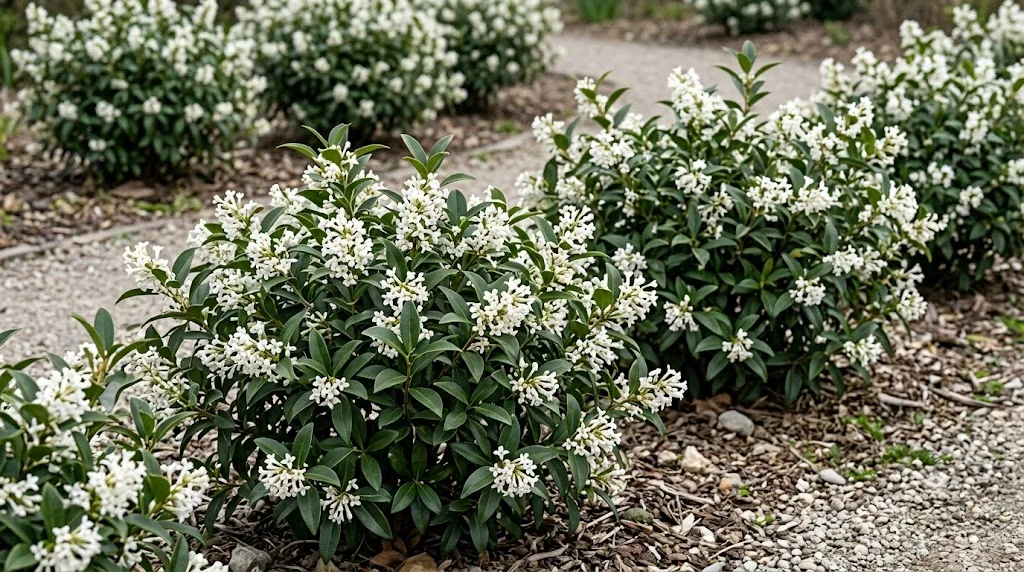

Burkwood osmanthus grows most successfully where it receives abundant light combined with protection from severe heat and drying winds. It can tolerate a range of exposures, but the amount and quality of light directly influence flowering, shoot density, leaf colour, and the overall shape of the shrub. Full sun generally produces the strongest floral display, while partial shade can protect foliage in hot climates. Deep, persistent shade should be avoided because it weakens growth and reduces the ornamental value of the plant.
Light conditions change throughout the year as the sun moves, surrounding trees develop leaves, and buildings cast longer or shorter shadows. A site that appears sunny in early spring may become heavily shaded in summer. Observing the position at several times of day provides a more accurate picture than a single inspection. The shrub should ideally receive several hours of direct sun or bright, open light.
The intensity of sunlight also varies according to climate and orientation. Morning sun is cooler and usually well tolerated, while strong late-afternoon sun can increase moisture loss in hot regions. In cooler areas, a south-facing or west-facing position may provide valuable warmth. Local conditions should therefore guide placement rather than a rigid rule.
Light must be considered together with soil moisture and wind. A sunny position with deep, moisture-retentive soil may be ideal, while the same exposure in dry sand can cause stress. Partial shade can reduce irrigation needs, but competition from tree roots may cancel that advantage. The best site combines suitable light with stable root conditions.
Growing in full sun
Full sun supports compact branching and helps the shrub form numerous flower buds. Leaves often remain dense and richly coloured when soil moisture is adequate. The plant also dries more quickly after rain, reducing the time that foliage remains wet. This can lower the risk of some leaf-spotting problems.
More articles on this topic
In cool and temperate regions, full sun is usually the preferred exposure. A position receiving six or more hours of direct light can produce strong growth and abundant spring fragrance. Shelter from cold wind remains important because sunny winter days may increase moisture loss from the leaves. The warmest location is not always the safest if it is also highly exposed.
Summer watering may be necessary for shrubs grown in sunny sites, especially during establishment. Mulch helps keep the root zone cooler and slows evaporation. A plant that repeatedly dries out may develop scorched leaf edges despite receiving otherwise suitable light. Bright exposure should therefore be matched with dependable moisture.
Reflected heat from pale walls, paving, or glass can create conditions more intense than ordinary full sun. Leaves may scorch even when nearby garden plants remain unaffected. Increasing distance from reflective surfaces or providing light afternoon shade can reduce stress. Good airflow is helpful, but strong hot wind should be avoided.
Growing in partial shade
Partial shade is suitable when the shrub receives direct sun for part of the day and bright light for the remainder. Morning sun with afternoon shade is particularly useful in warm climates. This pattern supports flowering while protecting leaves from the hottest conditions. The soil also tends to retain moisture for longer.
More articles on this topic
The plant can grow beneath the light canopy of open trees, provided root competition is not excessive. Dense tree roots may remove water and nutrients before the shrub can use them. Additional irrigation and organic mulch may be necessary in such positions. Avoid planting directly beneath shallow-rooted, highly competitive trees.
Flowering in partial shade may be slightly lighter than in full sun, but it can still be generous. The degree of reduction depends on how bright the site remains. Open shade near the edge of a canopy is much better than a dark space enclosed by buildings and evergreen vegetation. Brightness, not merely the absence of direct sun, determines performance.
Growth should be monitored for signs of insufficient light. Long internodes, widely spaced leaves, leaning shoots, and a thin interior indicate that the shrub is reaching toward brighter conditions. Selective pruning may temporarily improve shape but cannot correct a fundamentally dark site. Moving the plant may be the best solution when shade continues to increase.
Indoor light, containers, and changing exposure
Burkwood osmanthus is primarily an outdoor shrub and is not suited to long-term cultivation in ordinary indoor rooms. Indoor light is usually much weaker than outdoor light, even beside a bright window. Warm, dry air can also encourage pests and cause leaf loss. Temporary protection in a cool, bright structure is different from keeping the plant as a houseplant.
Container specimens can be repositioned as seasonal light conditions change. A bright, sheltered terrace may be ideal in spring, while light afternoon shade can be useful during extreme summer heat. Pots should be turned occasionally if light reaches them strongly from only one side. This encourages a more balanced crown.
A plant moved from shade into strong sun should be acclimatised gradually. Sudden exposure can scorch leaves that developed under lower light. Increasing the duration of direct sun over one or two weeks allows the foliage to adjust. Newly purchased plants may also need this transition if they were kept under nursery shade.
Nearby construction, growing trees, or new garden structures can alter exposure over time. A mature shrub that once flowered well may decline as shade becomes denser. Periodic evaluation helps distinguish a light problem from a feeding or pruning issue. Maintaining an open, bright position is one of the most effective ways to preserve dense growth and reliable flowering.