
Pruning is a vital horticultural practice that ensures the harlequin glorybower remains both healthy and aesthetically pleasing within the garden landscape. Because this shrub has a vigorous growth habit and a tendency to sucker, regular intervention is necessary to maintain its desired form and size. Beyond mere shaping, strategic cutting back encourages the production of new wood, which is essential for a prolific display of flowers and berries. Mastering the timing and technique of pruning is the mark of a truly dedicated and professional gardener.
The primary goals of pruning this species are to improve air circulation, remove unproductive wood, and control the overall spread of the plant. Without regular attention, the shrub can become a tangled thicket that is more prone to pests and diseases. A well-pruned specimen, however, showcases a balanced structure that highlights the beauty of its large leaves and exotic blooms. Each cut should be made with a clear purpose, whether it is for health, structural integrity, or ornamental value.
Timing is the most critical factor in the success of your pruning efforts, as the plant’s reaction depends on its current metabolic state. Generally, the best time to perform significant pruning is in the late winter or very early spring while the plant is still dormant. This allows the shrub to direct its first flush of spring energy into healing the wounds and producing vigorous new growth. Pruning during the height of the growing season is usually limited to minor shaping or removing damaged branches.
The tools you use are just as important as the technique, as clean cuts heal faster and are less likely to become entry points for pathogens. A pair of sharp bypass pruners is ideal for smaller stems, while loppers or a pruning saw may be needed for thicker, older wood. Always ensure your tools are sterilized with alcohol or a mild bleach solution before moving from one plant to another. This simple precaution is one of the most effective ways to prevent the spread of garden diseases.
Fundamental pruning techniques
Thinning is the process of removing entire branches back to their point of origin on the main stem or trunk. This technique is highly effective for reducing the density of the canopy and allowing more light and air to reach the center of the plant. By removing the oldest or most crowded branches, you encourage the development of younger, more productive wood. Thinning should always be the first step in your annual pruning routine to establish the overall framework of the shrub.
More articles on this topic
Heading back involves cutting the ends of branches to a specific bud or lateral branch to control the overall size and shape. This type of cut stimulates the buds just below the cut to grow, leading to a bushier and more branched appearance. Be careful not to “over-head” the plant, as this can result in a dense outer shell of growth that shades out the interior. Proper heading back should always consider the natural growth habit of the harlequin glorybower.
Sucker removal is a recurring task for anyone growing this species, as it naturally produces new shoots from the root system. If left unchecked, these suckers can eventually take over and turn a single specimen into a large, messy colony. The best way to manage suckers is to pull them or cut them off as close to the root as possible as soon as they appear. Regular monitoring throughout the summer will keep the plant contained and direct more energy to the main branches.
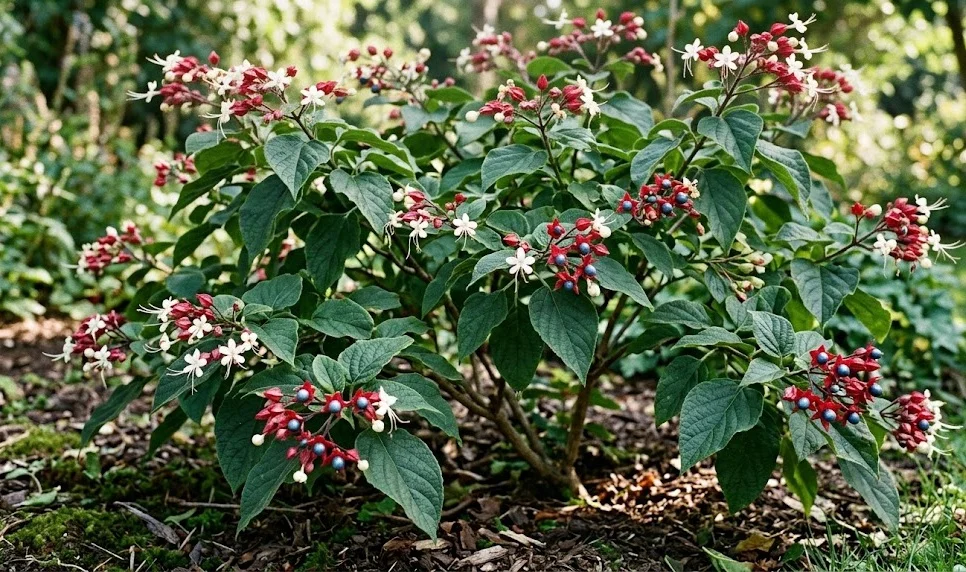
Deadheading, or removing spent flowers, is not strictly necessary for the health of the plant but can improve its appearance. However, with the harlequin glorybower, you must be careful because the flowers are followed by the highly ornamental berries. If you remove the flowers, you will miss out on the spectacular blue and red autumn display. Most gardeners choose to skip deadheading for this reason, allowing the natural lifecycle of the plant to unfold.
Structural and rejuvenation pruning
For older, neglected plants, a more drastic approach known as rejuvenation pruning may be necessary to restore their vigor. This involves cutting the entire shrub back to within a few inches of the ground in early spring. While it may seem extreme, the harlequin glorybower is remarkably resilient and will quickly send up a flush of healthy new shoots. This “hard prune” is an excellent way to reset a plant that has become too large or woody to manage otherwise.
More articles on this topic
If you prefer to maintain the plant as a small tree rather than a shrub, you will need to perform structural training from a young age. Select a single, strong central leader and remove all other competing stems at the base. As the plant grows, gradually remove the lower branches to expose the trunk and create a clear “clearance” beneath the canopy. This elevated form can be particularly striking and is a great way to save space in smaller gardens.
Maintaining a balanced canopy requires you to look at the plant from several different angles as you work. Step back frequently to ensure that you are not removing too much from one side or creating an asymmetrical shape. The goal is to mimic the natural, rounded form of the species while removing any crossing or rubbing branches. A well-proportioned shrub is not only more attractive but also more stable during heavy winds and storms.
Long-term structural health also depends on the removal of any wood that shows signs of decay or mechanical damage. Even a small wound can become a site for fungal infections that eventually weaken the entire branch. By proactively removing these problem areas, you protect the core of the plant and ensure its longevity. This “clean-up” pruning should be a regular part of your seasonal maintenance tasks for every woody plant in your garden.
Managing the aftermath of pruning
After a significant pruning session, the plant will need a little extra care to help it recover and fuel its new growth. A light application of balanced fertilizer can provide the necessary nutrients for the surge of metabolic activity that follows pruning. Ensure the plant is well-watered, as the new shoots are particularly sensitive to drought stress. Maintaining a fresh layer of mulch around the base will also help keep the root system stable during this transition.
The wood removed during pruning should be handled carefully, especially if any of it shows signs of disease or pests. It is usually best to chop up the healthy trimmings for compost or use them as natural mulch in other parts of the garden. However, diseased wood should always be disposed of in the trash or burned to prevent the spread of pathogens. Keeping your garden site clean is a fundamental part of professional plant management.
Over the weeks following your pruning, monitor the plant to see how it responds to the cuts you made. You may notice a flush of “water sprouts”—straight, fast-growing shoots that often appear near large cuts. These should usually be removed as they are weak and add little to the ornamental value of the plant. Learning how your specific plant reacts to pruning will help you refine your technique in future years.
Pruning is a conversation between the gardener and the plant that takes place over many seasons. With the harlequin glorybower, it is an opportunity to guide a vigorous species into a refined and beautiful garden element. Each year, you will gain a deeper understanding of its growth patterns and how best to support its natural beauty. A well-pruned shrub is a testament to the skill and patience of the person who cares for it.