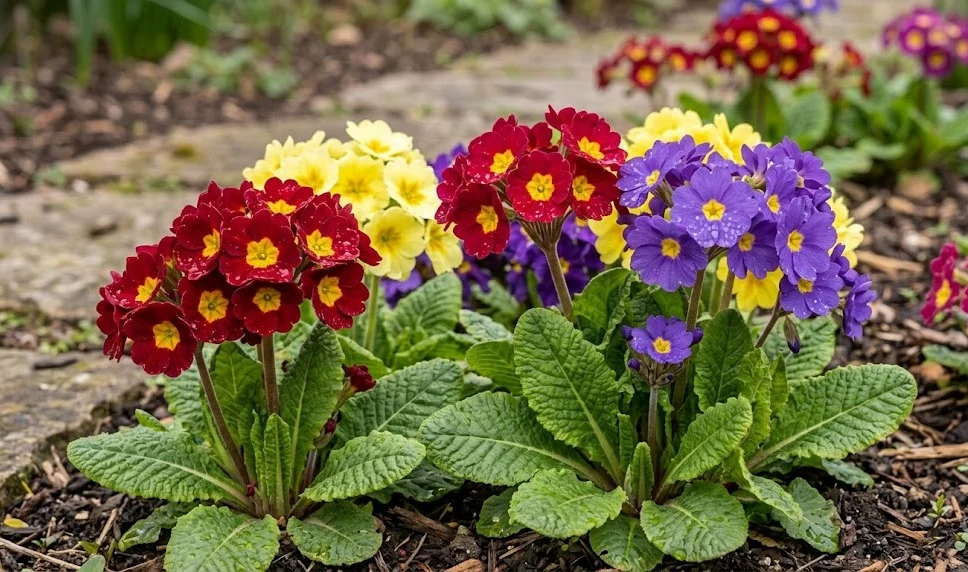

Effective watering is the cornerstone of maintaining healthy garden primroses, as these plants are particularly sensitive to fluctuations in soil moisture. They belong to a group of plants that prefer a “cool root run,” meaning the soil should stay consistently damp but never saturated. Finding the right balance is an art that requires you to pay close attention to both the weather and the soil structure. During the active growing season in spring, their demand for water is at its highest point.
You should always aim to water your primroses at the base of the plant rather than from above. Wetting the foliage can encourage the development of gray mold and other fungal diseases, especially in humid weather. A soaker hose or a watering can with a long spout is the best tool for delivering water directly to the root zone. This ensures that the water reaches the plant where it is needed most without wasting resources or risking plant health.
Early morning is the ideal time to water, as it allows any accidental moisture on the leaves to evaporate during the day. Watering in the evening can leave the plants sitting in damp conditions overnight, which is an open invitation for slugs and snails. If you notice the leaves of your primroses wilting in the afternoon heat, it is usually a sign of environmental stress rather than a direct need for more water. Check the soil moisture before you reach for the hose, as over-watering a stressed plant can be fatal.
The frequency of your watering schedule will depend largely on the type of soil in your garden and the current air temperature. Heavy soils retain moisture longer, while sandy soils will require more frequent attention to keep the plants hydrated. During a particularly dry summer, you might need to water your primroses several times a week to keep them alive. Always monitor the top few centimeters of soil; if it feels dry to the touch, it is time to provide some hydration.
Managing seasonal water requirements
As the garden primrose moves through its annual life cycle, its need for supplemental water changes significantly. In the early spring, when the plant is producing flowers and new leaves, it requires a steady supply of moisture to support this rapid growth. If the soil dries out during the budding stage, the flowers may be small or fail to open entirely. Providing deep, regular watering during this critical period will ensure a spectacular and long-lasting floral display.
More articles on this topic
During the heat of mid-summer, many primroses enter a state of semi-dormancy where their growth slows down to conserve energy. While they still need moisture to survive, they do not require as much as they did during the peak of spring. Your goal during the summer months is simply to prevent the root ball from drying out completely and becoming hydrophobic. A thick layer of mulch can be a lifesaver during this time, as it prevents evaporation and keeps soil temperatures lower.
Autumn brings a second, smaller flush of growth for some varieties, and moisture levels should be adjusted accordingly. As the air temperatures drop, the evaporation rate decreases, so you may find that you need to water less frequently than in summer. However, it is important not to let the plants go into the winter in bone-dry soil, as this makes them more vulnerable to frost damage. A well-hydrated plant has a much better chance of surviving the rigors of a cold winter than a dehydrated one.
Winter watering is rarely necessary for plants growing in the ground, as natural rainfall and snow usually provide enough moisture. In fact, the primary danger during winter is often too much water, which can lead to crown rot in cold, heavy soils. If you are growing primroses in containers or under the eaves of a house, you should check them occasionally to ensure they haven’t dried out completely. If the ground isn’t frozen, a light watering on a mild day can be beneficial for container-grown specimens.
Understanding nutrient requirements
To reach their full potential, garden primroses require a balanced diet of essential nutrients delivered at the right time. They are not considered “heavy feeders,” but they do respond well to a boost in soil fertility, especially in older garden beds. The primary nutrients they need are nitrogen for leaf growth, phosphorus for flower production, and potassium for overall plant health and disease resistance. A lack of these elements will result in stunted growth and a lackluster display of color in the spring.
More articles on this topic
Organic matter is the best long-term source of nutrients for these woodland-dwelling perennials. By regularly adding compost or leaf mold to your garden, you are providing a slow-release form of nutrition that mimics their natural environment. This organic approach also improves the soil structure, making it easier for the roots to access the nutrients already present in the ground. For many gardeners, a simple top-dressing of compost in the autumn or early spring is all the fertilization the plants will ever need.
If you choose to use synthetic fertilizers, it is important to select a product with a balanced N-P-K ratio, such as a 10-10-10 formula. High-nitrogen fertilizers should be used sparingly, as they can cause the plant to produce a mass of foliage while neglecting its flowers. Phosphorus is particularly important for primroses, so look for fertilizers that are marketed for blooming plants or bulbs. Always follow the manufacturer’s instructions regarding dosage, as more is definitely not better when it comes to plant nutrition.
Micronutrients like iron, magnesium, and manganese also play a vital role in the health of the garden primrose. A deficiency in these minerals often manifests as chlorosis, where the leaves turn yellow while the veins remain green. This is particularly common in alkaline soils where these nutrients become chemically locked away and unavailable to the plant. If you notice these symptoms, applying a chelated micronutrient spray or an acidic soil conditioner can quickly resolve the problem.
Timing and application of fertilizers
The timing of your fertilizer application is just as important as the nutrients themselves for achieving the best results. The first and most important feeding should take place in the late winter or very early spring, just as the first signs of new growth appear. This provides the plant with the energy it needs to produce its first flush of flowers and leaves. A liquid fertilizer can be very effective at this stage as it is quickly absorbed by the active root system.
A second application of fertilizer can be beneficial once the main flowering period has come to an end. This helps the plant to build up its energy reserves for the following year and supports the development of new rosettes. Avoid fertilizing in the late summer or autumn, as this can stimulate new, tender growth that won’t have time to harden off before the first frost. You want the plant to naturally transition into its dormant phase as the temperatures begin to drop.
When applying granular fertilizers, always scatter the product around the base of the plant rather than over the leaves. The concentrated salts in synthetic fertilizers can burn the foliage if they are allowed to sit on the leaves for any length of time. Gently scratch the granules into the top layer of soil with a hand fork to ensure they stay in place and begin to break down. After any fertilizer application, it is essential to water the area thoroughly to help transport the nutrients to the roots.
Foliar feeding is another professional technique that can be used to give your primroses a quick health boost. This involves spraying a very dilute solution of liquid fertilizer directly onto the leaves, where it is absorbed through the stomata. This method is especially useful for correcting minor nutrient deficiencies or providing a “pick-me-up” during periods of stress. However, foliar feeding should always be seen as a supplement to, rather than a replacement for, proper soil-based nutrition.
Avoiding the pitfalls of over-fertilization
While it is tempting to think that more fertilizer will result in better plants, over-fertilizing is one of the most common mistakes in primrose care. Excessive amounts of fertilizer can lead to an accumulation of salts in the soil, which can actually prevent the roots from taking up water. This can cause symptoms that look like dehydration, leading inexperienced gardeners to water even more, which only worsens the problem. A “less is more” philosophy is usually the safest approach when dealing with these delicate perennials.
One of the most obvious signs of over-fertilization is the presence of brown, “burned” edges on the leaves of your primroses. This occurs when the plant absorbs more minerals than it can process, leading to toxic levels in the leaf tissue. Excessive nitrogen can also result in very large, soft leaves that are highly attractive to pests like aphids and slugs. Furthermore, plants that have been over-stimulated are often less hardy and more susceptible to winter damage.
If you suspect that you have over-fertilized your plants, the best course of action is to flush the soil with large amounts of clean water. This helps to leach the excess salts and nutrients out of the root zone and away from the plant. Avoid applying any more fertilizer for at least one full growing season to allow the soil chemistry to return to a natural balance. In extreme cases, you may need to lift the plants and move them to a fresh location with untreated soil.
Maintaining a healthy soil ecosystem through organic methods is the best way to prevent the problems associated with synthetic fertilizers. Using compost, mulch, and natural soil conditioners creates a buffer that protects the plants from sudden changes in nutrient levels. A slow, steady supply of nutrients is much more beneficial for the long-term health and vigor of your garden primroses. By observing your plants closely and providing only what they truly need, you can ensure they remain a beautiful part of your garden for years.