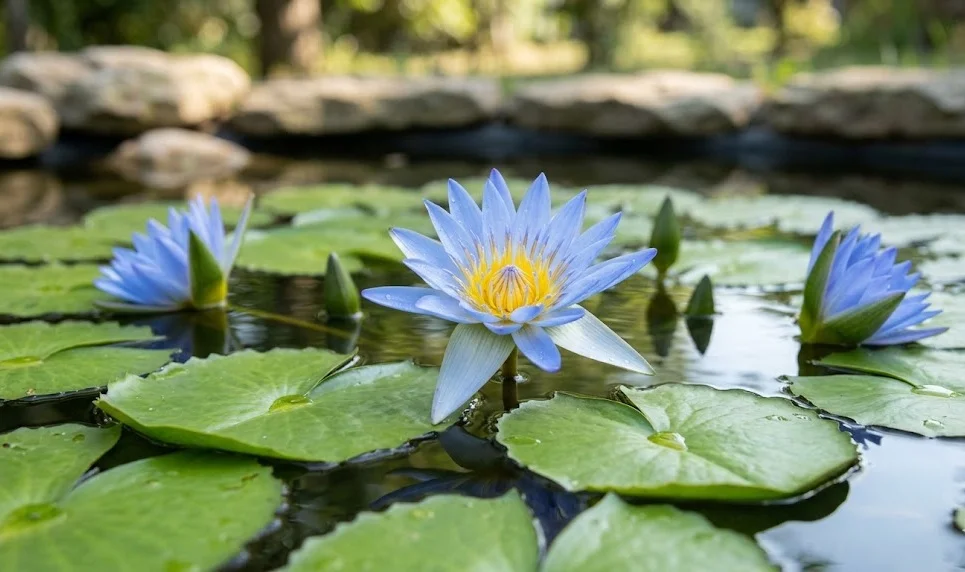

Watering and fertilization are the twin pillars of nutrition that dictate the growth and flowering potential of the blue water lily. While it may seem redundant to “water” an aquatic plant, the management of water levels and the quality of the medium are vital for its survival. Because the plant is contained within a pot submerged in a pond, it relies entirely on the gardener to provide a nutrient-rich environment. Professional fertilization techniques ensure that the plant has the specific minerals required to produce its iconic blue blooms throughout the summer season.
Managing water levels and stability
The depth of the water above the plant’s crown is a dynamic factor that must be managed with precision throughout the year. As water evaporates during the hot summer months, the concentration of minerals and salts in the pond can increase, potentially stressing the plant. It is essential to top off the pond regularly to maintain a consistent depth, ideally between thirty and sixty centimeters for a mature specimen. This consistency allows the plant to regulate its internal pressure and maintain the buoyancy of its large leaves.
During periods of heavy rain, the water level may rise significantly, which can temporarily submerge the floating leaves. While the blue water lily can handle brief periods of submersion, prolonged exposure to deep water can cause the leaves to rot. Professional pond designs often include an overflow pipe to ensure that excess water is drained away automatically. If your pond lacks this feature, manually removing water after a storm is a necessary step to keep the foliage healthy and functional.
The temperature of the water used for topping off the pond should ideally be close to the temperature of the pond itself. Adding a large volume of very cold tap water can shock the plant and cause a temporary halt in its metabolic processes. It is better to add water in smaller increments more frequently rather than doing one large fill-over. This “little and often” approach helps maintain a stable environment that supports continuous growth and blooming.
In smaller containers or patio ponds, water level management becomes even more critical due to the limited volume. These smaller environments can heat up and evaporate much faster than a large, established pond. Gardeners should check these containers daily during heatwaves to ensure the roots never become exposed to the air. A well-managed water level is the first line of defense against physiological stress and ensures the lily pads can always reach the sunlight.
More articles on this topic
Water quality and chemical balance
The quality of the water is just as important as the quantity when it comes to the health of the blue water lily. This species is sensitive to high levels of chlorine and chloramines, which are common additives in municipal water supplies. Using a water conditioner that neutralizes these chemicals is a professional standard when filling or topping off a pond. Alternatively, allowing tap water to sit in an open container for twenty-four hours allows the chlorine to dissipate naturally.
The pH level of the water should be monitored regularly to ensure it stays within the optimal range of six to seven point five. If the water becomes too alkaline, the plant may struggle to absorb iron and other essential micronutrients, leading to yellowing leaves. Conversely, highly acidic water can damage the delicate root hairs and disrupt the beneficial microbial life in the soil. Simple testing kits are available and should be used at least once a month to track any significant shifts in water chemistry.
Total dissolved solids and mineral hardness also play a role in how well the plant can transport nutrients through its system. Water that is excessively hard can lead to the buildup of mineral crusts on the surface of the leaves, which hinders gas exchange. If the local water is very hard, blending it with harvested rainwater can help create a more balanced and natural environment. This attention to detail in water quality is what allows the blue water lily to reach its full ornamental potential.
Nitrate and phosphate levels in the water should be kept low to prevent the overgrowth of competing algae. While the lily needs these nutrients, it should ideally get them from the soil and root fertilization rather than the water column itself. Excessive nutrients in the water often lead to “pea soup” algae, which blocks light and reduces the oxygen available to the plant. Keeping the water clean and nutrient-poor while the soil remains nutrient-rich is the professional secret to a clear and beautiful pond.
More articles on this topic
Understanding nutrient requirements
The blue water lily is a heavy feeder, meaning it requires a significant amount of nutrients to sustain its rapid growth and large flowers. Nitrogen is essential for the development of the lush, green lily pads that provide the energy for the rest of the plant. Without adequate nitrogen, the leaves will remain small, pale, and unable to support a healthy blooming cycle. However, too much nitrogen can lead to excessive leaf growth at the expense of flower production, so balance is key.
Phosphorus is the primary nutrient responsible for the development of those spectacular blue flowers and a strong rhizome system. Professional aquatic fertilizers often have a higher middle number in their N-P-K ratio to encourage prolific blooming. Ensuring that the plant has access to enough phosphorus is the best way to guarantee a long and vibrant flowering season. It also helps the plant build up energy reserves in the rhizome for the following spring.
Potassium and various micronutrients like iron, magnesium, and manganese are also vital for the plant’s overall structural integrity. Iron, in particular, is necessary for chlorophyll production, and a deficiency often manifests as yellowing between the leaf veins. Because these minerals are not always present in standard garden soil, they must be supplemented through targeted fertilization. A well-nourished plant is far more resistant to environmental stressors and common pests.
The unique challenge of fertilizing an aquatic plant is ensuring the nutrients stay in the soil rather than dissolving into the water. This is why specialized aquatic fertilizer tabs or spikes are the preferred choice for professional gardeners. These products are designed to be pushed deep into the soil near the roots, where they release their nutrients slowly over several weeks. This delivery method ensures the plant gets exactly what it needs without feeding the algae in the pond.
Fertilization timing and techniques
The fertilization schedule should begin in early spring, just as the first leaves start to appear on the water’s surface. This initial boost provides the energy needed for the plant to quickly establish its canopy and begin the budding process. Depending on the specific product used, fertilization should be repeated every four to six weeks throughout the growing season. Consistency is vital, as a sudden drop in nutrient availability can cause the plant to stop producing new flower buds.
To apply the fertilizer, the gardener should carefully push the tablet or spike into the soil about five to ten centimeters away from the central crown. It is important not to place the fertilizer directly against the rhizome, as the concentrated nutrients could cause chemical burns. After inserting the tablet, the hole should be pinched shut to prevent the fertilizer from leaching out into the pond. This precise placement ensures maximum uptake by the root system.
As the season progresses into late summer, the frequency of fertilization should be gradually reduced. By the time the water begins to cool in early autumn, the plant will naturally start to slow its growth in preparation for dormancy. Adding fertilizer late in the season can encourage soft, new growth that is easily damaged by the first frosts of winter. Stopping the nutrient supply allows the plant to focus on hardening its rhizome for the cold months ahead.
Monitoring the plant’s response to fertilization is an essential part of the professional care routine. If the leaves are large and vibrant and the flowers are appearing regularly, the current schedule is likely correct. If growth seems stagnant or the leaves are pale despite regular feeding, it may be necessary to adjust the type or amount of fertilizer. Each pond is a unique ecosystem, and the blue water lily will provide visual cues to help the gardener fine-tune its nutritional needs.
Identifying and correcting imbalances
Nutrient deficiencies often present clear visual symptoms that an experienced gardener can learn to recognize quickly. For instance, small, reddish-purple leaves on a normally green plant can indicate a significant lack of phosphorus. If the oldest leaves are turning yellow and dying off prematurely, it is often a sign that the plant is recycling nitrogen to support new growth. Recognizing these signals early allows for corrective action before the plant’s health is seriously compromised.
Over-fertilization can be just as problematic as a lack of nutrients, often leading to burnt leaf edges or distorted growth. If you notice a sudden explosion of algae immediately after feeding, it is a sign that the fertilizer is leaching into the water. This usually happens if the tablets were not buried deep enough or if the soil is too loose to hold them. Reducing the dose or switching to a slower-release formula can help resolve this issue and restore balance to the pond.
Salt buildup in the soil is a less common but still serious issue that can occur in older pots that haven’t been refreshed. This can cause the plant to wilt even though it is submerged in water, as the high salt concentration prevents water uptake. If this is suspected, the best course of action is to repot the lily in fresh, clean soil. This process not only removes the salts but also provides a fresh start for the root system to expand and thrive.
Maintaining a professional log of fertilization dates and the plant’s reactions is a great way to ensure long-term success. Over several seasons, you will start to see patterns and understand the specific rhythm of your blue water lily. This data-driven approach removes the guesswork and allows you to provide the highest level of care. A perfectly balanced feeding and watering routine is the hallmark of a master gardener and the key to a breathtaking aquatic display.