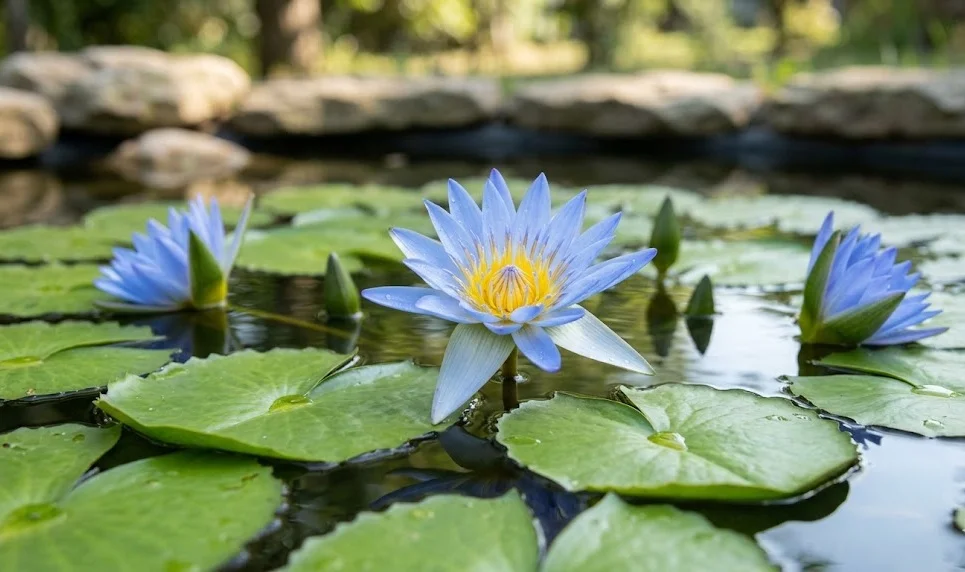

The blue water lily is a heliotropic species that relies heavily on intense sunlight to power its metabolic processes and produce its iconic blooms. Without adequate light, the plant will struggle to photosynthesize, resulting in weak stems, pale leaves, and a complete lack of flowers. For professional aquatic gardeners, understanding the nuances of light exposure is the key to unlocking the full aesthetic potential of this ancient plant. Managing solar energy involves balancing intensity, duration, and the potential for heat stress within the unique environment of a garden pond.
Sunlight intensity and duration
For the blue water lily to reach its peak ornamental value, it requires a minimum of six to eight hours of direct sunlight every day. This high light requirement is a reflection of its origins in tropical regions where the sun is consistently intense throughout the growing season. The energy from the sun is used not only for foliage growth but also to trigger the complex hormonal changes necessary for flower production. In locations with less than six hours of sun, the plant may survive but will rarely produce the vibrant blue blossoms for which it is known.
The quality of the sunlight is just as important as the duration, with morning and midday sun being the most beneficial. These periods of high-intensity light provide the maximum amount of energy for photosynthesis before the heat of the late afternoon sets in. If the pond is situated in a location that only receives dappled or filtered light, the lily pads will often become elongated and spindly as they “stretch” toward the light source. This search for light depletes the plant’s energy reserves and results in a less healthy and attractive specimen.
Professional pond placement should take into account the seasonal movement of the sun across the sky to ensure consistent coverage. A spot that is sunny in May might be shaded by a nearby tree in July as the canopy fills out and the sun’s angle changes. It is often necessary to prune back overhanging branches or nearby shrubs to maintain the open sky that the blue water lily demands. Constant monitoring of light patterns throughout the season allows the gardener to make adjustments and ensure the plant’s needs are met.
In regions with particularly intense summer sun, the plant may actually benefit from a small amount of late afternoon shade to prevent heat stress. However, this is a delicate balance, as too much shade will quickly diminish the plant’s vigor. The goal is to provide the maximum amount of direct light possible during the hours when the sun is most productive. This focused approach to light management is the foundation of successful blue water lily cultivation and ensures a rewarding gardening experience.
More articles on this topic
Photosynthetic health and blooming
The health of the lily pads is the most visible indicator of whether the plant is receiving the correct amount of light. Healthy, well-lit leaves are typically a deep, vibrant green and feel firm and substantial to the touch. If the leaves appear pale, yellowish, or unusually thin, it is often a sign of light deficiency or “chlorosis” caused by inadequate photosynthesis. Ensuring that each leaf has its own space on the water’s surface ensures that the maximum surface area is exposed to the sun’s rays.
Light is the primary environmental trigger for the opening and closing of the blue water lily’s flowers each day. This species is a “day-bloomer,” meaning its flowers open in the morning as the light intensity increases and close again in the late afternoon. If the day is particularly cloudy or overcast, the flowers may not open fully, as they lack the solar stimulation required for their daily cycle. This fascinating behavior highlights the intimate connection between the plant and the sun’s rhythmic movements.
The production of flower buds is also directly proportional to the amount of total light energy the plant can store in its rhizome. A blue water lily that receives optimal light will produce a steady succession of buds throughout the summer, often with multiple flowers open at once. Conversely, a plant in a shaded location will prioritize its limited energy for leaf survival, often sacrificing flower production entirely. Professional fertilization can help, but it can never truly compensate for a lack of sufficient natural light.
Managing the water clarity also plays a subtle but important role in the plant’s light acquisition, especially during the early spring growth phase. When the first new leaves are still submerged, they rely on light penetrating through the water column to reach them. If the water is excessively turbid or filled with algae, this light is blocked, and the young leaves may fail to reach the surface. Maintaining clear, healthy pond water ensures that the lily can begin its photosynthetic cycle as early and efficiently as possible.
More articles on this topic
Managing shade and environmental heat
While light is essential, the heat that often accompanies intense sunlight can pose its own set of challenges for the aquatic gardener. In smaller ponds or containers, prolonged exposure to direct sun can cause the water temperature to rise to levels that stress the plant’s root system. If the water becomes too hot, the plant may enter a state of semi-dormancy as a survival mechanism, leading to a temporary halt in blooming. This is why deeper water or larger ponds are generally more stable and easier to manage for high-light plants.
Natural shade from other aquatic plants, such as floating hearts or submerged oxygenators, can help keep the water temperature down without shading the lily itself. This “bottom-shading” approach protects the pond’s ecological balance and prevents excessive evaporation during heatwaves. It is a professional technique that creates a cooler microclimate within the water while allowing the blue water lily to bask in the full sun above. This synergy between different plant types is a key component of a well-designed and functional water garden.
Artificial shading solutions, such as shade cloths or strategically placed garden ornaments, can be used temporarily during extreme heatwaves. However, these should be removed as soon as the temperatures moderate to ensure the plant does not lose out on vital photosynthetic energy. The flexibility to respond to weather extremes is a hallmark of an expert gardener who understands the dynamic nature of an outdoor pond. By protecting the plant from excessive heat, you ensure that the sunlight remains a source of growth rather than a source of stress.
Finally, the orientation of the pond can be used to maximize light while minimizing the harshest effects of the afternoon sun. A pond with a long east-west axis will receive consistent light throughout the day, which is ideal for the blue water lily. Understanding these principles of light and heat allows you to create an environment where the plant can truly flourish. With the right light requirements met, the blue water lily will reward your efforts with its breathtaking and spiritually significant blooms all season long.