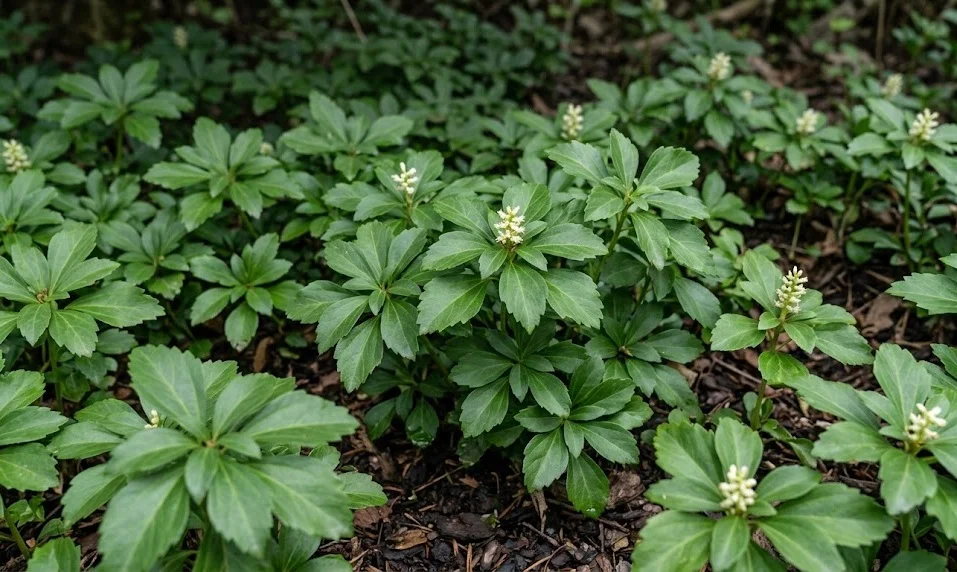

Establishing a thriving bed of Japanese spurge begins with a careful planting process that respects the plant’s unique growth requirements. This hardy evergreen groundcover is a favorite for shaded landscapes, but its success depends heavily on the initial preparation of the site. Gardeners must focus on soil quality, spacing, and timing to ensure the young plants can develop a strong root system. Once the foundation is laid, these plants will gradually expand to form a beautiful, maintenance-free carpet that lasts for many years.
The best time to start your planting project is either in the early spring or the early autumn when the weather is mild. Planting during these transitional seasons allows the roots to settle in without the stress of extreme heat or freezing temperatures. If you plant in the spring, the spurge will have the entire growing season to establish itself before the winter dormancy. Autumn planting is also effective because the soil is still warm, which encourages rapid root development even as the air cools down.
Before placing a single plant in the ground, you must take the time to prepare the soil by removing all existing weeds and grass. Because this groundcover grows relatively slowly at first, it can easily be overwhelmed by aggressive native plants if the area isn’t cleared. Amending the site with plenty of organic matter, such as compost or peat moss, will create the friable texture these plants love. A well-prepared bed ensures that the delicate rhizomes can spread easily through the earth as they begin to colonize the area.
When you are ready to plant, space the individual pots about six to twelve inches apart depending on how quickly you want full coverage. While closer spacing is more expensive initially, it results in a closed canopy much faster, which significantly reduces future weeding tasks. Dig a hole for each plant that is slightly wider than the root ball but no deeper than the original container level. Gently firm the soil around the base to remove any large air pockets that could dry out the roots.
Techniques for successful propagation
Propagating Japanese spurge is a rewarding way to expand your garden without the need for constant new purchases. The most common and effective method for the home gardener is through the division of established clumps. This process involves lifting a section of the mature groundcover and carefully separating the rooted stems into smaller pieces. Ideally, this should be done in the spring just as new growth is starting to emerge from the soil.
More articles on this topic
To perform a successful division, use a sharp spade or a garden fork to lift a portion of the mat, making sure to include plenty of roots. Once the clump is out of the ground, you can pull it apart by hand or use a knife to cut it into segments. Each new piece should have several healthy stems and a robust section of the root system to ensure it can survive the move. Replant these divisions immediately into prepared soil and water them thoroughly to help them recover from the shock.
Stem cuttings are another viable option if you want to produce a large number of plants from a single parent. Take cuttings that are about four inches long from the tips of healthy, vigorous stems during the early summer months. Remove the lower leaves and dip the cut end into a rooting hormone to speed up the process of root formation. Place the cuttings in a moist, sandy potting mix and keep them in a shaded, humid environment until they are well-rooted.
While it is possible to grow this species from seed, it is rarely the preferred method because it is incredibly slow and unreliable. The seeds have a short period of viability and require specific environmental conditions to germinate successfully. Most professional growers and hobbyists stick to vegetative propagation because it guarantees that the new plants will be identical to the parent. By using division or cuttings, you can maintain the specific leaf characteristics and growth habits of your favorite specimens.
Establishing young plants in the landscape
The first few months after planting are the most critical period for the long-term survival of your Japanese spurge. During this time, the young plants are vulnerable to drying out because their root systems are still confined to a small area. You must provide consistent moisture, ensuring the soil stays damp but not soggy to encourage the roots to grow outward. A light layer of mulch around the new plants will help retain this moisture and keep the soil temperature stable.
More articles on this topic
Monitoring for signs of stress is an essential part of the establishment phase for any new groundcover. If you notice the leaves drooping or the tips turning brown, it is likely a sign that the plants are not getting enough water. Conversely, yellowing leaves might indicate that the soil is too wet or that the drainage is poor in that specific spot. Adjusting your care routine early on will prevent small problems from becoming major setbacks for the entire planting.
As the plants begin to grow, you may see new shoots emerging from the ground several inches away from the original planting site. This is a great sign that the rhizomes are active and the groundcover is starting to colonize the area as intended. Resist the urge to move or disturb these new shoots, as they are the key to creating a seamless green carpet. Simply continue with your regular watering and weeding routine to support this natural expansion.
Weed control remains a top priority until the canopy of the spurge is thick enough to block out the light. Any weeds that pop up between the young plants should be removed by hand as soon as they are spotted. Be careful not to pull up the shallow rhizomes of the spurge while you are removing the unwanted intruders. Once the plants touch each other and form a solid mass, the need for weeding will drop off almost entirely.
Optimizing site conditions for growth
The location you choose for planting will ultimately dictate how fast and how healthy your groundcover grows. Japanese spurge is famous for its shade tolerance, but it actually performs best in dappled or filtered light. Deep shade will produce a very dark green leaf, but the growth rate will be somewhat slower than in a slightly brighter spot. Finding that “sweet spot” of light will give you the best balance of beautiful color and vigorous spread.
Soil drainage is the one factor that can make or break your planting project before it even begins. If the area stays wet for long periods after a rain, the roots will likely rot, and the plants will fail to thrive. You can test the drainage by digging a small hole and filling it with water to see how quickly it disappears. If it takes more than a few hours to drain, you should consider planting on a slight mound or improving the soil structure with grit.
While these plants are quite hardy, they do appreciate some protection from harsh, drying winds. Planting them in a location that is naturally sheltered by buildings, fences, or larger shrubs will prevent the foliage from becoming windburned. This is particularly important in regions where the winters are cold and dry, as the evergreen leaves can lose moisture quickly. A calm, protected environment allows the plant to focus its energy on spreading rather than just surviving.
Finally, consider the competition from other plants in the area before you begin your planting. Large trees with shallow root systems, like maples, can make it difficult for groundcovers to get the water and nutrients they need. If you are planting under such trees, you may need to provide extra water and a bit of fertilizer to help the spurge compete. With the right start, however, this plant is tough enough to hold its own and provide a beautiful solution for those difficult garden spots.