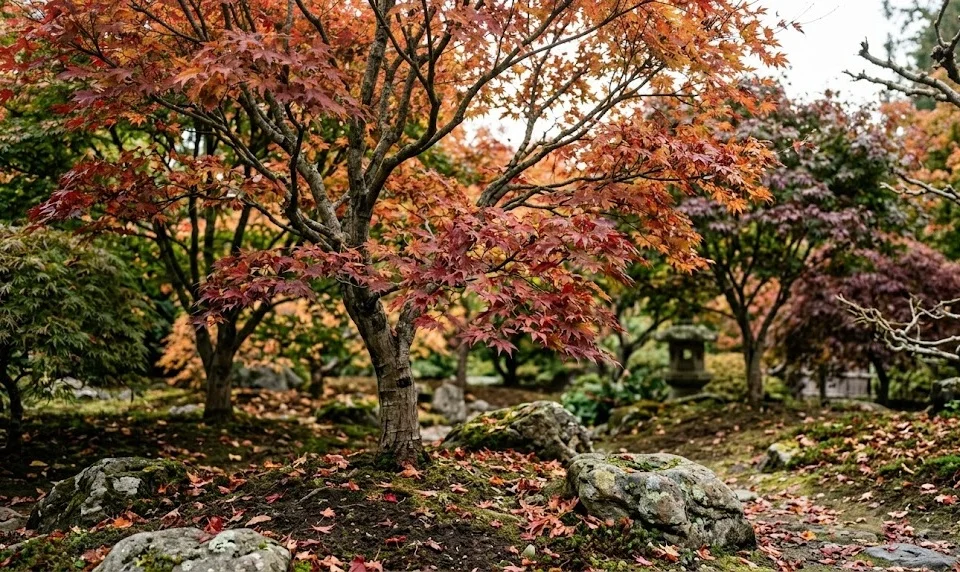

Preparing your Japanese maple for the winter months is a critical part of its annual care cycle, especially in regions with fluctuating temperatures and heavy snowfall. While many varieties are quite hardy once established, their shallow root systems and delicate bark make them vulnerable to certain winter stresses. You should focus on a gradual transition that allows the tree to enter dormancy naturally and stay protected until the spring thaw. A professional approach to overwintering ensures that your tree emerges in the spring with its structural integrity and health intact.
Preparing the tree for dormancy
The process of overwintering begins long before the first snowflake falls, starting with how you manage the tree in late summer and autumn. You should stop all nitrogen-heavy fertilization by mid-summer to prevent the tree from producing soft, new growth that won’t have time to harden off. This tender tissue is the first to be damaged by frost, which can lead to dieback and entry points for disease. Allowing the tree’s growth to slow down naturally is the most important step in preparing it for the cold ahead.
Watering should also be adjusted as the temperatures drop, but it should never be stopped entirely until the ground actually freezes. A tree that enters the winter in a state of drought is much more likely to suffer from winter desiccation, where the cold winds pull moisture out of the branches that cannot be replaced from the frozen ground. Providing a deep, thorough watering in late autumn is a professional secret for helping trees survive harsh winters. You want the root zone to be well-hydrated before the seasonal deep freeze sets in.
As the leaves begin to change color and fall, you should take the opportunity to inspect the tree’s structure one last time. Look for any weak branch attachments or damaged limbs that might be prone to breaking under the weight of heavy snow or ice. Removing these problematic pieces now can prevent more significant damage to the tree’s main framework during a winter storm. However, you should avoid heavy pruning at this time, as it can stimulate the tree and interfere with its dormancy.
Cleaning up the area around the base of the tree is also an essential part of the preparation phase. Raking up fallen leaves helps remove potential overwintering sites for fungal spores and insect pests that could plague the tree in the spring. If your tree has had any disease issues during the growing season, disposing of these leaves rather than composting them is a wise precaution. A clean site reduces the biological pressure on the tree during its most vulnerable period of rest.
More articles on this topic
Root protection and mulching
The root system of a Japanese maple is relatively shallow, which makes it particularly sensitive to the “heaving” that occurs when the ground freezes and thaws repeatedly. You can protect the roots by applying a fresh layer of organic mulch in the late autumn, once the ground has started to cool. A three-to-four-inch layer of wood chips, bark, or pine needles acts as an insulating blanket that stabilizes soil temperatures. This prevents the roots from experiencing the extreme temperature swings that can cause physical damage.
When applying winter mulch, you should extend the coverage out to the drip line of the tree to ensure the entire root zone is protected. However, it is vital to keep the mulch a few inches away from the actual trunk to prevent moisture buildup and bark rot. This “donut” shape allows the tree to breathe while still providing the necessary insulation for the roots below. Proper mulching is one of the simplest and most effective things you can do to ensure winter survival.
In very cold climates, you might even consider a temporary “extra” layer of mulch for younger or more sensitive varieties. This can be removed in the early spring once the danger of deep freezes has passed and the soil begins to warm up. Some gardeners also use evergreen boughs placed over the root zone to catch and hold snow, which is actually an excellent natural insulator. Understanding your local climate’s extremes will help you decide how much protection is necessary for your specific tree.
If you live in an area where rodents like voles or rabbits are active in the winter, you may need to add a physical barrier to protect the bark. These animals often chew on the tender bark of maples when other food sources are scarce, which can girdle and kill the tree. A simple cylinder of hardware cloth or plastic tree guards can be placed around the base of the trunk to prevent this damage. Make sure the guard is tall enough to reach above the expected snow line for maximum effectiveness.
More articles on this topic
Sheltering container-grown maples
Trees grown in pots are much more vulnerable to winter damage because their roots are not insulated by the mass of the earth. The root ball in a container can experience temperatures much lower than those in the ground, which can lead to root death even if the top of the tree is hardy. If possible, you should move your potted maples to a sheltered, unheated location such as a garage, shed, or a protected corner of a porch. The goal is to keep them out of the wind and away from the most extreme cold without bringing them into a heated house.
If you cannot move the containers indoors, you can group them together in a sheltered spot to benefit from collective thermal mass. Wrapping the pots in several layers of burlap, bubble wrap, or specialized insulating blankets can also help keep the root zone above the critical temperature. Some enthusiasts even bury their pots in the ground or in a large pile of mulch for the winter to provide the best possible protection. This extra effort is often the only way to successfully overwinter sensitive cultivars in colder zones.
Watering remains important for containerized trees even during the winter, though the frequency will be much lower than in the summer. You should check the soil every few weeks and provide a small amount of water if it feels dry to the touch, choosing a day when the temperatures are above freezing. It is important to keep the tree dormant, so do not provide any fertilizer or place it in a location where it might get too warm. A dormant tree in a dark garage will be perfectly fine as long as its roots don’t dry out completely.
In late winter, you must be careful not to move the trees back out into the open too early, as a sudden warm spell followed by a hard frost can be devastating. Gradually reintroduce the trees to the outdoor environment as the weather stabilizes and the buds begin to show signs of life. This transition period requires close attention to the local weather forecast to avoid any setbacks. Container gardening offers flexibility, but it also demands a higher level of vigilance during the winter months.
Managing late spring frosts
Perhaps the most dangerous time for a Japanese maple is the transition from winter to spring, when the tree begins to wake up. Many varieties are prone to “early bud break,” where they respond to a few days of unseasonably warm weather by starting to push out new leaves. If this is followed by a sharp return to freezing temperatures, the tender new growth can be killed instantly. This can be a major setback for the tree and, in some cases, can lead to significant branch dieback.
If a late frost is predicted after your tree has started to leaf out, you should be prepared to provide temporary protection. Covering the tree with a lightweight cloth, burlap, or a frost blanket can hold in enough ground heat to protect the delicate foliage. You should avoid using plastic directly against the leaves, as it can transfer the cold and cause even more damage. Be sure to remove the covers during the day once the temperatures rise above freezing to prevent overheating.
Another professional technique is to water the tree thoroughly before a predicted frost, as moist soil holds more heat than dry soil. Some gardeners also use small outdoor lights or even jugs of warm water placed under the canopy to provide a few extra degrees of warmth. These methods can be the difference between a beautiful spring display and a season spent waiting for the tree to recover from frost damage. Being proactive during this volatile season is a key part of expert maple management.
If your tree does suffer from frost damage, the best course of action is to wait and see how it recovers before taking any drastic measures. Often, the tree will produce a second set of leaves from secondary buds, though this takes a significant amount of energy. You should provide consistent care and avoid any heavy pruning until you can clearly see what wood has survived and what has truly died back. Patience and gentle support are the most important tools in your kit after a late-season weather event.