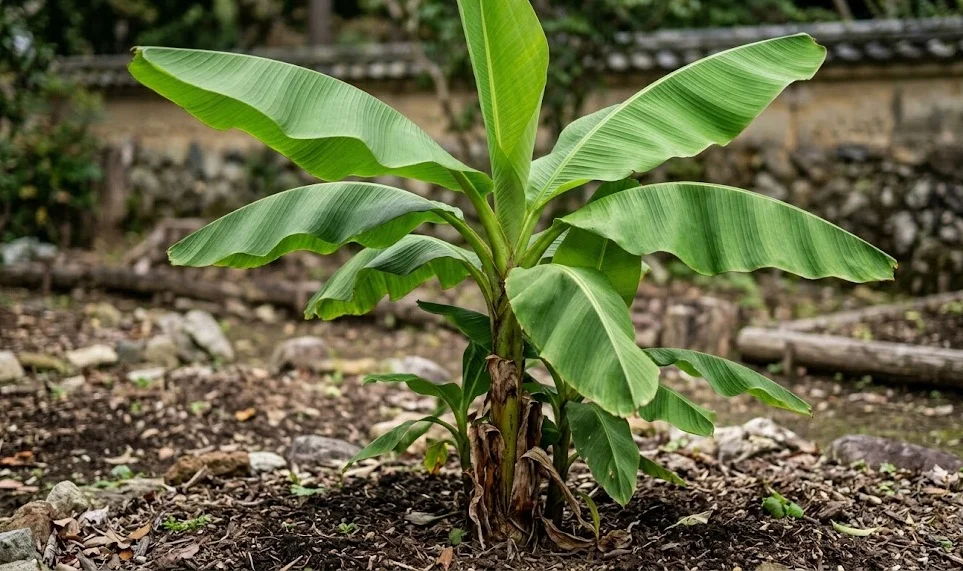

Understanding the light requirements of the Japanese banana is fundamental to achieving the rapid growth and massive leaf size that make this plant so desirable in a landscape. As a species evolved for high-energy environments, its metabolic processes are finely tuned to the intensity and duration of the sunlight it receives. While it is remarkably adaptable compared to other tropical plants, its performance is directly correlated with its solar exposure. Finding the right balance between providing enough energy for growth and protecting the foliage from extreme conditions is a key part of successful cultivation.
Full sun versus partial shade
In its ideal environment, the Japanese banana prefers a position that receives full sun for the majority of the day, typically defined as six to eight hours of direct exposure. Sunlight is the primary “fuel” for the plant, powering the photosynthesis that allows it to produce its giant leaves and thick pseudostem in a single season. In cooler climates, maximizing sun exposure is especially important to provide the heat necessary for the soil and the plant’s internal systems. A sun-drenched spot will almost always result in a taller, more robust specimen than one grown in the shade.
However, the plant is surprisingly tolerant of partial shade, making it a viable option for gardens with filtered light or morning-only sun. In these conditions, the growth rate will be somewhat slower, and the plant may not reach its ultimate potential height. One interesting side effect of growing in partial shade is that the leaves often become a deeper, darker green as they produce more chlorophyll to capture the limited light. The leaves may also grow slightly larger in surface area but thinner in texture as they “reach” for the available solar energy.
The choice between sun and shade can also depend on your local humidity and temperature levels. In regions with intense, scorching summer heat and low humidity, some afternoon shade can actually be beneficial to prevent the leaves from drying out too quickly. The midday sun in these areas can be so intense that the plant spends more energy trying to cool itself than it does on growth. In contrast, in more temperate or coastal areas with frequent cloud cover, full sun is almost always the better choice to ensure the plant gets enough energy.
You should also consider the “quality” of the light throughout the different seasons as the angle of the sun changes. A spot that is in full sun during the height of summer might be in deep shade during the spring or autumn when the sun is lower in the sky. Since the Japanese banana does the vast majority of its growing between June and August, prioritize a location that is brightest during these peak months. Observing the movement of shadows in your garden before planting can help you avoid making a mistake in positioning.
More articles on this topic
Leaf health and UV exposure
The massive leaves of the Japanese banana act like giant solar panels, but they are also sensitive organs that can be damaged by excessive ultraviolet radiation. When a plant is moved from a greenhouse or a shaded area into direct, intense sunlight, it may suffer from “sunscald.” This appears as white or bleached patches on the leaves where the tissues have essentially been burned by the sudden increase in light intensity. To prevent this, always “harden off” new plants by gradually increasing their sun exposure over a period of a week or two.
The structure of the leaf itself has natural defenses against the sun, including a waxy cuticle that helps reflect some of the heat and retain internal moisture. You can tell if your banana is receiving the right amount of light by looking at the angle and condition of the leaves. Healthy leaves should stand relatively upright and have a vibrant, uniform color. If the leaves are consistently folding themselves in half along the midrib during the day, it is a sign that the plant is trying to reduce its exposure to the sun to conserve water.
Light also plays a role in the strength of the pseudostem, which must support the weight of the heavy canopy. Plants grown in adequate light tend to have thicker, more sturdy stems because they have the energy to build dense cellular structures. In contrast, bananas grown in too much shade may become “leggy,” with long, weak stems that are more prone to falling over in the wind. Ensuring the plant gets enough light from a young age is the best way to build a foundation that can support a massive mature specimen.
Finally, the interaction between light and water is a delicate balance that affects leaf health throughout the day. A plant in full sun will transpire much more quickly, requiring a constant supply of water to keep the leaves from wilting. If the plant is well-hydrated, it can handle very high light levels without any issues. However, if the roots cannot keep up with the water loss, the leaves will suffer regardless of how much light they are receiving. Proper light management is always intertwined with a consistent and effective watering routine.
More articles on this topic
Indoor light and seasonal transitions
For those who grow Japanese bananas in containers or move them indoors for the winter, managing light levels becomes a different type of challenge. Indoors, the light intensity is significantly lower than it is outside, even when the plant is placed directly next to a window. During the winter dormancy, this low light is perfectly fine as the plant’s metabolic needs are minimal. However, if you are trying to keep the plant active indoors, you may need to supplement with full-spectrum grow lights to prevent it from becoming weak and stretched.
The transition from the low light of a house or garage back to the bright outdoor sun in the spring is a critical time for the plant. The “indoor” leaves are not acclimated to UV radiation and will burn almost instantly if placed in direct sun. Start by placing the plant in a fully shaded spot for a few days, then move it to an area with morning sun only, and finally to its permanent, sunny location. This gradual transition allows the plant to build up its natural defenses and ensures that the new growth is strong and resilient.
If you are growing the banana purely as a houseplant, light will be the most limiting factor for its success. It should be placed in the brightest possible location, ideally a south-facing window that receives several hours of direct sun. Even then, you may find that the plant grows much more slowly than its outdoor counterparts. Regularly rotating the pot will ensure that all sides of the plant receive equal light, preventing it from leaning too heavily in one direction as it searches for the sun.
Lastly, keep the leaves clean of dust when the plant is indoors, as a layer of grime can significantly reduce the amount of light the plant can actually use. A gentle wipe with a damp cloth every few weeks will keep the “solar panels” functioning at their highest efficiency. By paying attention to these small details, you can manage the light requirements of your Japanese banana regardless of where it is growing. Whether it’s a garden giant or a container curiosity, light remains the most important ingredient in its recipe for health.