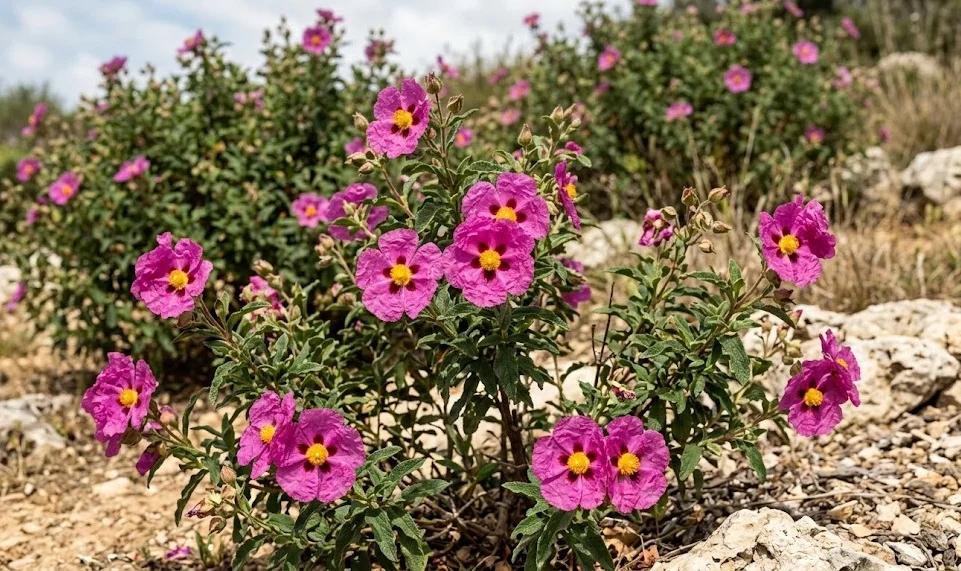

Watering and fertilizing of the purple rockrose are two of the most misunderstood aspects of its care, often leading to common gardening mistakes. Because this shrub is native to the dry regions of the Mediterranean, its requirements are very different from the lush perennials many gardeners are used to. Providing too much of either water or nutrients can actually do more harm than good, potentially shortening the lifespan of the plant. Mastering the balance of these two elements is key to maintaining a healthy, flowering shrub that remains resilient year after year.
Establishing a watering schedule for new plants
When you first introduce a purple rockrose to your garden, its watering needs are at their highest. During the initial months, the root system is confined to the original shape of the pot and cannot yet access moisture from the surrounding soil. You should water the plant deeply once or twice a week, depending on the ambient temperature and rainfall. The goal is to keep the root ball moist but never saturated, allowing the soil to breathe between applications.
As you observe the plant over the first few weeks, you will see how it reacts to your watering routine. If the leaves start to droop or lose their luster, it may be a sign that the soil has dried out too much. On the other hand, yellowing leaves or a soft stem can indicate that the plant is receiving too much water. Adjust your frequency based on these visual cues and the specific drainage characteristics of your garden’s soil.
It is always best to water the plant at the base rather than from overhead to keep the foliage as dry as possible. Wet leaves in a warm environment can become a breeding ground for fungal spores that might damage the shrub’s health. Early morning is the ideal time for watering, as it allows any accidental moisture on the leaves to evaporate quickly in the sun. Using a soaker hose or a watering can with a narrow spout can help you direct the water exactly where it is needed.
By the end of the first growing season, the plant should have started to extend its roots into the neighboring soil. You can gradually increase the time between watering sessions to encourage the roots to grow deeper in search of moisture. This deep-rooting habit is what eventually makes the purple rockrose so drought-tolerant in the future. Proper establishment during this first year sets the foundation for the plant’s legendary resilience in the years to come.
More articles on this topic
Managing water for established shrubs
Once your purple rockrose has been in the ground for two or more years, it is considered established and requires very little supplemental water. In many climates, natural rainfall is sufficient to meet the needs of the plant for most of the year. You should only intervene during periods of extreme drought or during exceptionally long, hot summers with no rain. The ability to survive with minimal water is one of the primary reasons this plant is so popular in sustainable landscapes.
If you do need to water an established shrub, it is better to provide one long, deep soaking rather than frequent, light sprinkles. Deep watering encourages the roots to stay down in the cooler, moister layers of the soil rather than coming to the surface. Surface roots are much more vulnerable to heat damage and can lead to a less stable plant over time. Aim to saturate the soil to a depth of at least twelve inches during these occasional watering events.
You must be especially careful not to over-water during the winter months when the plant’s metabolism is slower. During this time, the soil naturally stays moist for longer, and the risk of root rot increases significantly. If you live in an area with high winter rainfall, ensure that the drainage you provided during planting is functioning correctly. A rockrose that is forced to sit in wet, cold soil for weeks at a time will likely not survive until the spring.
Monitoring the overall health of the plant is the best way to determine if your watering strategy is working. A healthy rockrose will have firm, green leaves and a robust growth habit that doesn’t appear overly lush or soft. If the plant looks too “succulent,” it might be receiving more water than it actually needs to maintain its natural form. Trust the plant’s evolutionary adaptations and avoid the temptation to treat it like a thirsty tropical species.
More articles on this topic
Nutrient requirements and soil fertility
The purple rockrose is a plant that truly thrives in “lean” conditions where nutrients are not overly abundant. In its natural habitat, the soil is often thin and mineral-rich but low in nitrogen and organic matter. Because of this, the plant has evolved to be highly efficient at extracting what it needs from poor environments. Adding too much fertilizer can stimulate rapid, weak growth that is more susceptible to pests and weather damage.
In most garden settings, the natural breakdown of minerals in the soil is enough to sustain a healthy shrub. You should avoid the routine application of high-nitrogen lawn fertilizers anywhere near the root zone of your rockroses. Excessive nitrogen can lead to a massive amount of green foliage at the expense of the beautiful flowers you want to see. A plant that is “over-fed” will often have a shorter life and a less attractive, floppy appearance.
If you feel that your soil is exceptionally poor or if the plant’s growth has stalled, a very light application of a balanced, slow-release fertilizer can be used. This should be done in the early spring just as the new growth begins to emerge from the dormant branches. Use a product with a lower nitrogen count to ensure that the growth remains sturdy and focused on flower production. Always follow the manufacturer’s instructions and apply less than the recommended amount to be safe.
Organic matter, such as compost, should be used sparingly and only as a very thin top-dressing if necessary. Too much organic matter can change the soil structure, making it hold onto moisture in a way that the rockrose finds unpleasant. A better way to provide long-term soil health is to use a mineral mulch, like pea gravel or crushed stone, which slowly releases trace elements. This approach keeps the soil “clean” and free from the heavy nutrient loads that can stress Mediterranean species.
Identifying and correcting nutrient imbalances
Even with its low requirements, a purple rockrose can sometimes show signs of nutrient deficiency if the soil is severely depleted. One common sign is chlorosis, where the leaves turn pale yellow while the veins remain green. This often indicates a lack of iron or magnesium, which can be caused by soil that is too alkaline for the plant to absorb these minerals. You can address this by applying a chelated mineral supplement or slightly adjusting the soil pH.
If the plant is producing very few flowers despite being in full sun, it might be lacking in phosphorus or potassium. These elements are crucial for the development of strong buds and the overall energy management of the plant. Before reaching for a chemical solution, check if the plant is simply too young or if it was pruned at the wrong time. If a deficiency is confirmed, a “bloom-booster” style fertilizer used at half-strength can help restore the balance.
Stunted growth accompanied by very dark, purplish leaves can sometimes be a sign of phosphorus deficiency, though this is rare in established plants. Before making any major changes, it is always a good idea to perform a basic soil test to see what is actually happening underground. A soil test takes the guesswork out of gardening and prevents you from adding nutrients that are already present in sufficient quantities. Many gardening problems attributed to “hunger” are actually related to soil moisture or root health.
Remember that a rockrose showing signs of stress is often suffering from environmental factors rather than a lack of food. Always check the light levels, drainage, and competition from other plants before deciding to apply fertilizer. A “less is more” philosophy is almost always the correct path when managing the nutrition of these hardy shrubs. By observing and understanding the subtle signals the plant sends, you can provide the perfect amount of support without overwhelming its natural systems.
Long-term strategies for water and nutrient management
As the years go by, your purple rockrose will become an integral part of the garden’s ecosystem and its needs will stabilize. You may find that after five years, you never need to water or fertilize the plant at all under normal circumstances. This maturity is the goal of every sustainable gardener, creating a landscape that works in harmony with the local climate. The plant becomes a self-sustaining feature that provides beauty with almost zero input from you.
During periods of landscape renovation, be careful not to disturb the soil around your established rockroses. Digging nearby can sever the deep roots that the plant relies on for water during the dry months. If you are adding new plants nearby, choose other drought-tolerant species that share the same watering and feeding requirements. This grouping, often called “hydrozoning,” makes the overall management of your garden much more efficient and successful.
Keep an eye on the surrounding mulch and ensure it hasn’t broken down into a heavy, soil-like substance over time. If you used gravel, it may occasionally need to be topped up to maintain its protective and aesthetic functions. This layer helps keep the root zone cool during the summer heat and prevents the soil from compacting during heavy rains. Proper mulch management is a passive way to support both the water and nutrient needs of the shrub.
Finally, enjoy the fact that the purple rockrose is such an undemanding guest in your garden collection. Its ability to look spectacular while thriving on neglect is a testament to its evolutionary success in the Mediterranean. By avoiding the common pitfalls of over-watering and over-fertilizing, you allow the plant to show its true character. A well-managed rockrose is a symbol of a healthy, balanced garden that respects the natural limits of the environment.