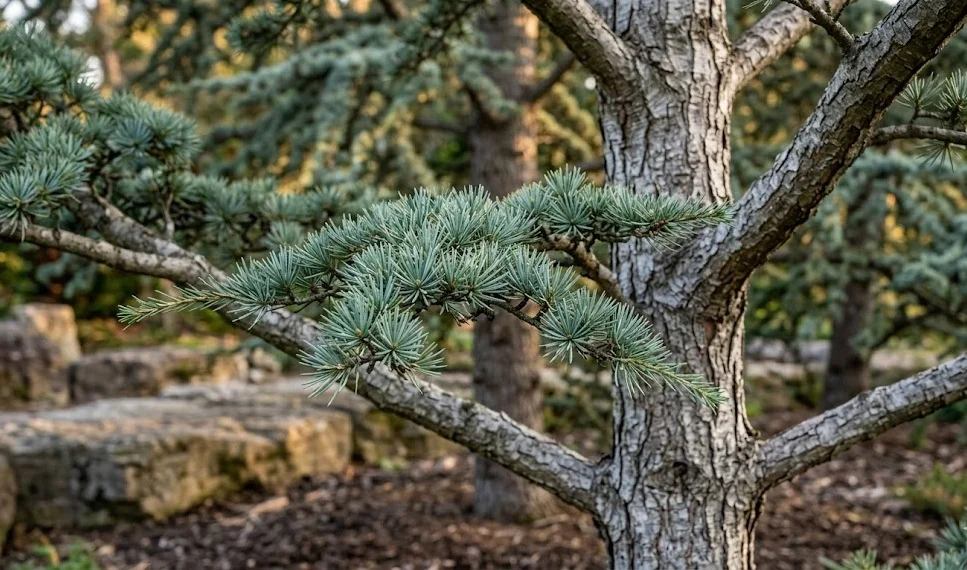

The atlas cedar is a heliophilic species, meaning it thrives best when exposed to direct and abundant sunlight throughout the day. Light intensity directly influences the density of the canopy and the vibrancy of the needle pigmentation, especially in blue cultivars. Without sufficient light, the tree may become leggy and lose the compact, majestic form for which it is celebrated. Understanding how light interacts with the tree’s physiology is essential for choosing the best placement in any landscape design.
Understanding photoperiodism and light absorption in conifers helps explain why the atlas cedar is so demanding of its sunny position. The needles are specialized for capturing solar energy, and their metallic sheen is actually a protective adaptation to high light levels. In its native habitat, this tree grows in open mountain ranges where sunlight is intense and unobstructed for most of the year. Replicating these high-light conditions in a garden setting ensures that the tree can produce enough energy for healthy growth.
Optimal sun exposure is the primary driver for the development of the striking silvery-blue color seen in many atlas cedar varieties. The waxy coating on the needles, which creates this hue, thickens in response to high light intensity as a way to reflect excess radiation. Trees grown in shaded areas often lose this coloration, turning a dull green as the wax layer thins out. For a landscape architect, placing the tree in a south-facing location provides the maximum duration of light needed for peak aesthetic performance.
Shade tolerance in the atlas cedar is remarkably low compared to other coniferous species like yews or hemlocks. If planted in a location that receives less than six hours of direct sunlight, the inner branches will quickly begin to thin and die back. This lack of light leads to a sparse canopy that is more susceptible to pest infestations and environmental stressors. While a young tree might survive in partial shade for a few years, its long-term structural integrity will be significantly compromised.
Light intensity also plays a role in determining the overall shape and growth rate of the tree. In full sun, the atlas cedar tends to grow more symmetrically, with sturdy branches that can support their own weight as they extend outward. Trees that are forced to compete for light often lean toward the strongest source, resulting in an unbalanced and potentially hazardous structure. Ensuring that the tree is not overshadowed by faster-growing species is a key part of long-term maintenance and site planning.