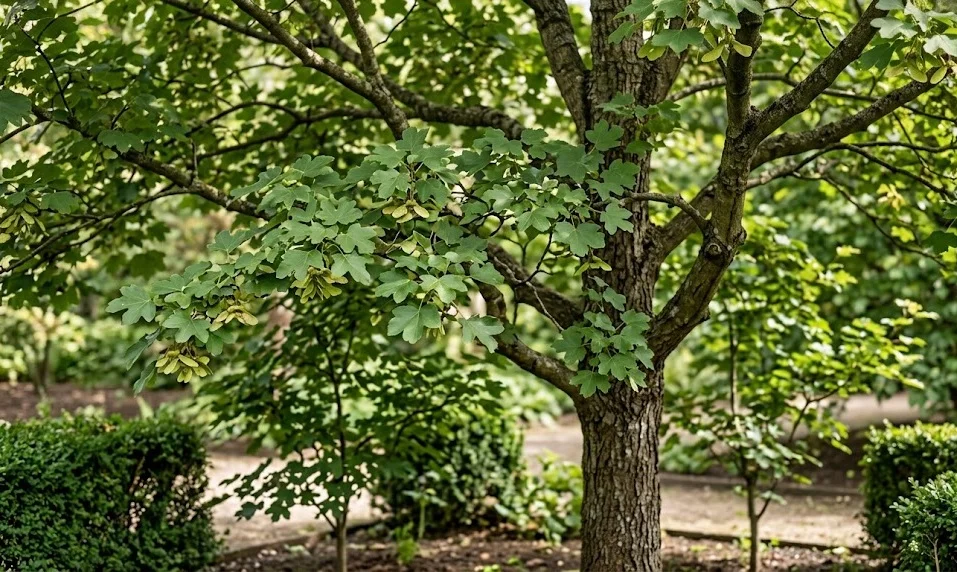

The first few years after planting are the most critical period for establishing a healthy water routine for your field maple. Young trees do not yet have the extensive root systems required to tap into deep underground water reserves during dry spells. You must take an active role in ensuring the soil remains consistently moist but never waterlogged during this establishment phase. A well-hydrated young tree will develop much more quickly and be more resilient to future environmental challenges.
During the first growing season, you should check the soil moisture levels at least twice a week, especially during the hot summer months. It is better to provide one or two deep soakings than to give frequent, shallow waterings that only dampen the surface. Deep watering encourages the roots to grow downwards, which ultimately creates a much more stable and drought-resistant tree. You can use a soaker hose or a slow-release watering bag to deliver moisture directly to the root zone.
The amount of water required will depend heavily on your specific soil type and the local weather conditions in your area. Sandy soils drain quickly and will need more frequent attention, while clay soils retain moisture much longer but can be prone to stagnation. You can judge the need for water by digging down a few inches into the soil to see if it feels dry to the touch. If the soil is still damp at that depth, you should hold off on watering for another day or two.
Mulching is your best ally in maintaining consistent hydration for a newly planted field maple in any garden setting. A thick layer of wood chips or shredded bark helps prevent evaporation and keeps the soil temperature stable throughout the day. Ensure that the mulch is not touching the bark of the trunk, as this can trap moisture and encourage rot or fungal issues. As the mulch breaks down, it also improves the soil structure, further enhancing its ability to hold and distribute water.
Managing water for mature specimens
Once a field maple is fully established, it becomes remarkably drought-tolerant and requires very little supplemental watering under normal conditions. The deep and wide-reaching root system of an adult tree is usually capable of finding all the moisture it needs from the environment. However, during periods of extreme or prolonged drought, even a mature tree can benefit from an occasional deep soaking. You should watch for signs of stress, such as wilting leaves or early autumn coloration, which may indicate a need for help.
More articles on this topic
The timing of watering for mature trees is best handled in the early morning or late evening when evaporation rates are at their lowest. This ensures that the maximum amount of water reaches the roots rather than being lost to the hot summer air. If you decide to water a large tree, focus on the area under the outer edge of the canopy, known as the dripline. This is where the most active feeder roots are located, ready to absorb moisture and nutrients for the rest of the tree.
Winter watering is a concept that many gardeners overlook, but it can be essential during dry winters with little snow or rain. Evergreens are more susceptible to winter desiccation, but deciduous trees like the field maple can also suffer if the ground is completely dry for months. If the ground is not frozen and there has been no precipitation for several weeks, a gentle watering can prevent root damage. This is particularly important in regions where the winter sun and wind can be very drying.
Overwatering is just as dangerous as underwatering, and it is a common mistake made by overly enthusiastic gardeners. Field maples do not like “wet feet,” and saturated soil can quickly lead to root rot and the eventual death of the tree. If you notice that the leaves are turning yellow and falling off while the soil is still wet, you are likely overwatering. Improving the drainage or reducing the frequency of your watering schedule will help the tree recover and regain its health.
Seasonal watering patterns
Spring watering should be adjusted based on the amount of natural rainfall and the start of the new growing season. As the tree breaks dormancy and begins to produce leaves, its demand for water increases significantly to support this rapid expansion. If the spring is unusually dry, you should provide supplemental water to ensure the new growth is vigorous and healthy. This early support sets the tone for the tree’s performance throughout the rest of the year.
More articles on this topic
Summer is the peak time for water management, as high temperatures and long days increase the rate of transpiration from the leaves. You must be particularly vigilant during heatwaves, as the field maple can lose a significant amount of moisture through its foliage. Monitoring the weather forecast and being proactive with the hose can prevent the tree from entering a defensive, dormant-like state mid-summer. A healthy summer hydration level ensures the tree has enough energy to prepare for the coming winter.
Autumn marks a period of transition where the tree’s water requirements begin to decrease as it prepares for dormancy. You should gradually reduce the frequency of watering to signal to the tree that it is time to slow down its metabolic processes. However, you should never allow the tree to go into winter completely dry, as some moisture is needed to protect the roots from freezing. A final deep watering before the first hard frost is often a very beneficial practice for long-term health.
Winter requirements are minimal, but the soil should remain slightly moist to support the tree’s survival during its resting phase. If you live in an area with heavy snowfall, this usually provides all the moisture the tree needs as it melts periodically. In drier climates, a monthly check of the soil moisture is sufficient to ensure the tree is not suffering from extreme desiccation. Understanding these seasonal shifts allows you to provide the right amount of care at the right time.
Nutrient requirements and fertilization
The field maple is not a heavy feeder and can often find all the nutrients it needs in reasonably healthy garden soil. In many cases, the regular addition of organic mulch is all that is required to maintain a steady supply of essential minerals. However, if the tree is growing slowly or the leaves look pale, a balanced fertilizer can provide a much-needed boost. It is always better to use a slow-release formula that feeds the tree gradually over several months.
Nitrogen is important for leafy growth, but excessive amounts can lead to weak, sappy wood that is more prone to pests and diseases. For this reason, you should avoid high-nitrogen fertilizers unless a specific deficiency has been identified through a soil test. Phosphorus and potassium are also vital, supporting root development and overall plant resilience, especially during the winter months. A balanced NPK ratio, such as 10-10-10, is usually the safest and most effective choice for general tree health.
The best time to apply fertilizer is in early spring, just as the buds are beginning to swell and the roots are becoming active. This ensures that the nutrients are available exactly when the tree needs them most for its primary growth spurt. You should avoid fertilizing in late summer or autumn, as this can encourage new growth that won’t have time to harden off before the frost. This tender new wood is very susceptible to winter kill, which can weaken the entire structure of the tree.
Application methods should focus on delivering the nutrients to the area where the roots can actually reach them. Granular fertilizers should be spread evenly across the soil surface under the canopy and then watered in thoroughly. Avoid placing fertilizer directly against the trunk, as the concentrated chemicals can cause bark burn and other physical damage. Organic options, like well-rotted manure or compost tea, are excellent alternatives that also improve the overall health of the soil ecosystem.
Assessing soil fertility and health
Before embarking on a heavy fertilization program, it is highly recommended to perform a professional soil test in your garden. This will tell you exactly which nutrients are missing and help you avoid over-applying elements that are already present in abundance. Over-fertilization can lead to nutrient imbalances and can even be toxic to the tree and the surrounding soil life. A targeted approach is always more effective and environmentally responsible than a “one size fits all” strategy.
Visual cues from the tree itself can provide a wealth of information about its nutritional status and overall well-being. Pale green or yellowing leaves often suggest a lack of nitrogen or iron, while stunted growth might indicate a phosphorus deficiency. However, these symptoms can also be caused by water issues or root damage, so a soil test is the only way to be sure. Learning to read your tree’s signals is a skill that comes with experience and careful observation over time.
The role of soil pH cannot be overstated when it comes to the availability of nutrients to the tree’s root system. Field maples prefer neutral to slightly alkaline soils, and if the pH is too acidic, some minerals become chemically locked and unavailable. You can adjust the pH using lime to make it more alkaline or sulfur to make it more acidic, depending on your test results. Ensuring the correct pH is often more important than adding more fertilizer, as it unlocks the nutrients already present.
Building long-term soil health should be the ultimate goal of any fertilization and care program for the field maple. Focus on increasing the organic matter content of the soil, which improves structure, water retention, and biological activity. Healthy soil teeming with earthworms and beneficial microbes creates a self-sustaining system that supports the tree naturally. By working with nature rather than relying on synthetic inputs, you ensure the longevity and beauty of your field maple.