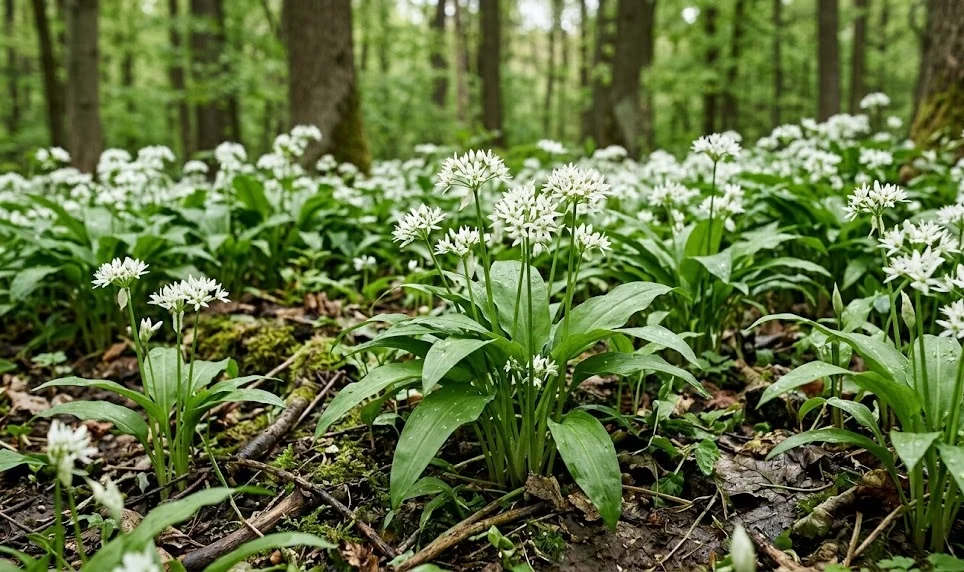

Understanding the light requirements of wild garlic is the key to successfully integrating this woodland species into your garden design. You must remember that in its natural habitat, the plant takes advantage of a specific “light window” that occurs before the forest canopy closes in late spring. This guide explores how to simulate these unique lighting conditions to ensure your wild garlic patch remains vigorous and productive. Mastering the balance between light and shade is the difference between a struggling plant and a flourishing colony.
The importance of spring sunlight
In the early spring, wild garlic thrives in a period of relatively high light intensity before the deciduous trees above have fully developed their leaves. You should aim to provide a location that receives bright, filtered sunlight during the months of March and April. This light is essential for providing the energy the plant needs to rapidly produce its large, broad leaves and its delicate white flowers. Without this initial burst of solar energy, the bulbs will not be able to store enough nutrients for the following year. Professional gardeners often call this “utilizing the spring light window” to maximize plant health.
The quality of the light is just as important as the quantity during this critical early growth phase. You should look for a spot that gets dappled sunlight rather than harsh, direct afternoon sun which can dry out the delicate foliage too quickly. Sunlight filtered through the bare branches of trees or large shrubs is the ideal condition for this species. This filtered light provides the perfect spectrum for photosynthesis while keeping the air temperature around the leaves at a comfortable level. Recreating this natural forest lighting is the most effective way to ensure a high-quality harvest.
Day length is another factor that plays a significant role in the development and eventual flowering of wild garlic. You should be aware that the plant uses the increasing hours of daylight in the spring as a signal to transition from leaf production to reproduction. As the days get longer, you will see the umbrella-like flower heads beginning to emerge from the center of the leaf clumps. This internal biological clock is very sensitive to light cycles and ensures the plant completes its lifecycle before the deep shade of summer arrives. Understanding this response helps you predict the timing of your harvest and seed collection.
If your garden is naturally very shaded even in the early spring, you might notice that your wild garlic grows more slowly and has smaller leaves. You should consider thinning out some overhanging branches or removing some of the leaf litter to allow more light to reach the ground. Even a small increase in light intensity during the peak morning hours can significantly boost the productivity of your patch. On the other hand, if your garden is too sunny, the plant will struggle with the heat and may go dormant much earlier than desired. Finding the right light balance is a continuous process of observation and adjustment.
More articles on this topic
Simulating forest floor conditions
To grow wild garlic professionally, you must mimic the way light changes on the forest floor throughout the spring and into the summer. You should choose a location on the north or east side of a building, or under the canopy of deciduous trees like oak, beech, or maple. These trees provide the perfect cycle of bright spring light followed by the deep, cool shade of summer that the bulbs require. This shifting light environment is what the species has adapted to over thousands of years of evolution. By matching your garden’s light cycle to the plant’s evolutionary history, you ensure its long-term success.
The concept of “dappled shade” is the gold standard for wild garlic cultivation and is highly sought after by horticultural experts. You should try to create an environment where the light is constantly moving and changing as the sun passes through the leaves of overhead plants. This prevents any single leaf from being exposed to direct, intense sun for too long, which can lead to unsightly scorch marks or yellowing. Dappled shade also helps maintain a higher level of humidity around the plants, which is vital for leaf health. It is this complex interaction of light and moisture that creates the perfect woodland microclimate.
If you are growing wild garlic in a more urban or open garden, you can use artificial shading to provide the necessary protection. You should consider using lattice panels, shade cloth, or even tall, airy perennials to break up the direct sunlight during the hottest part of the day. These structures can act as a “surrogate canopy,” providing the cool, protected environment that the bulbs need to survive the summer months. The goal is to prevent the soil from heating up too much, even when the plants are dormant underground. Smart use of shading can allow you to grow wild garlic in locations that might otherwise be too bright.
Monitoring the intensity of the light throughout the day can help you fine-tune the placement of your garlic patch for maximum effect. You should take note of which areas stay cool and shaded as the sun moves across the sky in late spring. Often, a spot that seems perfect in March may become much too sunny and hot by the time May arrives. Understanding these seasonal shifts in light patterns is a hallmark of an experienced gardener who thinks several months ahead. By selecting a site with stable, predictable light conditions, you are setting your colony up for a lifetime of health.
More articles on this topic
Risks of direct sunlight and heat
Direct, intense sunlight is one of the greatest threats to the health and culinary quality of wild garlic leaves. You should be aware that the broad, thin leaves of this species have a very high transpiration rate and can lose water rapidly in the sun. If exposed to direct afternoon light, the leaves will often wilt, turn yellow, and lose their characteristic tender texture and flavor. This sun stress forces the plant to divert energy away from growth and toward survival, which results in smaller bulbs and a weaker patch. Protecting your plants from the midday sun is a non-negotiable part of professional care.
Heat stress is a direct consequence of too much sunlight hitting the soil surface and warming up the root zone. You should remember that wild garlic is a cool-weather specialist that naturally begins to shut down when temperatures rise above twenty degrees Celsius. Direct sun on the soil can act as a heater, signaling to the bulbs that summer has arrived and it is time to go dormant. If this happens too early in the spring, you will lose a significant portion of your harvest and the bulbs may not have enough energy for the next year. Keeping the ground shaded and cool is the best way to extend your growing season.
Sunscald is a physical condition where the delicate tissues of the leaves are actually burned by the ultraviolet rays of the sun. You should look for bleached, white, or paper-thin patches on the leaves, which are clear indicators of sun damage. These damaged areas are no longer capable of photosynthesis and can provide an entry point for various fungal pathogens and molds. Once a leaf is badly scorched, it cannot be repaired, and its value for cooking is greatly diminished or lost entirely. Preventing this damage through careful site selection is much easier than trying to manage it after it occurs.
Finally, you should consider the impact of reflected light and heat from nearby walls, fences, or stone paths. You should avoid planting wild garlic too close to light-colored surfaces that can reflect intense sunlight back onto the plants from below. These “hot spots” in the garden can create a microclimate that is several degrees warmer than the surrounding area, causing significant stress to woodland species. Choosing a location with natural, dark-colored ground cover and plenty of space from reflective structures is a professional choice. By managing both direct and reflected light, you create a truly stable and protected environment for your wild garlic.