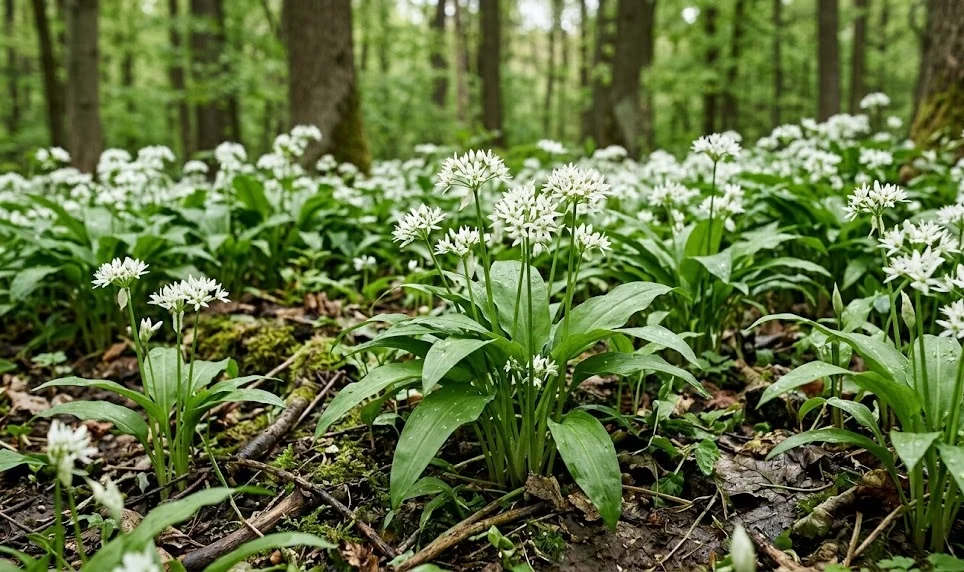

Establishing a thriving colony of wild garlic begins with a precise understanding of its planting and propagation requirements. You must approach the process with a focus on timing, as the biological clock of this woodland species is very specific. Whether you are starting from seeds or bulbs, the success of your project depends on how well you mimic the natural forest floor. This guide provides the expert knowledge needed to successfully introduce and expand this aromatic plant in your garden environment.
Selecting and preparing the site
Choosing the right location is the most critical step before you even touch a shovel or a seed packet. You should look for an area that receives dappled sunlight in the spring but stays heavily shaded during the summer months. The soil must be rich in organic matter, reflecting the natural accumulation of leaves found in a deciduous forest. Avoid areas where water tends to pool after a rain, as this will lead to the rotting of your precious bulbs. Selecting a site that naturally stays cool will give your wild garlic the best chance of long-term survival.
Soil preparation should be done several weeks before you intend to plant your seeds or bulbs in the ground. You should work in a generous amount of well-rotted leaf mold or high-quality compost to a depth of at least fifteen centimeters. This ensures that the soil is loose and friable, allowing the roots to penetrate easily and the bulbs to expand. If your soil is naturally heavy or compacted, adding some grit or coarse sand can help improve the internal drainage. A well-prepared bed is an investment that will pay off with much faster establishment and healthier growth.
Testing the soil pH is a professional step that can prevent many future problems with nutrient uptake. You should aim for a soil that is slightly acidic to neutral, as this mirrors the conditions of most natural woodlands. If the soil is too alkaline, you can incorporate some leaf mold from oak or beech trees to help lower the pH naturally. Understanding the chemical composition of your soil allows you to make adjustments that favor the specific needs of wild garlic. This level of detail is what separates a casual gardener from a true horticultural expert.
Finally, you should consider the proximity of other plants that might compete for resources or space. You should clear the area of any aggressive weeds or thick grass that could choke out the young garlic shoots. It is often helpful to mark the boundaries of your planting area to prevent accidental digging during the dormant season. Planning for the eventual spread of the colony is also wise, as a healthy patch will slowly expand outward over time. Giving the plants enough space from the start ensures that they can grow into a dense, productive carpet of green.
More articles on this topic
Sowing seeds for long-term growth
Growing wild garlic from seed is a test of patience but offers the most natural way to establish a large colony. You should always use fresh seeds, as they lose their viability very quickly once they dry out completely. Ideally, seeds should be sown in late summer or early autumn immediately after they have been collected from a mature plant. This allows them to undergo the natural cold stratification process during the winter months, which is required for germination. Sowing seeds at the right time is the key to achieving a high germination rate in the following spring.
The technique for sowing is relatively simple but requires attention to the depth and spacing of the seeds. You should scatter the seeds onto the surface of the prepared soil and then lightly cover them with a thin layer of fine leaf mold. Do not bury them too deeply, as the small seedlings may struggle to reach the surface when they eventually sprout. Keeping the area consistently moist throughout the autumn and winter is essential for the seeds to stay healthy. This mimicry of the natural forest floor provides the seeds with the protection and moisture they need to thrive.
Germination usually occurs in the early spring, but you should be prepared for the fact that not all seeds will sprout at once. Some seeds may even stay dormant for an entire year before they decide to emerge from the soil. You should keep the area labeled and protected from disturbances during this long waiting period to avoid damaging the invisible life below. The first-year seedlings will look like tiny blades of grass and should not be harvested for several years. This slow start is a natural part of the plant’s strategy for long-term survival in a competitive environment.
Thinning out the young seedlings is rarely necessary, as wild garlic actually prefers to grow in dense, crowded patches. You should allow the plants to grow naturally and only intervene if you see signs of extreme overcrowding that leads to disease. As the plants mature, they will naturally find their own balance within the available space and resource pool. Over the course of three to four years, your seed-grown patch will transition from thin blades to broad, harvestable leaves. This method requires a long-term vision but results in the most resilient and well-adapted garden colony.
More articles on this topic
Propagating through bulb division
Bulb division is the fastest way to expand an existing patch of wild garlic or to start a new one from a donor plant. You should ideally perform this task during the dormant period, which usually begins in early summer after the leaves have withered. However, some professionals prefer “in the green” transplanting right after the flowering phase but before the leaves are completely gone. This allows you to see exactly where the plants are located and ensures that you are handling healthy specimens. Choosing the right moment for division is a balance between plant health and gardener convenience.
To divide the bulbs, you should carefully lift a small clump of soil using a garden fork to minimize damage to the root systems. Gently pull the individual bulbs apart, taking care to keep the roots as intact as possible throughout the process. You will notice that a single mature bulb often has several smaller offsets attached to its base. These offsets can be separated and planted individually to create many new plants from a single parent. This process of division is a natural way to rejuvenate older patches that have become too dense or less productive.
Replanting the divided bulbs should happen as quickly as possible to prevent the delicate roots from drying out in the air. You should plant the bulbs at a depth of about five to ten centimeters, with the pointed end facing upward toward the surface. Space the bulbs roughly ten centimeters apart to give them room to grow and multiply over the next few seasons. Firm the soil gently around the bulbs to remove any large air pockets that might cause the roots to dry out. Watering the area thoroughly immediately after planting helps the bulbs settle into their new home and reduces transplant shock.
Maintenance after division is crucial for ensuring that the new plants establish themselves before the next growing season. You should keep the newly planted area mulched and moist, even if there is no visible growth above the surface. Avoid walking on the area or placing heavy objects on the soil where the new bulbs are resting. If you have transplanted “in the green,” you may see the remaining leaves wither quickly, but this is a normal response to the stress of moving. The real proof of success will come the following spring when a fresh carpet of green emerges from the soil.
Managing the initial growth phase
The first few seasons of a new wild garlic patch are a critical time that requires careful monitoring and gentle care. You should avoid the temptation to harvest any leaves during the first two years of the plant’s life in your garden. This allows the young plants to direct all their energy into building strong root systems and larger bulbs. Taking leaves too early can stunt the growth and significantly delay the time when the patch becomes fully productive. Patience during these early years is the foundation of a successful, multi-decade harvest.
Watering during dry spells is especially important for young plants that do not yet have deep or extensive root systems. You should ensure that the soil remains consistently damp, particularly during the active growing months of March and April. If the young leaves begin to wilt, it is a sign that the plant is under stress and needs immediate hydration. A lack of water during this phase can lead to the premature dormancy of the plant, which reduces its overall vigor. Providing a stable environment during these formative years is the best way to ensure long-term health.
Protection from pests and competition is another focus during the initial establishment phase of your colony. You should keep the area free of aggressive weeds that could easily overwhelm the smaller, younger garlic plants. Be on the lookout for slugs and snails, which can quickly decimate the tender foliage of a new planting. Using natural barriers or organic control methods can help protect the leaves without introducing harmful chemicals into your future food source. Keeping the environment clean and safe allows the young plants to focus on their natural growth patterns.
As the patch matures and begins to flower, you will see the first signs of natural self-seeding occurring in your garden. You should encourage this process by allowing some of the flower heads to remain and drop their seeds naturally onto the soil. This creates a multi-generational colony where plants of different ages coexist and support the overall health of the patch. Over time, the boundaries between your original plantings and the new seedlings will blur, resulting in a beautiful, natural-looking woodland floor. Successful establishment is not just about keeping the first plants alive, but about creating a system that can sustain itself.