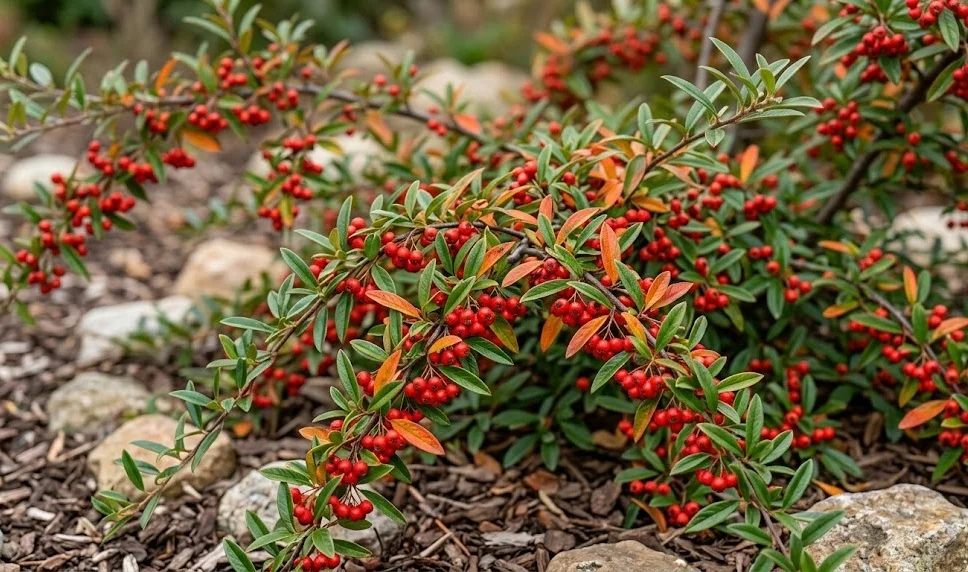

Successful establishment of willow-leaved cotoneaster starts with a precise planting technique that prioritizes root health and proper site placement. This versatile shrub can serve as an excellent ground cover or a cascading element over walls, provided it is given the right start in its new environment. Propagation offers a rewarding way to expand your garden collection using material already present in your landscape. By following professional standards for both planting and multiplication, you can ensure a uniform and vigorous display of this elegant species.
The first step in planting involves preparing a hole that is significantly wider than the current root ball of the specimen. This loose soil environment allows the young roots to spread out horizontally without meeting resistance from compacted earth. You should aim for a depth that allows the plant to sit at the same level it was growing in its nursery container. Burying the stem too deeply can lead to rot, while planting it too high may cause the roots to dry out prematurely.
Once the plant is situated in the hole, backfilling should be done with a mixture of native soil and a small amount of compost. You should firm the soil gently with your hands to remove any large air pockets that could cause the roots to desiccate. It is important not to pack the soil too tightly, as this can hinder the movement of water and air to the root zone. A thorough watering immediately after planting helps settle the soil around the roots and provides essential hydration for the initial recovery phase.
Choosing the right time of year for planting is crucial for minimizing transplant shock and encouraging quick establishment. The cool, moist conditions of early spring or mid-autumn are generally considered the best windows for this task. Planting during these periods allows the cotoneaster to focus its energy on root development rather than trying to survive the stresses of summer heat or winter cold. If you must plant during the summer, extra attention to irrigation and temporary shading will be necessary for success.
Propagation through semi-hardwood cuttings
Semi-hardwood cuttings are a reliable method for creating new willow-leaved cotoneaster plants during the mid-summer months. You should select healthy, vigorous shoots that have begun to firm up at the base but are still flexible at the tip. Cuttings should be approximately ten to fifteen centimeters long and taken with a sharp, sterilized cutting tool. Removing the lower leaves prevents excess moisture loss and provides a clear area for new roots to emerge from the nodes.
More articles on this topic
To encourage root formation, the base of each cutting can be dipped in a rooting hormone before being placed in a well-draining medium. A mixture of perlite and peat moss works exceptionally well for maintaining the right balance of moisture and aeration. You should keep the cuttings in a humid environment with indirect light to prevent them from wilting before they can support themselves. Within a few weeks, you should start to see new growth, indicating that a successful root system has begun to form.
Hardwood propagation techniques
Hardwood cuttings offer another effective way to propagate this shrub during the dormant season in late autumn or early winter. These cuttings are taken from mature wood that grew during the previous season and are typically more resilient than softer material. You should look for straight stems that are about the thickness of a pencil for the best results. Cutting the base at an angle increases the surface area for water absorption and root initiation during the rooting process.
These cuttings can be placed directly into a prepared outdoor nursery bed or stored in a cool, moist environment until spring. If planting outdoors, ensure the soil is well-worked and protected from extreme freezing through the use of heavy mulch. Hardwood cuttings take longer to root than semi-hardwood ones, so patience is required as you wait for signs of life in the spring. This method is particularly useful for producing a large number of plants with minimal intervention and specialized equipment.
Layering for natural expansion
Layering is a low-stress propagation method that takes advantage of the willow-leaved cotoneaster’s natural tendency to root where its branches touch the ground. You can facilitate this process by pinning a low-growing branch to the soil and covering a small section with earth. Wounding the underside of the stem slightly can stimulate the production of callus tissue and subsequent root growth. This method is highly successful because the new plant remains attached to the parent, receiving nutrients and water throughout the process.
More articles on this topic
Once a significant root system has developed at the layering site, the new plant can be severed from the parent and moved to its permanent location. This usually takes one full growing season to ensure the roots are strong enough to support the independent plant. You should perform the separation during the dormant season to minimize stress on both the parent and the offspring. Layering is an excellent way to fill in gaps in a ground cover planting or to share plants with other gardening enthusiasts.