
In the dramatic landscapes of the high mountains, light is one of the most powerful and variable environmental factors that plants must navigate. The lifelong saxifrage has evolved to thrive in these high-light environments, yet it possesses a surprising degree of flexibility depending on the specific microclimate. Finding the correct balance of illumination in a garden setting is crucial for maintaining the plant’s compact form and its iconic silver-edged rosettes. A professional understanding of light intensity and duration will ensure your saxifrage remains a healthy and visually stunning part of your collection.
The intensity of light at high altitudes is much greater than at sea level, but the temperatures are significantly lower, which changes how the plant experiences the sun. In a domestic garden, the combination of intense summer sun and high lowland temperatures can be a dangerous mix for many alpine species. While the plant craves light for photosynthesis, it often struggles with the heat that accompanies direct exposure in the middle of the afternoon. This means that site selection must be done with a keen eye for both light levels and thermal management.
Photosynthesis in the lifelong saxifrage is highly efficient, allowing it to produce all the energy it needs even in relatively short growing seasons. However, the plant also uses light as a signal to regulate its growth habit and the production of its mineral-rich leaf deposits. If the light is too low, the rosettes will become “leggy,” stretching toward the source and losing the tight, cushion-like structure that is so desirable. Conversely, too much light without adequate moisture can lead to scorching and a dull, bleached appearance on the foliage.
Professionals often recommend a location that provides “cool sun,” such as an east-facing slope or a position that is shaded during the hottest part of the day. This allows the plant to enjoy the bright morning light when the air is still fresh and the soil is cool from the night. Providing this balance is one of the most effective ways to prevent the physiological stress that can lead to disease or pest infestations. Observe how the shadows move across your garden throughout the day to find the perfect spot for your alpine treasures.
Finding the ideal sun exposure and intensity
Full sun is often listed as the requirement for this species, but this recommendation needs to be interpreted based on your specific geographical location. In northern latitudes or cooler mountain regions, the plant can handle and even thrive in all-day direct sunlight. However, in warmer southern gardens, “full sun” can be far too intense, leading to the rapid drying of the substrate and heat stress in the leaves. In these areas, partial shade or dappled light during the afternoon is much more appropriate and safer for the plant’s long-term health.
More articles on this topic
The quality of the light also matters, with bright, indirect light often being just as beneficial as direct rays for this specific saxifrage. A position near a light-colored stone wall can provide reflected light that enhances the plant’s growth without the direct heat of the sun. This reflected light also helps showcase the silver lime deposits on the leaf margins, making the plant look even more luminous and attractive. Many experts find that their best specimens are grown in these bright but protected microclimates within the rock garden.
During the winter months, the light requirements change as the plant enters its dormant state and its metabolic activity slows down. While the plant doesn’t need as much light for energy production, it still benefits from being in an open, bright location to prevent the buildup of dampness. A spot that is in deep shade all winter can remain cold and wet for too long, which increases the risk of fungal problems. Ensure that your chosen site receives at least some ambient light throughout the entire year to keep the rosettes healthy and dry.
If you are growing lifelong saxifrage in containers, you have the flexibility to move them to take advantage of the changing light conditions throughout the seasons. In the spring, you can place them in the brightest possible spot to encourage vigorous growth and the development of flower stalks. As the heat of summer arrives, you can shift them into a slightly more shaded area to protect them from the midday sun. This mobile approach allows you to provide the optimal light environment for your plants at every stage of their yearly cycle.
Adaptations to light and environmental stress
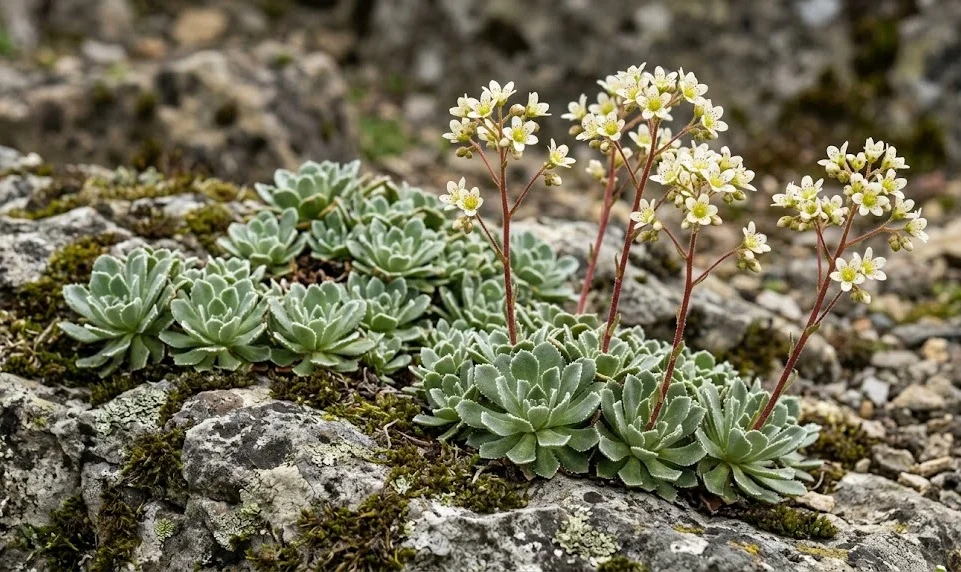
The thick, leathery leaves of the lifelong saxifrage are a direct adaptation to the intense light and drying winds of its mountain home. These leaves have a reduced surface area and a heavy cuticle that helps minimize water loss while still allowing for efficient photosynthesis. The silver lime deposits along the edges also play a role in light management by reflecting a portion of the incoming radiation. This natural “sunscreen” helps protect the delicate internal tissues of the leaf from damage during periods of extreme solar intensity.
More articles on this topic
When a plant is receiving the correct amount of light, it will maintain a very tight, compact rosette form with short internodes between the leaves. This compact habit is an essential survival strategy in the wild, as it helps the plant hug the ground and avoid the worst of the wind and cold. In the garden, this is also the most attractive way for the plant to grow, creating the iconic “cushion” effect that alpine enthusiasts love. If your plant begins to look loose or open, it is a clear signal that it needs more light to stay healthy.
Photo-inhibition is a process where too much light actually slows down photosynthesis and can damage the plant’s biological machinery. This occurs when the plant receives more light energy than it can process, leading to the formation of harmful oxygen radicals within the cells. The lifelong saxifrage has internal mechanisms to deal with this, but it can still be overwhelmed if the light is combined with high heat and drought. Providing a little bit of relief from the most intense sun can help the plant avoid this type of stress and keep growing at its optimal rate.
Observing the color of the foliage is another way to gauge if the light levels are correct for your specific plants. Healthy, well-lit specimens will have a deep green or blue-green color with very distinct, bright silver markings on the edges. If the leaves become very pale or yellowish, it may be a sign of too much light (scorching) or not enough light (chlorosis). By paying close attention to these subtle color changes, you can adjust the plant’s position and ensure it is receiving exactly what it needs to thrive.
Professional adjustments for different garden settings
In a traditional rock garden, the placement of large stones can be used to create a variety of different light environments in a very small space. Planting on the east side of a large boulder provides morning sun and afternoon shade, while the north side offers a cooler, more consistently shaded environment. These “micro-habitats” allow you to grow different species with varying needs side by side in a harmonious layout. A professional rock gardener uses the geology of the site to manage the light as much as the soil and water.
If you are growing these plants on a flat site or in an open bed, you may need to provide some artificial shade during the peak of summer. A temporary piece of lattice or a strategically placed taller plant can provide the necessary break from the intense sun. Be careful not to choose companions that will drop heavy leaves or create a stagnant air environment around the saxifrage. The goal is to provide light shade while still maintaining the high level of air circulation that these mountain plants require.
Indoor or greenhouse cultivation presents its own set of challenges regarding light management and air temperature. While a greenhouse provides plenty of light, it can also become dangerously hot very quickly without proper ventilation and shading. Using “cool” lights or providing extra air movement with fans can help mimic the mountain environment more effectively indoors. For most gardeners, keeping these plants outside for as much of the year as possible is the easiest way to satisfy their complex light and temperature needs.
Ultimately, the best teacher for understanding light requirements is your own experience and the observations you make in your own garden. Every site is unique, and factors like the color of your house, the proximity of large trees, and even the local air quality can affect how light reaches your plants. Don’t be afraid to try different placements and see where your lifelong saxifrage looks and grows the best. With time and patience, you will develop a “feel” for the light that will ensure the success of your entire alpine collection.