
Understanding the dance between light and shadow is one of the most important skills any gardener can develop, especially when dealing with forest-floor species like the Christmas rose. While we often think of plants as needing as much sun as possible, this specific perennial has evolved to thrive in the complex, shifting light patterns of deciduous woodlands. Providing the right exposure is about more than just finding a dark corner; it is about finding a spot that offers the right kind of light at the right time of year. This article will detail the professional techniques for managing light to ensure your plants are healthy, vibrant, and full of blossoms.
The black hellebore is unique because its light needs change significantly as the seasons transition from the heat of summer to the cold of winter. In its native alpine environment, it is often found in the “high shade” provided by tall trees, where the light is bright but filtered. This prevents the leathery leaves from being scorched by the intense summer sun while still allowing for enough energy production. Finding a similar spot in your home garden—perhaps on the north or east side of a building or under a large shrub—is the first step toward long-term success.
Optimal exposure and site selection
The ideal location for a black hellebore is one that provides what professional gardeners call “dappled shade.” This means that the plant receives patches of sunlight that move across its foliage throughout the day, rather than being hit by a single, intense beam for many hours. A spot that gets soft morning sun and is then protected during the harsh afternoon hours is often the perfect compromise. Full, deep shade can sometimes lead to fewer flowers and a more “leggy” growth habit as the plant stretches toward the light.
When choosing a site, consider the surrounding structures and plants that might influence the light levels. A white-painted wall behind the plant can reflect a surprising amount of light and heat, which might be beneficial in the winter but stressful in the summer. Conversely, being tucked too tightly under a dense evergreen hedge might deprive the plant of the light it needs during its most active winter blooming period. You are looking for a sense of “open shade” where the sky is visible above, but the direct sun is filtered by a canopy of leaves.
It is also important to remember that light levels are not static and will change as your garden matures. A small sapling planted nearby today might become a massive shade-tree in ten years, completely altering the environment for your hellebores. A professional approach involves periodically assessing the light in your garden and making adjustments as needed. This might involve thinning out the branches of an overhead tree or even moving a plant if it has become too deeply shaded to thrive.
More articles on this topic
In more northern climates, these plants can handle a bit more direct sun than they can in the south, where the summer heat is much more intense. If you live in a cooler region, a spot with several hours of direct light might result in a more compact plant with even more flowers. However, in hotter areas, the priority must always be on protection from the midday sun. Learning to observe how the light moves through your specific piece of land is one of the most rewarding parts of becoming an expert gardener.
Seasonal light shifts and plant response
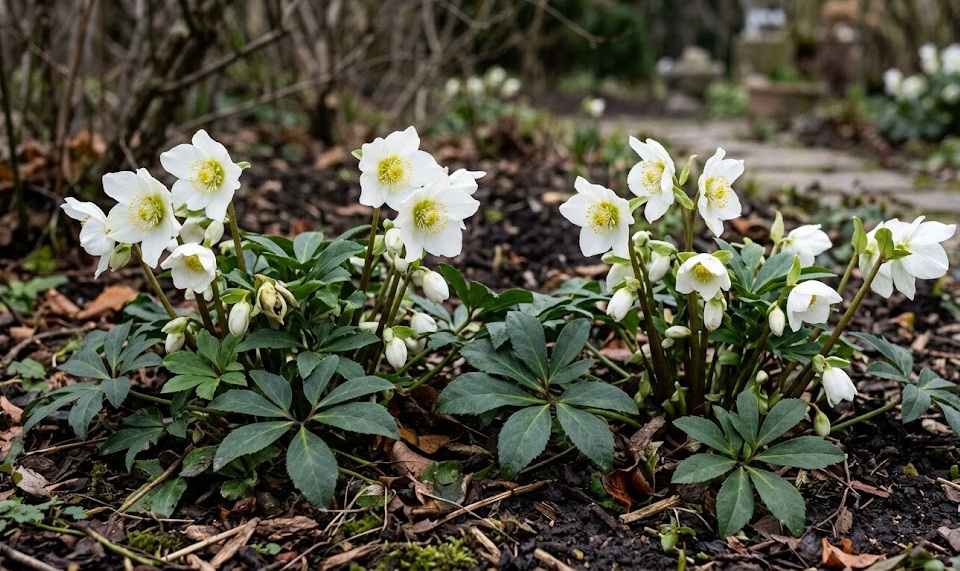
One of the most fascinating aspects of growing the black hellebore is how it takes advantage of the “light window” created by deciduous trees. In the winter and early spring, when the oaks, maples, and beeches have lost their leaves, the ground below receives a significant amount of light. This is exactly when the hellebore is doing its most important work: developing flower buds and showcasing its blossoms. This natural synchronization is why they are so perfectly suited for planting under large, leafy trees.
As the trees begin to leaf out in late spring, they provide a cooling canopy just as the temperatures start to rise. This shade is vital for protecting the plant during its dormant summer period, preventing the soil from drying out too quickly and the leaves from burning. If you have your hellebores in a spot that doesn’t have this natural seasonal shift—such as under an evergreen tree—you will need to be more careful about providing consistent moisture. The plant is essentially designed to thrive in a world that changes its light levels twice a year.
During the height of summer, the leathery, dark green leaves of the hellebore are working hard to store energy in the thick rhizomes for the coming winter. While they don’t need direct sun for this, they do need a certain amount of ambient light to be productive. A plant that is in “black shade” where it can barely see the sky will often struggle to build up enough reserves for a good floral display. Think of the plant as needing “bright shade”—the kind of light where you could easily read a book without needing a lamp.
More articles on this topic
As autumn arrives and the days get shorter, the light levels drop naturally, signaling to the plant that it is time to start the next cycle. The cooling temperatures and the return of light to the forest floor as the leaves fall are the primary triggers for bud development. If you use artificial garden lighting, be careful not to have bright spotlights shining directly on your hellebores all night long. Like many plants, they benefit from a natural period of darkness to regulate their internal clocks and maintain their seasonal rhythms.
Identifying and correcting signs of light stress
A professional gardener is always on the lookout for the visual clues that a plant is unhappy with its light levels. If your black hellebore is getting too much sun, you will often see “leaf scorch,” which appears as brown, papery edges or bleached spots on the leaves. The plant might also take on a yellowish tint as the chlorophyll is damaged by the intense radiation. If you see these signs, providing some temporary shade with a piece of lattice or moving the plant to a more sheltered spot is the best course of action.
On the other hand, a plant that is not getting enough light will often show its frustration through a lack of flowers. While the foliage might look lush and green, the stems will often be long and weak, and the overall clump will look “stretched” and sparse. If your hellebore hasn’t bloomed for several years despite proper watering and fertilizing, it is almost certainly a sign that it needs a bit more light. Simply thinning out the overhead canopy or moving the plant just a few feet toward a brighter area can work wonders.
In very deep shade, you might also notice more problems with fungal diseases like black spot, as the leaves take much longer to dry out after a rain. Light and air circulation go hand-in-hand when it comes to maintaining plant health. A bit of dappled sunlight helps to evaporate surface moisture and keeps the environment less hospitable for fungal spores. This is another reason why “open shade” is always preferred over a dark, stagnant corner of the garden.
By paying attention to these subtle signals, you can fine-tune the environment for your plants over time. Gardening is not a static hobby; it is a relationship between you and the living things in your care. Each season offers a new opportunity to learn more about how light affects the growth and beauty of your Christmas roses. With a professional’s eye and a human’s touch, you can ensure that your hellebores are always in the best possible light to showcase their stunning winter stars.