
Overwintering a black jewel orchid is a critical phase of its yearly cycle, as the shifting light and temperature levels indoors can significantly impact its health. In its native tropical habitat, the seasonal changes are far less dramatic than in temperate climates, meaning the plant isn’t naturally adapted to harsh winter conditions. Your goal as a grower is to provide a stable, warm microclimate that protects the plant from the drying effects of central heating and the chill of winter windows. When managed correctly, this period can actually be the highlight of the year, as it is when the orchid typically produces its elegant flower spikes.
As the days grow shorter and the intensity of the sun decreases, the orchid’s growth rate will naturally begin to slow down. You should mirror this change by gradually reducing the frequency of watering and halting any fertilization until the spring. This resting phase allows the plant to conserve energy and focus on its reproductive cycle, leading to the development of the winter blooms. If you continue to treat the plant as if it were mid-summer, you risk causing root rot or producing weak, leggy growth that is susceptible to pests.
The indoor air quality during winter is often the biggest challenge for this humidity-loving terrestrial species. Modern heating systems strip moisture from the air, creating a desert-like environment that can quickly cause the velvet leaves to shrivel and brown at the edges. You may need to employ multiple strategies, such as using humidifiers or grouping plants together, to maintain the necessary moisture levels. Monitoring the humidity with a digital hygrometer can provide you with the accurate data needed to make adjustments before the plant shows signs of stress.
Positioning is everything during the colder months, as the area near a window can be significantly cooler than the rest of the room. While the plant needs light to produce its flowers, it must be protected from cold drafts and the “radiant cold” that comes off glass panes at night. Moving the orchid a few feet back from the window or ensuring there is a thick curtain between the plant and the glass can make a world of difference. Consistency in temperature is the key to preventing the plant from entering a state of shock during the winter.
Adjusting the indoor environment for winter
Creating the right thermal environment is the first step in successful overwintering, with a target daytime temperature of around twenty-one degrees Celsius. At night, the temperature can safely drop to about sixteen or seventeen degrees, which often helps trigger the plant to send up its flower spikes. Avoid placing the orchid near radiators, vents, or fireplaces, as the direct heat will dehydrate the plant and can cause the leaves to drop. A stable, interior wall away from direct heat sources and cold entrances is often the safest spot in the house.
More articles on this topic
Light management during winter is equally important, as the sun sits much lower in the sky and its rays are less powerful. You may find that a spot that was too bright in the summer is now perfectly adequate for providing the gentle light the jewel orchid craves. If your home is particularly dark, you might consider using a small LED grow light to supplement the natural day length. Keeping the light duration at around ten to twelve hours will help the plant maintain its vibrant foliage colors even during the gloomiest months.
Humidity remains the most critical factor, and a simple pebble tray might not be enough when the indoor humidity drops below thirty percent. Consider using a small, dedicated plant tent or a glass terrarium to create a self-contained environment where moisture is recycled. This not only protects the plant from dry air but also helps maintain a more consistent temperature around the root zone. If you choose to mist the plant, do so very sparingly and only in the morning to ensure the leaves are dry by nightfall.
Air circulation should not be neglected, even though your primary focus might be on keeping the plant warm and moist. Stagnant air in a humid winter environment is an invitation for mold and bacterial rot to set in on the soft stems. A very small fan set to the lowest speed, placed across the room, can provide enough air movement to prevent these issues without chilling the plant. Finding the right balance between warmth, moisture, and air movement is the hallmark of a professional approach to overwintering.
Care during the winter rest and blooming period
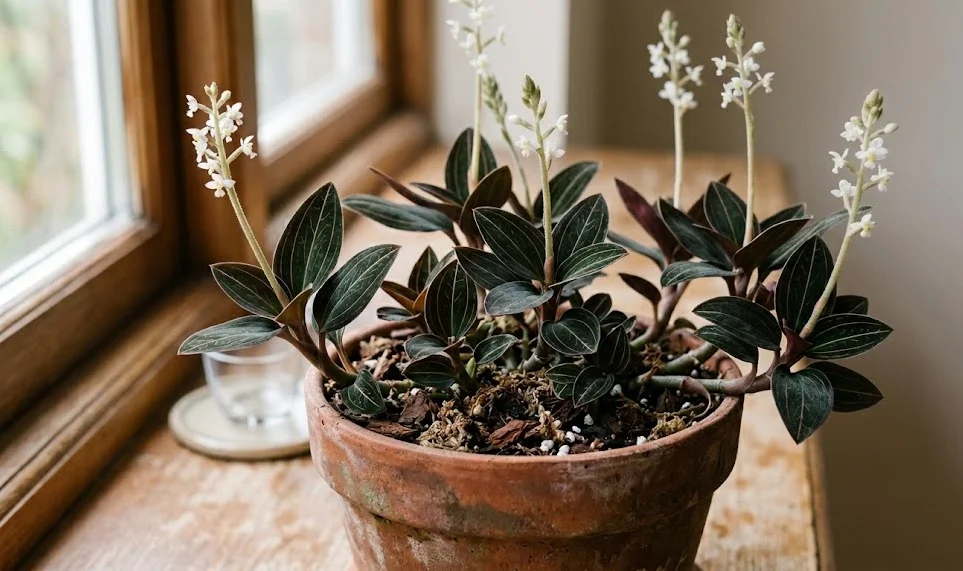
During the winter, the black jewel orchid transitions from a phase of foliage expansion to one of flowering and relative dormancy. You will notice the emergence of a fuzzy, upright flower spike from the center of the mature rhizomes as the weather cools. This is a sign that your plant is healthy and responding well to the seasonal cues you have provided. While the plant is flowering, keep the environment as stable as possible to ensure the blooms last for the maximum amount of time.
More articles on this topic
Watering should be done with extreme care during this period, as the plant’s metabolic needs are at their lowest point of the year. Allow the top layer of the substrate to dry out more than you would in the summer, but never let the roots become bone-dry. Use room-temperature water and be especially careful not to get any moisture on the developing flower spike or the leaf axils. Overwatering in the winter is the most common cause of plant loss, so when in doubt, it is often safer to wait another day.
You should stop all fertilization during the winter months, as the plant is not in a stage where it can effectively utilize extra nutrients. Adding fertilizer to a plant that is resting or blooming can lead to a buildup of salts in the soil, which can damage the sensitive roots. Wait until you see the first signs of new vegetative growth in the spring before reintroducing a weak fertilizer solution. This break in feeding is a natural part of the plant’s life cycle and helps maintain the long-term health of the substrate.
Inspect the plant regularly for any signs of winter pests like spider mites, which thrive in the dry air of heated homes. If you catch an infestation early, it is much easier to manage than if you wait until the plant is covered in webbing. Gently wiping the leaves with a damp cloth every few weeks not only removes dust but also allows you to check for any hidden problems. By staying proactive, you ensure that your jewel orchid survives the winter in peak condition, ready for a new season of growth.
Preparing the orchid for the spring transition
As the days begin to lengthen and the outdoor temperatures start to rise, your black jewel orchid will begin to wake up from its winter rest. This transition phase is a delicate time when you must gradually reintroduce more frequent watering and eventually, light fertilization. You will know the plant is ready when you see bright green tips emerging from the rhizomes or new leaves starting to unfurl in the center. Increasing the humidity during this time will support the vigorous new growth and help the plant recover from the dry winter air.
If your orchid has finished blooming, it is the perfect time to prune away the spent flower spikes to save the plant’s energy. Use a sterilized pair of scissors and cut the spike as close to the base as possible without damaging the surrounding leaves. This signals to the plant that the reproductive phase is over and it is time to focus on expanding its foliage and root system. Many growers also take this opportunity to clean the leaves thoroughly, removing any mineral deposits or dust that accumulated during the winter.
Spring is also the ideal season for repotting or dividing your jewel orchid if it has outgrown its current container. The fresh substrate will provide a new supply of nutrients and better aeration for the roots just as the plant enters its most active growth period. Be gentle during the repotting process, as the winter-rested rhizomes can be somewhat brittle until they are fully hydrated and growing again. Using a slightly larger pot will give the plant room to creep and branch throughout the coming summer.
Finally, evaluate the plant’s location and decide if it needs to be moved to a more shaded spot for the summer months. The spring sun can be surprisingly strong, and a window that was perfect in January might be too intense by April or May. Gradually acclimating the plant to its summer position will prevent leaf scorch and ensure a smooth transition. With a little foresight and care, your black jewel orchid will emerge from its winter home stronger and more beautiful than ever before.