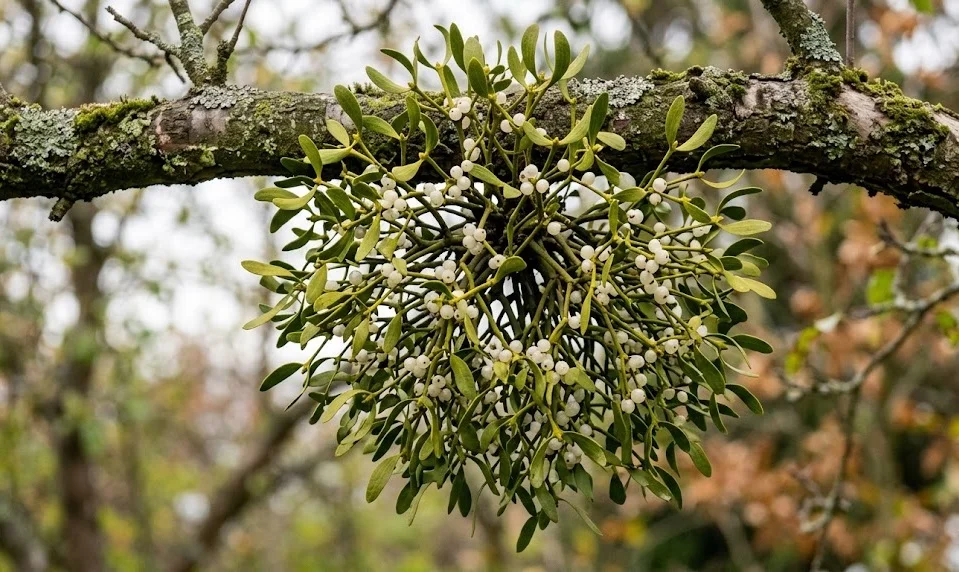

White mistletoe is a highly light-dependent plant that thrives in the bright, airy conditions of the upper tree canopy. As an evergreen hemiparasite, it relies on its own photosynthesis to produce the energy needed for growth and berry production while stealing water and minerals from its host. Understanding its light requirements is essential for anyone wishing to successfully grow or manage this plant in a garden or orchard setting. A professional approach involves ensuring the mistletoe receives maximum solar exposure throughout the year, especially during the summer months when the host tree is in full leaf.
Photosynthesis in the upper canopy
The leaves of the white mistletoe are specifically adapted to capture sunlight in the filtered environment of a tree’s crown. They are thick and rich in chlorophyll, allowing them to remain active even during the shorter days of winter. Because the mistletoe is often positioned high above the ground, it has access to light that many understory plants never see. This “vertical advantage” is a key part of its survival strategy, enabling it to produce enough sugars to sustain its unique lifestyle.
During the peak of summer, the mistletoe must compete with the host tree’s own leaves for every photon of light. If the host tree has a very dense or “weeping” habit, the mistletoe may find itself in deep shade for much of the day. This can lead to a decline in vigor, characterized by smaller leaves and fewer berries. A professional gardener will often choose host trees with more open canopy structures, such as apple or poplar, to ensure the mistletoe gets the light it needs.
Interestingly, mistletoe leaves are capable of adjusting their photosynthetic rate based on the available light intensity. They can handle full, direct sun without burning, thanks to their protective waxy coating. In fact, plants grown in full sun often have a more compact, spherical shape and a higher berry yield than those in partial shade. This resilience makes mistletoe an excellent choice for sunny, exposed locations where other delicate plants might struggle.
The orientation of the mistletoe clump within the tree also significantly impacts its photosynthetic efficiency. Clumps located on the southern or western sides of a tree generally receive more total light energy than those on the northern side. When planting or inoculating new seeds, a professional will always aim for the sunnier portions of the canopy. This strategic placement ensures that the young plant has the best possible chance of establishing a strong and productive energy cycle.
More articles on this topic
Impact of shading on mistletoe vigor
Prolonged shading is one of the most common reasons for the failure of white mistletoe in a garden environment. When the plant does not receive enough light, its growth slows down and it becomes more susceptible to secondary infections and pests. The characteristic olive-green color may fade to a pale, sickly yellow, indicating a lack of chlorophyll activity. Without sufficient energy from photosynthesis, the mistletoe becomes entirely dependent on the host, which can eventually lead to the death of both.
Shading also has a direct impact on the reproductive success of the plant, specifically the production of its iconic white berries. Mistletoe is dioecious, meaning individual plants are either male or female, and both require light to flower effectively. Female plants in shaded positions will produce significantly fewer berries, which reduces their ecological value and aesthetic appeal. If you want a berry-rich display for the winter, maximizing light exposure is absolutely non-negotiable.
In some cases, the host tree’s own growth can eventually shade out a once-thriving mistletoe clump. As a tree matures and its branches thicken and multiply, the interior of the canopy becomes increasingly dark. This natural process can “suffocate” mistletoe that was established when the tree was younger and more open. Professional management involves monitoring these changes over the years and taking action to maintain the light levels around the parasite.
To counteract the effects of shading, one might need to perform “light pruning” on the host tree. This involves removing a few strategic host branches that are casting heavy shadows over the mistletoe. It is not about a major structural change to the tree, but rather a subtle adjustment to improve the light environment. By creating small “windows” in the host’s canopy, you can significantly boost the health and longevity of the mistletoe.
More articles on this topic
Optimizing light exposure through host management
Optimizing the light environment for white mistletoe is a year-round task that requires a professional eye. During the winter, when the host tree is dormant, the mistletoe is in its glory, receiving 100% of the available light. This is a crucial time for the plant to build up energy reserves for the following spring. Keeping the area around the host tree clear of tall buildings or other evergreens that might cast long winter shadows is a proactive way to support the plant.
When selecting a host tree for a new mistletoe project, the tree’s natural leaf density should be a primary consideration. Trees with large, broad leaves that create a “shady umbrella” are generally less suitable than those with smaller, more divided foliage. For example, a rowan or an ornamental hawthorn provides a much better light environment for mistletoe than a dense horse chestnut. Choosing the right partner for the mistletoe is the first step in successful light management.
The height at which the mistletoe is established also plays a role in its light access. Generally, the higher the plant is in the tree, the more light it will receive, but this also makes it more difficult to maintain. A professional balance is usually found by placing the mistletoe in the middle to upper third of the canopy. This height typically offers a good compromise between excellent light exposure and ease of monitoring for the gardener.
Finally, regular cleaning of the host’s canopy can help maximize light penetration. Removing “water sprouts”—the fast-growing, vertical shoots that trees often produce—can prevent them from quickly shading the mistletoe. These shoots often have little value for the tree’s structure but can rapidly block the sun for anything growing beneath them. By keeping the canopy “clean” and well-structured, you ensure that the white mistletoe remains a vibrant and glowing feature of your garden.